Childminding lets you run a rewarding childcare business from your own home, set your own hours and work with a small group of children. Demand is strong in many areas, especially for flexible care, wraparound school care and families who want a home setting.
It is also a regulated business with real responsibilities: registration, training, ratios, safeguarding, records, insurance and safe premises. On top of that, you need fees that cover your costs and a steady income through school holidays and funding changes. This guide explains how to become a childminder in the UK and run it as a sustainable business.
1. Register with the right regulator
Childminders must be registered to look after children for payment in their own home. In England, you register with Ofsted or a registered childminder agency; in Wales with Care Inspectorate Wales; in Scotland with the Care Inspectorate; and in Northern Ireland with your local Health and Social Care Trust. Registration involves checks on you and adults in your home, training requirements and an inspection.
Your registration sets limits on how many children of each age you can care for. Keep your attendance register within those limits every day.
2. Training and checks
Before and after registering you will typically need:
- Paediatric first aid training, renewed regularly
- Safeguarding training
- Food hygiene training if you provide meals or snacks
- Criminal record checks for you and other adults in the household
- Knowledge of the relevant early years framework where you live
Log every certificate and renewal date in your compliance register.
3. Insurance and policies
You will need public liability insurance designed for childminders, and business car insurance if you transport children. Write clear policies on safeguarding, behaviour, complaints, illness and exclusion, outings and emergencies, and review them every year. Have parents sign contracts and consent forms covering hours, fees, collection arrangements, photos, outings and emergency treatment.
4. Setting your childminder fees
Childminder fees are usually charged per hour, per day or per session. Work out:
- Your food and consumables cost per hour (snacks, meals, nappies, wipes, craft materials)
- Activities and other costs such as outings, groups and resources
- Your fixed costs: insurance, registration fees, training, toys and equipment, extra utilities
- The income you need to earn
Track childcare hours sold, rate per hour, food and consumables per hour, and revenue per family. Charge for late collection, and set clear terms for holidays, sickness and notice periods.
5. Funded hours and Tax-Free Childcare
Many families use government-funded hours or Tax-Free Childcare. Funded hours are paid through your local authority at set rates, which may not match your private rate. Understand your local funding rules, how you can charge for extras, when payments arrive and how funded hours affect your cash flow. Record a next contract or funding review date for every family.
6. Daily records and safety
Your daily routine protects the children and your registration:
- Ratios within your registration
- Attendance register with arrival and collection times
- Only authorised adults collect children
- Home safety check: gates, sockets and hazards
- Food prepared safely and allergies checked
- Accident and incident records completed and signed by parents
- Toilets and nappy areas cleaned
Weekly: outing risk check and car seats checked, fire exits clear, cleaning schedule signed. Monthly: fire drill practised and recorded, first aid kit stocked.
Your childminder risk assessment should cover choking and food allergies, trips and falls, burns and scalds, a lost or uncollected child, illness spreading, outings by car and fire.
7. Tax and records
Most childminders are self-employed and register with HMRC for Self Assessment. Keep records of fees received and allowable expenses, including a fair share of household costs for the parts of your home used for childminding. Ask an accountant how to calculate household costs, because childminders have specific options.
Settling-in and parent communication
Strong relationships with parents keep places full and prevent disputes. Offer settling-in sessions before a child starts, share a short daily update on meals, naps, nappies and activities, and hold a regular conversation about the child's development. Be clear and consistent about policies on illness, late collection and payment. Parents who feel informed recommend you to friends, which is how most childminders fill places.
Planning your week and holidays
Childminding hours are long, so plan breaks and holidays into your contracts from the start. Decide whether you charge during your own holidays and during families' holidays, and state it in writing. A weekly plan of activities, outings and meals saves time and shows inspectors and parents how you support each child's learning. Keep receipts for every resource and outing, because they reduce your tax bill.
Use your records to spot patterns. If most families need early starts, consider a before-school slot; if afternoons are quiet, offer wraparound care for school-age children. Small changes to your sessions can lift your income without longer hours.
Keeping on top of paperwork
Ten minutes at the end of each day keeps records accurate: complete the register, sign off accident and medication records with parents, and note anything to share tomorrow.
VAT and tax
Most small businesses register with HMRC for Self Assessment as sole traders, or run as a limited company once profits grow. You must register for VAT once taxable turnover passes the HMRC threshold, and some services in this sector have specific VAT treatment, so take advice from an accountant before you set prices. Once registered, a quarterly VAT summary of VAT charged, VAT reclaimable and net to pay keeps you ready for every return.
Cash flow: the number that keeps you open
Profitable businesses still run out of money when payments arrive later than bills. A 12-week cash flow forecast shows money in from customers and money out for wages, rent, supplies, insurance and tax, week by week, with a warning for any week the balance goes negative. Review it every week in your first year. It gives you time to chase payments, delay a purchase or arrange finance before a shortfall becomes a crisis.
Your first 90 days
Month one: complete registration, training, insurance and policies, and prepare your home and risk assessment. Month two: build contracts and an attendance register, and set fees with clear terms on holidays, sickness and notice. Month three: review your income per family and per hour, check your funded hours payments and adjust fees or sessions where your costs are not covered.
How to work out your break-even
Break-even is the number of childcare hours you need each month to cover all your costs.
1. Add up your monthly fixed costs: rent, insurance, software, marketing, loan payments and your own minimum drawings. 2. Work out your contribution per childcare hour: your price minus the variable cost of delivering it. 3. Divide fixed costs by contribution.
For example, with fixed costs of £400 a month, a price of £6.50 per childcare hour and a variable cost of £0.60, each childcare hour contributes £5.90, so you would need about 68 childcare hours a month to break even. These figures are illustrations only: use your own. A price rise lowers your break-even straight away, which is why pricing is usually the fastest lever you have.
When to raise your prices
Costs rise every year. If your prices stay still, your margin shrinks. Signs you are undercharging include being fully booked weeks ahead, customers rarely questioning your price and a gross margin that falls month by month. Review fees once a year and give parents written notice before the new rate applies. Explain what your fee includes: meals, activities, outings and resources.
Common mistakes
No written contract. Disputes over notice, holidays and late fees are common. Put everything in writing.
Undercharging. Low fees fill places quickly but leave you working long hours for little.
Ignoring funded hours cash flow. Funding payments can arrive later than private fees. Plan for the gap.
Letting training lapse. Expired first aid or safeguarding certificates can affect your registration.
The numbers to check every month
Review average revenue per family, childcare hours sold, revenue per hour, activities & other % of revenue, plus overdue invoices and your lowest cash balance in the next 12 weeks. Those numbers tell you whether the business is profitable, not just busy.
How to market your childminder
Most childminders fill places through word of mouth, local parenting groups, school gates and online childcare directories. A short profile with your hours, ages, approach, inspection outcome and photos of your setting (without children's faces unless you have consent) helps parents choose. Ask happy families for reviews and referrals. Keep a waiting list for future places.
The Childminder Business Management System
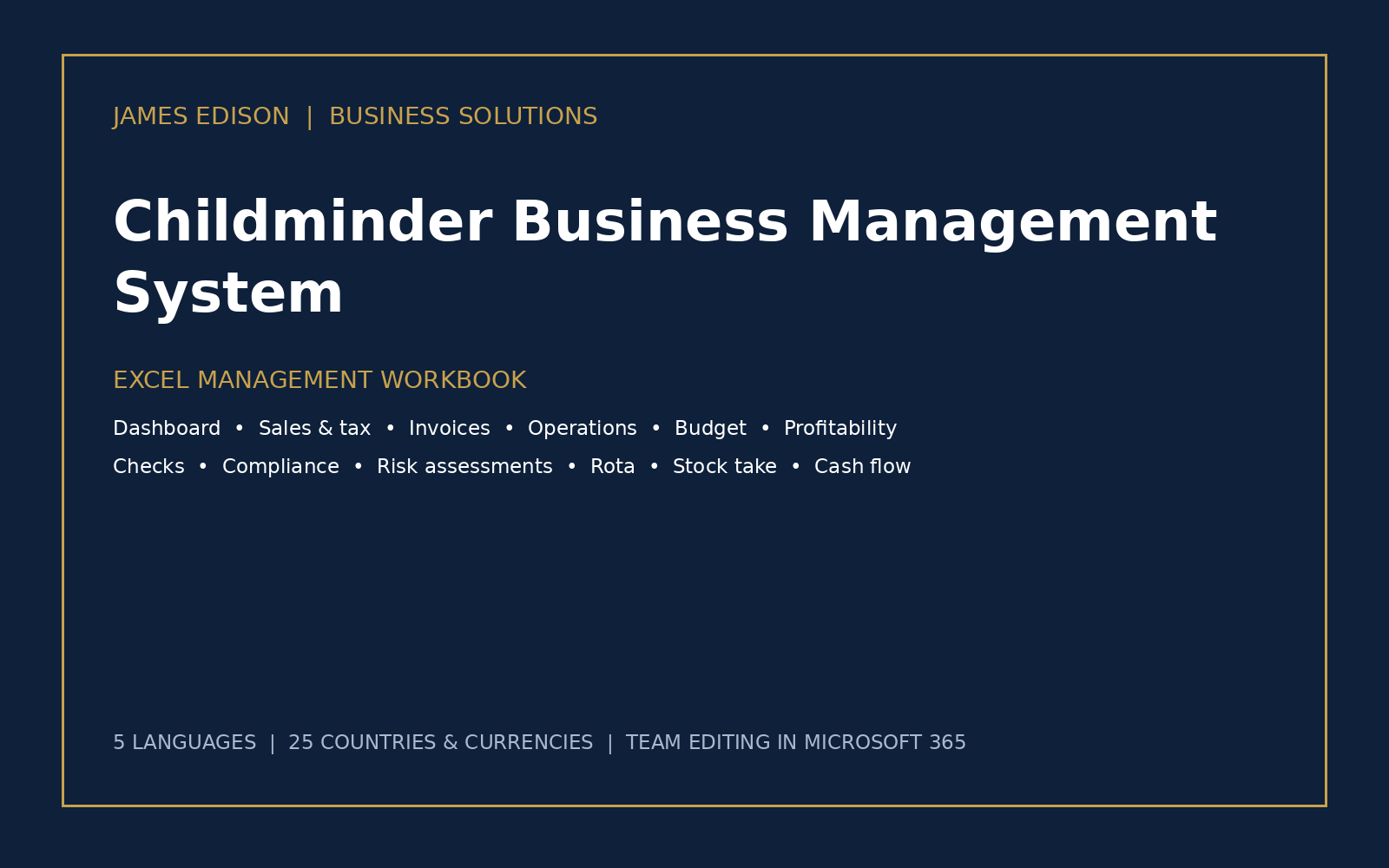
The Childminder Business Management System is a childminder spreadsheet in Excel built around this guide:
- Session type tracker with childcare hours, rate per hour, food & consumables per hour, activities & other costs, revenue, gross profit and a next contract / funding review reminder
- Sales and VAT, invoices and aged debtors with a "chase these first" list
- 12-week cash flow forecast with shortfall warnings
- Quarterly VAT summary, profit and loss, budget vs actual and a pricing calculator
- Daily, weekly and monthly checks including adult to child ratios within registration, attendance register with arrival and collection times, only authorised adults collect children, home safety check: gates, sockets, hazards, food prepared safely and allergies checked and more
- Compliance register pre-filled with registration with the childcare regulator, paediatric first aid certificate, safeguarding training, staff background checks, childcare public liability insurance, vehicle insurance and roadworthiness test and more, with renewal reminders
- Risk assessments pre-filled for choking and food allergies, trips and falls, burns and scalds, lost or uncollected child, illness spreading between children, long hours driving, fire
- Stock take pre-loaded with nappies and wipes, snacks and meals, craft and activity supplies, cleaning chemicals, hand sanitiser, fresh milk, first aid refills, toilet roll
- Staff rota with wage cost
- Dashboard with income, profit, margin, average revenue per family, childcare hours sold, revenue per hour, activities & other % of revenue and a compliance score
It costs £15 once, with no subscription and no app. It works in Excel 2016 or later, Microsoft 365, Excel for Mac and Excel online, in 5 languages and 25 currencies.
**Get the childminder spreadsheet →**
Your start-up checklist
1. Check the regulator for your nation and apply to register. 2. Complete paediatric first aid, safeguarding and food hygiene training. 3. Arrange criminal record checks for adults in your home. 4. Arrange childminder public liability and business car insurance. 5. Write your policies and parent contracts. 6. Make your home safe and complete a risk assessment. 7. Set hourly or session fees and late collection charges. 8. Understand funded hours and payment timings in your area. 9. Keep a daily register within your ratios. 10. Record accidents, incidents and medication. 11. Practise and record monthly fire drills. 12. Track income and expenses for Self Assessment.
Frequently asked questions
Do I need to register to be a childminder? Yes. Looking after children for payment in your home generally requires registration with the regulator for your nation, such as Ofsted in England or the Care Inspectorate in Scotland.
How many children can a childminder look after? Your registration and the rules where you live set limits by age. Always keep within your registration.
How much do childminders charge? Fees vary by area. Base yours on your costs, the income you need and local rates, and charge for late collection.
Do childminders pay tax? Most are self-employed and pay tax on profits through Self Assessment, after allowable expenses.
What records does a childminder need? Attendance registers, accident and incident records, medication records, parent contracts and consents, policies and training certificates.
Getting the systems right from day one is what turns a good childminder into a lasting one. The childminder spreadsheet puts it all in one Excel file for £15.