Opening a café is one of the most popular small business dreams in the UK, and one of the most unforgiving. Coffee has a healthy margin, but rent, staff, waste and quiet days can swallow it. The cafés that last are run by owners who know their gross profit on every item, keep tight control of stock and waste, stay on top of food safety and watch their cash every week.
This guide explains how to open a café or coffee shop in the UK step by step: concept, business plan, premises, registration, food safety, allergens, pricing and GP, stock, staffing, VAT and cash flow.
1. Choose your café concept
Decide what kind of café you are before you sign a lease:
- Coffee-led: speciality coffee, pastries, fast service. Lower food prep, higher coffee volume.
- Breakfast and brunch café: bigger plates, longer dwell time, more kitchen work.
- Lunch-focused: sandwiches, toasties, soups, salads, often with takeaway.
- Community café: families, groups, events.
- Kiosk or takeaway: small space, high volume, low staffing.
Your concept drives the equipment, staffing, menu, opening hours and location.
2. Write a café business plan with real numbers
A café business plan lives or dies on its numbers:
- Start-up costs: lease deposit, fit-out, espresso machine and grinder, fridges, dishwasher, furniture, initial stock, signage, legal fees.
- Monthly fixed costs: rent, business rates, utilities, insurance, card fees, software, music licence.
- Staff costs: wages, employer's National Insurance, pensions and holiday pay.
- Sales forecast: customers per day multiplied by average spend.
- Gross profit: sales minus food and drink cost.
- Break-even: how much you need to sell each week to cover everything.
Test your forecast by counting footfall outside the site at different times of day.
3. Premises and planning
Check the lease, the planning use class of the unit, extraction requirements if you plan hot food, toilet provision and accessibility. If you want outdoor tables on the pavement, you will usually need a pavement licence from the council, renewed regularly.
4. Register your food business
In the UK you must register your food business with your local council at least 28 days before you start trading. The council's environmental health team may then inspect you and give you a food hygiene rating. Customers check that rating, so aim for the top score from day one.
5. Food safety management
You need a written food safety management system based on HACCP principles. In England many small cafés use the Food Standards Agency's Safer Food, Better Business pack; Scotland has its own equivalent. It covers cross-contamination, cleaning, chilling, cooking and management, with a daily diary to sign.
Daily food safety checks typically include:
- Opening and closing checks
- Fridge and freezer temperatures recorded
- Hot food probe temperatures recorded
- Food safety diary signed
- Use-by dates checked
- Dishwasher temperature and rinse checked
- Coffee machine backflushed and steam wands purged
- Toilets cleaned
Weekly: allergen information reviewed, cleaning schedule signed off. Monthly: pest control check.
6. Allergens
UK law requires you to tell customers if any of the 14 major allergens are in the food you serve, and pre-packed-for-direct-sale foods need full ingredient labels with allergens emphasised. Keep an allergen matrix for every menu item, use separate utensils where needed, train staff and label clearly. Allergen cross-contamination should be in your risk assessment.
7. Café pricing and gross profit (GP)
Every café owner needs to know their GP (gross profit percentage) per item:
GP = (selling price − cost of ingredients) ÷ selling price
Coffee usually has a high GP; cooked breakfasts and sandwiches lower. A café GP calculator that shows cost per item, selling price, revenue, food and drink cost and gross profit for each product line tells you which items are carrying the business and which need repricing or removing.
Record, for each product line: items sold, selling price, cost per item and staff and other costs. From that, you see items sold, average selling price, food and drink cost as a percentage of sales and gross margin.
Remember VAT: once registered, much hot food and drink and eat-in food is standard-rated, and the selling price includes the VAT you pay over. Price with that in mind.
8. Café stock control and waste
Café stock control is where profit leaks. Milk, oat milk, coffee beans, syrups, tea, cups and lids, napkins and cleaning products all need tracking. For each item record:
- Unit cost
- Opening stock
- Deliveries
- Closing count
- Reorder level
Usage and stock value calculate themselves, and low items get flagged. Count weekly. Compare stock used against what your sales say you should have used; the gap is waste, over-portioning or theft.
9. Staffing and the café rota
Staff are usually a café's biggest cost after rent. A café staff rota with each person's shifts, hours and wage cost helps you match staff to busy and quiet periods. Look at your sales by day and hour and roster to them. One extra person on a quiet afternoon every day adds up to thousands a year.
10. Compliance and insurance
Your café compliance register should include:
- Food business registration and food hygiene inspection
- Public liability and employers' liability insurance
- Fire risk assessment and fire extinguisher service
- PAT testing
- Gas safety certificate (if you have gas appliances)
- Espresso machine pressure inspection: pressure systems such as espresso machines and boilers need periodic examination under a written scheme
- Pavement licence (if you have outdoor seating)
- Music licence (if you play music)
Each needs an expiry date and a reminder.
11. Health and safety risks
Your café risk assessment should cover allergen cross-contamination, burns from hot surfaces, steam and coffee machines, slips, fire, manual handling, cleaning chemicals and electrical equipment, each with controls and an annual review.
12. VAT
Once taxable turnover passes the HMRC threshold you must register for VAT. Café VAT has some complex rules about hot versus cold food and eating in versus takeaway, so get advice from an accountant. A quarterly VAT summary of VAT charged, reclaimable and net to pay keeps you ready.
13. Cash flow
Café cash flow swings with the weather, school holidays and seasons. A 12-week cash flow forecast shows money in from sales and money out for wages, rent, stock, rates and VAT, with warnings when the balance goes negative. Watch it weekly in your first year.
14. Coffee shop management software: app or spreadsheet?
Your till handles sales. Most coffee shop management software beyond the till charges monthly and rarely covers food safety checks, compliance, risk assessments and cash flow together. Many independent café owners use their till for sales and a spreadsheet for everything else.
Common mistakes new café owners make
Underestimating working capital. Many cafés run out of cash in the first six months, not because nobody comes but because the money set aside for quiet early trading was spent on fit-out. Keep a cash reserve and watch your forecast weekly.
A menu that is too big. Every extra dish means more stock, more waste and slower service. Start with a short menu you can do brilliantly, then add items that customers ask for.
Not costing recipes. If you do not know what a toastie costs to make, you do not know whether it makes money. Cost every recipe, including garnish, packaging and the takeaway cup.
Overstaffing quiet periods. Look at sales by hour for a few weeks, then roster to them. Staff are usually the biggest cost you control.
Ignoring waste. Milk, bakes and sandwiches that are thrown away are lost profit. Track what is wasted, adjust orders and use specials to move stock.
The numbers to check every week and month
Every week: sales, staff cost as a share of sales, stock used and wasted, and next week's cash forecast.
Every month:
1. Items sold and average selling price 2. Food and drink cost as a percentage of sales 3. Gross margin and net profit after rent, wages and overheads 4. Lowest cash balance in the next 12 weeks 5. Compliance score: checks up to date, certificates in date, high risks and stock to reorder
A café that reviews these numbers every month can fix problems while they are small.
How to market your café business
Marketing a coffee shop business is about being found, being trusted and being rebooked. Post your daily specials and new bakes, show the people behind the counter and reply to every review. A simple loyalty card or app stamp rewards regulars, who make up most of a café's takings. Partner with local businesses for office coffee orders and catering, and make your opening hours and menu easy to find on your website and map listings. Track which promotions actually lift sales so you spend your time on what works.
The most effective marketing for most small coffee shop businesses is free: excellent work, prompt replies, honest prices and asking every happy customer for a review. Paid advertising works best once your pricing, capacity and customer records are in place, because you will know exactly what a new customer is worth to you over a year.
The Café & Coffee Shop Management System
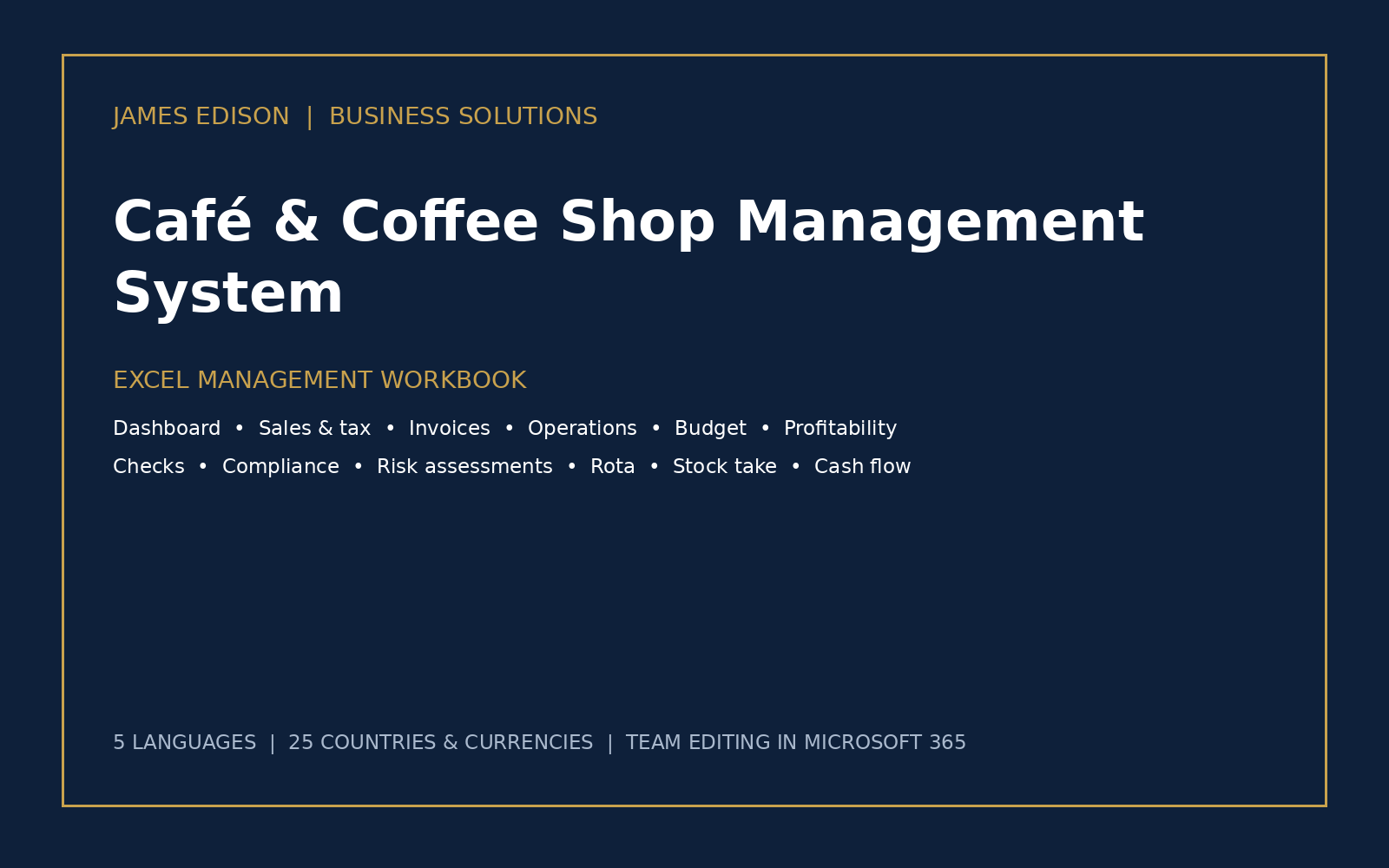
The Café & Coffee Shop Management System is a café management spreadsheet in Excel that covers this whole guide:
- Product tracker with items sold, selling price, cost per item, staff and other costs, revenue, food and drink cost and gross profit
- Sales and VAT, invoices and aged debtors
- 12-week cash flow forecast with shortfall warnings
- Quarterly VAT summary, profit and loss, budget vs actual and a pricing calculator
- Daily food safety checks: fridge temperatures, food probe, food safety diary, coffee machine, dishwasher, use-by dates, toilets, opening and closing
- Compliance register pre-filled with food hygiene registration, espresso machine pressure inspection, pavement licence, insurance, fire risk assessment, PAT testing, gas safety and music licence
- Risk assessments pre-filled for allergens, burns, slips, fire, manual handling, chemicals and electrical equipment
- Stock take pre-loaded with coffee beans, fresh milk, oat milk, syrups, tea, cups and lids, napkins and cleaning products
- Staff rota with wage cost
- Dashboard with income, profit, margin, items sold, average selling price, stock cost % of sales, gross margin and a compliance score
It costs £15 once, with no subscription, alongside your till. Works in Excel 2016 or later, Microsoft 365, Excel for Mac and Excel online, in 5 languages and 25 currencies.
**Get the café management spreadsheet →**
Your café opening checklist
1. Choose your concept and write a business plan with break-even. 2. Find premises; check planning use, extraction and toilets. 3. Register your food business with the council at least 28 days before opening. 4. Set up your food safety management system and daily diary. 5. Build an allergen matrix and train staff. 6. Arrange public and employers' liability insurance. 7. Complete fire risk assessment, PAT testing and gas safety. 8. Arrange the pressure inspection for your espresso machine. 9. Apply for a pavement licence and music licence if needed. 10. Cost every menu item and set prices to your target GP. 11. Set up weekly stock counts and a staff rota. 12. Run a 12-week cash flow forecast and plan for VAT.
Frequently asked questions
How much does it cost to open a café in the UK? Costs vary hugely with location and fit-out. The main items are the lease deposit, fit-out, coffee equipment, kitchen equipment, furniture, initial stock and working capital for the first few months.
Do I need a licence to open a café? You must register as a food business with your council. You may also need a pavement licence for outdoor seating, a music licence and, if you sell alcohol, a premises licence.
What GP should a café aim for? It depends on your menu mix. Drinks usually have a higher GP than food. Track GP per item and overall so you know your own figures.
How do I reduce waste in a café? Count stock weekly, compare usage with sales, adjust ordering, portion consistently and track use-by dates daily.
What software do independent cafés use? Most use a till system for sales and a spreadsheet for GP, stock, rota, food safety, compliance and cash flow.
A successful café comes down to knowing your numbers as well as your coffee. Track GP, control stock, stay on top of food safety and watch your cash. The café management spreadsheet puts it all in one Excel file for £15.