Gyms and fitness studios sit in one of the most competitive corners of UK retail. Budget chains offer low monthly fees, boutique studios charge premium prices for classes, and personal trainers rent space everywhere in between. There is still plenty of room for a well-run independent gym, but only if the numbers work from the first month.
The independent gyms that last know exactly how many members they need to break even, keep equipment safe and serviced, look after new members so they stay, and watch cash flow through the January peak and the summer dip. This guide explains how to open a gym in the UK: choosing your model, premises, equipment, pricing, staff, compliance, safety, VAT and cash flow.
1. Choose your gym model
- Independent open gym: memberships, day passes and inductions. Volume business with high fixed costs.
- Boutique studio: classes such as HIIT, spin, reformer Pilates or boxing, sold in packs and memberships. Higher price per visit, smaller space.
- Personal training studio: private sessions, small group training and nutrition coaching. Low member numbers, high revenue per client.
- Specialist gym: strength and conditioning, combat sports, CrossFit-style training or rehabilitation.
- Hybrid: open gym plus classes and personal training, often with self-employed trainers renting space.
Your model drives the size of premises, the equipment budget, staffing and how you price.
2. Premises and planning
Gyms need space, strong floors, ventilation, showers and parking or good transport links. Check the lease length, break clauses and service charges, and confirm the planning use class allows a gym. Noise from weights and music is a common complaint, so check neighbours and soundproofing before you sign. Budget for flooring, changing rooms, showers, lockers and access control on top of rent and business rates.
3. Equipment: buy, lease or second-hand
Equipment is usually the biggest start-up cost after the fit-out. Options include buying new, leasing, buying refurbished commercial kit or a mix. Leasing protects cash but adds a monthly cost for years; refurbished commercial kit can be good value if it comes with a warranty and service history. Whatever you choose, arrange a service contract so machines are inspected and maintained, and keep the records.
4. Membership pricing
Gym pricing is about recurring income. Most independents offer:
- Monthly memberships, often with off-peak and student options
- Day passes for visitors
- Class packs and class memberships
- Personal training sessions and packages
- Joining or induction fees
- Retail: supplements, drinks and merchandise
Track, for each line, members or sales, price, direct cost and gross profit. The key numbers are memberships and sales, average price, direct cost as a percentage of sales and gross margin. Retention matters as much as new sales: a member who stays twelve months is worth far more than one who leaves after two.
5. Staff and self-employed trainers
Decide whether trainers are employed, self-employed and paying rent, or paid per class. Self-employed arrangements must be genuine, so put terms in writing. Check every instructor's and trainer's qualifications and insurance, and keep first aid and defibrillator training current. A staff rota with hours and wage cost lets you match cover to busy times, especially early mornings and evenings.
6. Licences and compliance
If you play music in the gym or classes, you will usually need a music licence. Your compliance register should also cover public and employers' liability insurance, a fire risk assessment, extinguisher servicing, PAT testing of electrical equipment, a legionella risk assessment for showers, and the equipment service contract, each with an expiry date and reminder.
7. Member safety
Every new member should complete a health questionnaire and an induction before training. Daily checks keep the gym safe:
- Opening and closing checks
- Equipment checked and faulty kit taped off
- Equipment wiped and changing rooms cleaned
- Access control and CCTV working
- Toilets cleaned and cash reconciled
Weekly: defibrillator and first aid kit checked, showers and water temperatures checked, fire exits clear. Monthly: hazardous substances reviewed.
Your gym risk assessment should cover injury from equipment misuse, cardiac events during exercise, slips in changing areas, manual handling, legionella in showers, electrical equipment and fire.
Member retention: the hidden profit
Every gym loses members. The question is how fast. A member who leaves after two months barely covers the cost of winning them, while one who stays two years pays for years of rent. Simple retention habits make a big difference:
- Book a check-in two and six weeks after joining to review progress and adjust the programme.
- Track visits and contact anyone who has not been in for two weeks.
- Build community with challenges, member events and class regulars who know each other.
- Make cancelling a conversation: ask why, offer a freeze or a cheaper option, and learn from the answer.
Record cancellations and reasons monthly. If most leave in the first three months, fix the onboarding; if they leave after a year, refresh programmes and classes.
Running classes profitably
Classes can be your highest-margin product or a drain. For each class, track attendance, instructor cost and revenue. A class that regularly runs at a third full may cost more than it earns. Move poorly attended classes to better times, merge them, or replace them with formats members ask for. Waiting lists on popular classes are a sign to add another slot or raise the price.
VAT and tax
Most small businesses register with HMRC for Self Assessment as sole traders, or run as a limited company once profits grow. You must register for VAT once taxable turnover passes the HMRC threshold, and some services in this sector have specific VAT treatment, so take advice from an accountant before you set prices. Once registered, a quarterly VAT summary of VAT charged, VAT reclaimable and net to pay keeps you ready for every return.
Cash flow: the number that keeps you open
Profitable businesses still run out of money when payments arrive later than bills. A 12-week cash flow forecast shows money in from customers and money out for wages, rent, supplies, insurance and tax, week by week, with a warning for any week the balance goes negative. Review it every week in your first year. It gives you time to chase payments, delay a purchase or arrange finance before a shortfall becomes a crisis.
Your first 90 days
Month one: get insurance, compliance, inductions and daily checks in place before opening, and launch with a founding member offer to build your base. Month two: track memberships, cancellations and class attendance every week, and follow up with every member who has not visited for two weeks. Month three: review which products earn the most, adjust class timetables to demand and set your prices for the next twelve months.
How to work out your break-even
Break-even is the number of members you need each month to cover all your costs.
1. Add up your monthly fixed costs: rent, insurance, software, marketing, loan payments and your own minimum drawings. 2. Work out your contribution per member: your price minus the variable cost of delivering it. 3. Divide fixed costs by contribution.
For example, with fixed costs of £6,000 a month, a price of £30 per member and a variable cost of £4, each member contributes £26, so you would need about 231 members a month to break even. These figures are illustrations only: use your own. A price rise lowers your break-even straight away, which is why pricing is usually the fastest lever you have.
When to raise your prices
Costs rise every year. If your prices stay still, your margin shrinks. Signs you are undercharging include being fully booked weeks ahead, customers rarely questioning your price and a gross margin that falls month by month. Raise prices for new members first and give existing members notice. Members who value the coaching and community rarely leave over a small rise.
Common mistakes
Over-spending on equipment. Fancy kit does not keep members. Spend on what your members actually use and keep cash for marketing and working capital.
Ignoring retention. Most gyms focus on sign-ups. The members you keep pay the bills.
No induction process. Members who do not know how to use the gym leave, and untrained members get injured.
Underestimating quiet months. January is busy; summer can be slow. Plan cash for the dip.
The numbers to check every month
Review memberships and sales, average selling price, direct cost % of sales, gross margin, plus overdue invoices and your lowest cash balance in the next 12 weeks. Those numbers tell you whether the business is profitable, not just busy.
How to market your gym
Local search, social media and word of mouth bring most members to an independent gym. Show real members, coaches and results, reply to every review, and partner with local employers, physiotherapists and sports clubs. Referral rewards and a clear first-month offer convert enquiries. Track where every new member came from and how long they stay.
The Gym & Fitness Studio Management System
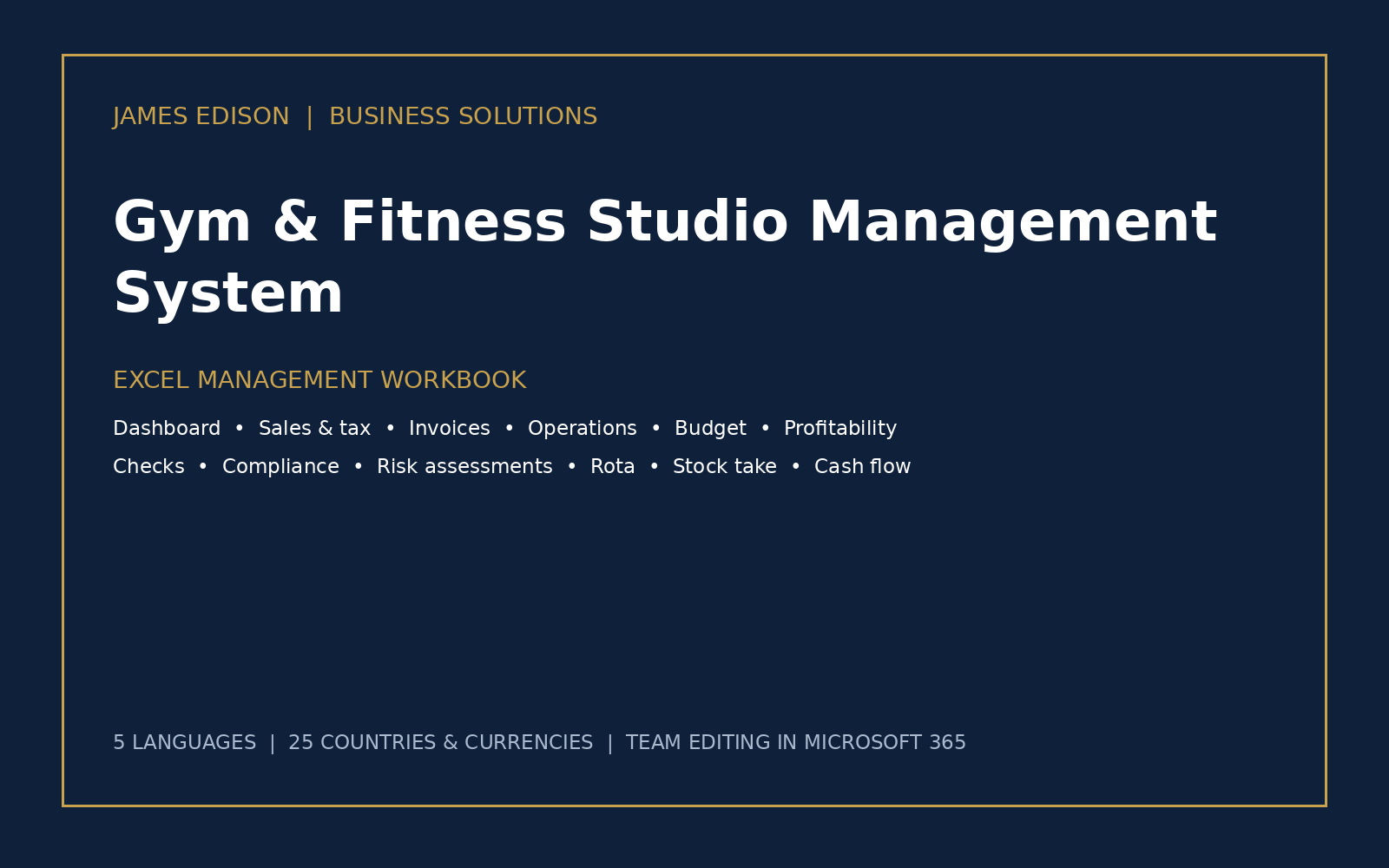
The Gym & Fitness Studio Management System is a gym management spreadsheet in Excel built around this guide:
- Product tracker with members / sales, price, direct cost each, staff & other costs, revenue, gross profit and a next renewal / review reminder
- Sales and VAT, invoices and aged debtors with a "chase these first" list
- 12-week cash flow forecast with shortfall warnings
- Quarterly VAT summary, profit and loss, budget vs actual and a pricing calculator
- Daily, weekly and monthly checks including opening checks completed, closing and lock-up checks completed, equipment checked and faulty kit taped off, equipment wiped and changing rooms cleaned, new member health questionnaires and inductions done and more
- Compliance register pre-filled with gym equipment service contract, instructor and personal trainer qualifications, first aid and defibrillator training, music licence, public liability insurance, employers’ liability insurance and more, with renewal reminders
- Risk assessments pre-filled for injury from equipment misuse, cardiac events during exercise, slips, trips and falls, manual handling and lifting, legionella in water systems, electrical equipment, fire
- Stock take pre-loaded with equipment cleaning wipes, sanitiser spray, towels, protein and supplements (retail), drinks (retail), resistance bands and small kit, toilet roll, hand soap and toiletries
- Staff rota with wage cost
- Dashboard with income, profit, margin, memberships and sales, average selling price, direct cost % of sales, gross margin and a compliance score
It costs £15 once, with no subscription and no app. It works in Excel 2016 or later, Microsoft 365, Excel for Mac and Excel online, in 5 languages and 25 currencies.
**Get the gym management spreadsheet →**
Your start-up checklist
1. Choose your model: open gym, studio, PT studio or specialist. 2. Write a business plan with member numbers needed to break even. 3. Find premises and check planning use, floors and noise. 4. Decide whether to buy, lease or buy refurbished equipment. 5. Arrange an equipment service contract. 6. Arrange public and employers' liability insurance. 7. Complete fire risk, legionella and PAT testing. 8. Get a music licence if you play music. 9. Check instructor qualifications and first aid training. 10. Set membership, class and PT prices. 11. Use health questionnaires and inductions for every new member. 12. Run a rota and a 12-week cash flow forecast.
Frequently asked questions
How much does it cost to open a gym? Costs vary hugely with size. The main items are the lease and fit-out, equipment, flooring, changing rooms, access control, insurance and working capital until membership grows.
Do I need a licence to open a gym? There is no specific gym licence, but you will usually need a music licence if you play music, plus planning permission for the right use and the usual fire and health and safety duties.
How many members does a gym need to break even? Divide your monthly fixed costs by the contribution each member makes after direct costs. The answer is your break-even membership number.
Should personal trainers be employed or self-employed? Both models work. Self-employed trainers who rent space reduce wage costs but give you less control. Put terms in writing either way.
What software do independent gyms use? Most use a booking or access system for members and a spreadsheet for profit, staff, compliance, safety checks and cash flow.
Getting the systems right from day one is what turns a good gym into a lasting one. The gym management spreadsheet puts it all in one Excel file for £15.