Every high street has a salon or barber, and for good reason: people need haircuts every few weeks whatever the economy is doing. That regular, repeat demand makes hairdressing one of the most resilient small businesses there is. But salons also have tight margins, high staff costs and a lot of moving parts: stylists, chair renters, colour stock, retail products, health and safety and VAT.
This guide explains how to open a hair salon or barbershop in the UK and run it profitably: planning, premises, staffing models, pricing, stock control, compliance, VAT, cash flow and the numbers you should watch every month.
1. Plan your salon concept
Start with who you serve and what you sell:
- Ladies' salon: cuts, colour, highlights, blow-dries and treatments. Higher ticket prices, more product cost.
- Barbershop: men's cuts, fades and beard trims. Higher volume, faster appointments, lower product cost.
- Unisex salon: wider market, more complex service menu.
- Specialist: curly hair, colour specialists, afro hair, extensions, bridal.
Your concept decides your location, fit-out, pricing, staffing and marketing. A walk-in barbershop near a station runs very differently from an appointment-only colour studio.
2. Write a simple salon business plan
A hair salon business plan does not need to be long. It needs numbers you believe:
- Start-up costs: fit-out, chairs, basins, dryers, initial stock, deposit and legal fees.
- Monthly fixed costs: rent, rates, utilities, insurance, software, music licence.
- Staff costs: wages or the income from chair renters.
- Expected services per day and average service price.
- Product cost as a percentage of sales.
- Break-even point: how many services a month you need to cover costs.
Revisit it after three months with real figures.
3. Premises, fit-out and set-up
Choose a location with footfall that matches your concept and parking or transport for your customers. Check the lease terms, the planning use class for the unit, and any restrictions on signage. Budget carefully for plumbing to basins, electrics for dryers and straighteners, ventilation for colour and chemical treatments, and accessible toilets.
Register your business with HMRC, open a business bank account and set up a booking and payment system.
4. Employed stylists or chair rental?
This is the biggest decision in salon economics.
Employed stylists. You pay wages (often with commission on services and retail), employer's National Insurance and pension contributions, holiday pay and sick pay. You control the brand, prices and service standards, and all the service income is yours.
Chair rental (self-employed stylists). Stylists pay you a fixed weekly rent for a chair and keep their own takings. Your income is predictable and your staff costs disappear, but you have less control over prices and standards, and employment status must be genuine. Write a clear chair rental agreement and review it every year.
Many salons mix both. Whichever you choose, track it: wage cost and commission for employees, rent received and agreement renewal dates for renters.
5. Salon pricing
Salon pricing must cover service time, product cost, staff cost and overheads, and still leave profit.
For each service, know:
- Time it takes
- Product cost per service (colour tubes, developer, foils, backbar shampoo and conditioner)
- Staff cost for that time
- Price
A full head colour might use £14 of product and take two hours of stylist time; a men's cut uses almost no product but takes 30 minutes. Work out the profit per hour for each service, not just per appointment. Raise prices on services that earn the least per hour, and use a pricing calculator to hit your target margin.
Review prices at least once a year. Customers expect small, regular rises more than occasional big jumps.
6. Salon stock control
Colour and backbar products are a major cost and easy to waste. Salon stock control means knowing, for each product line (colour tubes, developer, shampoo and conditioner, foils, neck strips, razor blades, retail styling products):
- Unit cost
- Opening stock
- Deliveries
- Closing count
- Reorder level
Usage and stock value then work themselves out, and items below reorder level get flagged. Count colour weekly; it is the line most likely to leak. Compare product cost to service revenue monthly: if product cost creeps above your target percentage, find out why.
7. Track services, not just takings
Takings tell you what came in. A salon services tracker tells you why. Record, by stylist and by service:
- Number of services done
- Price per service
- Product cost per service
- Staff and other costs
- Revenue, total cost and gross profit
From this you can see services done per month, average service price, product cost as a percentage of sales and gross margin. These four figures tell you more about your salon's health than any amount of gut feel.
8. Retail sales
Retail products (styling products, shampoos, treatments) add profit with little extra time. Track retail as its own line with its own cost, and set your team a simple retail target. A recommendation at the end of every appointment is all it takes.
9. Health, safety and compliance
Salons have specific risks. Your salon risk assessment should cover:
- Dermatitis from wet work and chemicals: gloves for washing and colour, moisturising and regular skin checks.
- Cuts from scissors and razors: single-use blades, a sharps bin and safe storage.
- Slips: water and hair on the floor.
- Hazardous chemicals: colour, bleach and perm solutions stored and labelled correctly, with a COSHH assessment.
- Electrical equipment: dryers, straighteners and tongs checked and PAT tested.
- Burns and fire.
Daily checks keep you on top of it: opening and closing checks, tools sterilised, towels laundered and gowns clean, stations and basins cleaned, colour patch tests done in advance, toilets cleaned, cash reconciled. Weekly: dryers and cables checked, fire exits clear.
Your compliance register should include public and employers' liability insurance, treatment liability insurance, fire risk assessment, extinguisher service, PAT testing, music licence, COSHH assessment, data protection registration and chair rental agreement reviews, each with an expiry date and reminder.
10. VAT for salons
VAT is a big issue for salons. Once taxable turnover passes the HMRC threshold you must register and charge VAT, which can mean either raising prices or absorbing a large cut in margin. The chair rental model affects your turnover calculation. Take advice from an accountant who works with salons before you approach the threshold.
Once registered, keep a quarterly VAT summary: VAT charged, VAT reclaimable and net to pay.
11. Cash flow
Salons have predictable busy periods (Christmas, prom and wedding season) and quiet ones (January). A 12-week cash flow forecast shows money in from services and retail, money out for wages, rent, stock and tax, and warns you of any week where the balance goes negative. Build a buffer in busy months to cover the quiet ones.
12. Staff rota
A salon rota that shows each stylist's shifts, total hours and wage cost helps you match staff to bookings. Overstaffing a quiet Tuesday costs as much as missing a busy Saturday.
13. Salon management software: app or spreadsheet?
Booking apps are useful for taking appointments. But most salon management software charges a monthly fee and focuses on the diary, not your profit, stock, compliance or cash flow. Many salon owners use a booking app for appointments and a spreadsheet to run the business side.
Common mistakes new salon owners make
Pricing from the competition, not your costs. Rent, staff and product costs differ from salon to salon. Start from your own numbers.
Giving away colour. Over-mixing and free toners add up. Weigh colour and track product cost per service.
No rebooking routine. Rebooking every client before they leave is the cheapest marketing a salon can do.
Ignoring quiet days. Use offers, students or chair rental to fill gaps rather than paying staff to wait.
The numbers to check every month
Review services done, average service price, product cost as a percentage of sales, gross margin, retail sales and your lowest cash balance over the next 12 weeks. Those numbers show whether the salon is genuinely profitable.
How to market your hair salon business
Marketing a barbershop business is about being found, being trusted and being rebooked. Show your work on social media with before and after photos, reply to every review and keep your opening hours and prices up to date online. Rebook clients before they leave, reward referrals and run offers on your quietest days rather than your busiest. Partnerships with local gyms, wedding venues and schools can bring in new clients at steady times of year. Track where new clients come from and drop what does not work.
The most effective marketing for most small barbershop businesses is free: excellent work, prompt replies, honest prices and asking every happy customer for a review. Paid advertising works best once your pricing, capacity and customer records are in place, because you will know exactly what a new customer is worth to you over a year.
The Hair Salon & Barber Management System
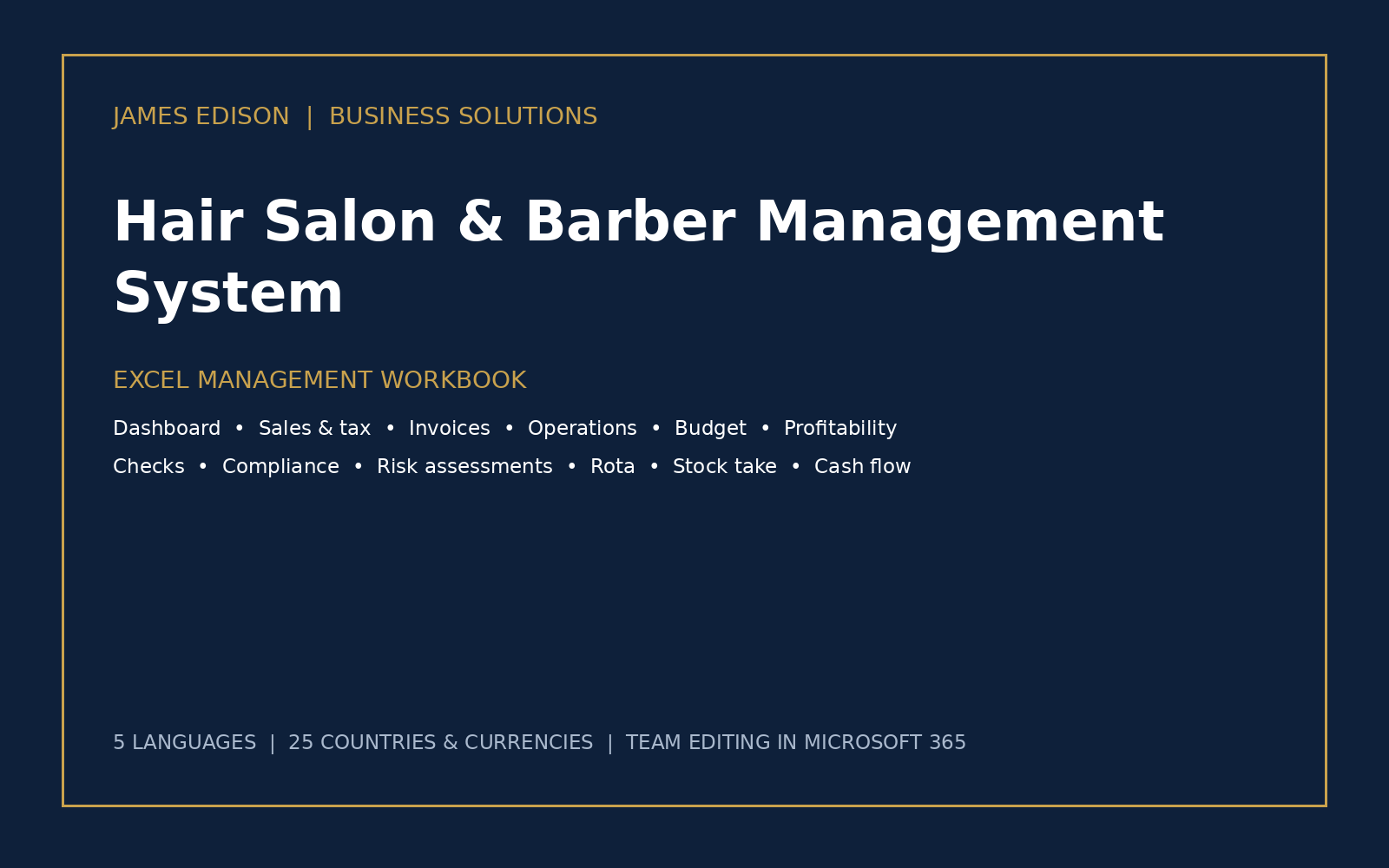
The Hair Salon & Barber Management System is a hair salon spreadsheet in Excel that covers the business side of your salon:
- Services tracker by stylist and service: services done, price, product cost, staff and other costs, revenue and gross profit
- Sales and VAT, invoices and aged debtors
- 12-week cash flow forecast with shortfall warnings
- Quarterly VAT summary, profit and loss, budget vs actual and a pricing calculator
- Daily checks for opening and closing, sterilising tools, towels, stations, patch tests, toilets and cash
- Compliance register pre-filled with treatment liability insurance, chair rental agreements, fire risk assessment, PAT testing, music licence, COSHH and data protection
- Risk assessments pre-filled for dermatitis, sharps, slips, chemicals, electrical equipment, burns and fire
- Stock take pre-loaded with colour, developer, backbar shampoo and conditioner, foils, neck strips, razor blades and retail products
- Staff rota with wage cost
- Dashboard with income, profit, margin, services done, average service price, product cost % of sales, gross margin and a compliance score
It costs £15 once, with no subscription. It works alongside your booking app in Excel 2016 or later, Microsoft 365, Excel for Mac and Excel online, in 5 languages and 25 currencies.
**Get the hair salon spreadsheet →**
Your salon opening checklist
1. Decide your concept: ladies, barber, unisex or specialist. 2. Write a business plan with start-up costs, monthly costs and break-even. 3. Find premises and check the lease and planning use. 4. Register the business and open a business bank account. 5. Choose employed stylists, chair rental or a mix, and write agreements. 6. Arrange insurance: public liability, employers' liability and treatment liability. 7. Complete a fire risk assessment, COSHH assessment and PAT testing. 8. Get a music licence if you play music. 9. Price every service by time, product and staff cost. 10. Set up stock control for colour, backbar and retail. 11. Plan for VAT before you reach the threshold. 12. Run a staff rota and a 12-week cash flow forecast.
Frequently asked questions
How much does it cost to open a hair salon in the UK? Costs vary widely with location and fit-out. The main items are the lease deposit, fit-out (chairs, basins, plumbing, electrics), equipment, initial stock, insurance and marketing. A small barbershop can cost far less than a large salon.
Is chair rental better than employing stylists? Chair rental gives predictable income and lower staff costs; employing stylists gives you more control and all the service income. Many salons use both.
Do I need a licence to open a hair salon? Requirements depend on your area and the services you offer. Check with your local council, especially if you plan to offer beauty or skin treatments as well as hair.
What is a good product cost percentage for a salon? It depends on your service mix. Colour-heavy salons have higher product costs than barbershops. Track it monthly so you know your own figure and spot changes.
What software do salons use? Most use a booking app for appointments. For profit, stock, compliance and cash flow, many owners use a spreadsheet to avoid extra monthly fees.
Opening a salon is about more than great hair. Know your numbers per service, control your stock and stay on top of compliance, and the regular repeat custom will do the rest. The hair salon spreadsheet gives you all of it in one Excel file for £15.