Takeaways are a fixture of every UK town: chip shops, pizzerias, kebab houses, burger bars, curry houses and Chinese takeaways. Delivery apps have expanded the market further, letting a well-run kitchen sell far beyond its walk-in trade.
But takeaways run on thin margins. Food costs move, oil prices change, delivery platforms take commission, staff costs rise and food safety failures can close you down overnight. This guide explains how to open a takeaway in the UK and run it profitably: concept, premises, registration, licences, extraction, food safety, allergens, food cost, delivery, staffing, VAT and cash flow.
1. Choose your takeaway concept
- Fish and chips: a British classic with strong loyalty and frying-heavy operations.
- Pizza: high margins on dough and toppings, oven-led kitchen, strong delivery demand.
- Burgers and chicken: fast service and big delivery volumes.
- Kebab and grill: late-night trade, licensing considerations.
- Curry, Chinese, Thai and other cuisines: bigger menus, more prep.
- Delivery-only kitchen: no walk-in trade, built around apps.
A tight, focused menu is easier to cost, quicker to cook and produces less waste.
2. Write a takeaway business plan
Your takeaway business plan should cover start-up costs (lease, fit-out, extraction, fryers and ovens, refrigeration, signage), monthly fixed costs (rent, rates, utilities, insurance, card fees), staff costs, expected orders per day, average order value, food cost percentage, delivery commission and break-even.
3. Premises, planning and extraction
Hot food takeaways usually need the right planning use class. Check before you sign a lease, because many councils restrict new takeaways in some areas. Kitchen extraction is critical: odour, smoke and noise affect neighbours, and grease-laden ducts are a fire risk. Budget for an extraction system that meets your council's requirements and for regular duct cleaning.
4. Register your food business
You must register your food business with your local council at least 28 days before trading. Environmental health officers will inspect you and award a food hygiene rating, which customers check on delivery apps and in your window. Aim for the top score from day one.
5. Licences
- Late night refreshment licence: in England and Wales, selling hot food or drink between 11pm and 5am usually requires a premises licence covering late night refreshment. Scotland has its own licensing rules for late hours.
- Alcohol licence if you sell alcohol.
- Music licence if you play music.
- Waste carrier and commercial waste contracts, including waste cooking oil collection.
Log every licence and renewal in your compliance register.
6. Food safety and fryer safety
You need a food safety management system based on HACCP principles, such as Safer Food, Better Business in England, with a daily diary. Typical daily checks:
- Opening and closing checks
- Fridge and freezer temperatures recorded
- Cooking and hot-holding probe temperatures recorded
- Food safety diary signed
- Fryer oil checked and changed when needed
- Delivery bags cleaned and food temperatures checked
- Use-by dates checked
Weekly: allergen information reviewed, extraction filters cleaned, cleaning schedule signed off. Monthly: pest control check.
Fryer fires are a major risk. Use thermostats, keep a fire blanket and the right extinguisher for cooking oil fires, and never leave fryers unattended.
7. Allergens
You must tell customers about any of the 14 major allergens in your food, including on delivery apps. Keep an allergen matrix for every dish, train staff and prevent cross-contamination. Allergen mistakes can be fatal and can lead to prosecution.
8. Food cost and gross profit
Every takeaway owner needs to know their GP per item:
GP = (selling price − food cost) ÷ selling price
Track, for each product line: items sold, selling price, cost per item, staff and other costs, revenue, food cost and gross profit. That shows which items carry the business and which lose money. Fish prices, oil, cheese and meat move often, so recost your menu regularly with a takeaway GP calculator.
9. Delivery platforms
Delivery apps bring volume but charge commission. Treat delivery as its own product line with its own pricing. Many takeaways price slightly higher on apps to cover commission, and push customers towards direct ordering. If you employ your own drivers, check licences and insurance, set realistic delivery times and supply hi-vis.
10. Stock and waste
Track frying oil, potatoes, flour, takeaway boxes, carrier bags, sauce sachets, soft drinks and cleaning products with unit cost, opening stock, deliveries, closing count and reorder level. Compare stock used with what sales say you should have used; the gap is waste, over-portioning or theft.
11. Staffing and rota
A takeaway staff rota with shifts, hours and wage cost lets you match staff to demand. Friday and Saturday evenings need more hands; quiet weekday afternoons need fewer.
12. Takeaway risk assessment
Cover allergens, fryer fires, burns, slips on greasy floors, violence on late shifts, delivery driver road risk and cleaning chemicals, each with controls and an annual review.
13. VAT and cash flow
Hot food is standard-rated for VAT, and many takeaways pass the threshold quickly. Price with VAT in mind and get advice from an accountant. Keep a quarterly VAT summary.
A 12-week cash flow forecast shows money in from sales and money out for food, oil, wages, rent, commission and VAT, with warnings for weeks the balance goes negative.
Common mistakes new takeaway owners make
A menu that is too big. More dishes mean more stock, more waste and slower service.
Not recosting. Ingredient prices move. A dish that was profitable last year may not be now.
Ignoring commission. Delivery app orders can look busy and earn little after fees.
Neglecting extraction. Dirty ducts are a fire risk and a hygiene problem.
The numbers to check every month
Review items sold, average selling price, food cost as a percentage of sales, gross margin, net profit and your lowest cash balance in the next 12 weeks. Check them weekly in your first six months.
How to market your takeaway
A high food hygiene rating, great photos and fast replies to reviews win orders on apps and in person. Run a direct ordering channel to avoid commission, offer meal deals on quiet nights and reward regulars. Track which promotions actually lift profit, not just orders.
Your first 90 days running a takeaway
Month one: lock down food safety, allergen information and daily checks so your first inspection goes well. Cost every menu item and set prices to your target GP. Month two: compare stock used with sales every week to spot waste and over-portioning, and review staff hours against busy and quiet periods. Month three: remove or reprice the dishes with the lowest GP, review delivery app profitability and decide whether to push direct ordering harder.
Controlling oil, waste and portions
Frying oil is a major cost. Filter it daily, change it on a schedule and record changes. Use portion scoops, scales and photos of correct plates so every cook serves the same amount. Log waste at the end of each shift. Small portion drift across thousands of orders can erase your profit.
How to work out your break-even
Break-even is the number of orders you need each month to cover all your costs. It is the single most useful number for a new takeaway.
1. Add up your monthly fixed costs: everything you pay whether you are busy or not, such as rent, insurance, vehicle finance, phone, software, marketing and your own minimum drawings. 2. Work out your contribution per order: your price per order minus the variable cost of delivering it (staff time, materials, fuel, products or fees). 3. Divide fixed costs by contribution.
For example, if your fixed costs were £6,000 a month, your average price per order was £14 and your variable cost per order was £6, each order would contribute £8 towards fixed costs. You would need about 750 orders a month just to break even. Everything above that is profit. These figures are illustrations only: use your own.
Knowing your break-even tells you how busy you need to be, whether a quiet month is a problem, and what happens if you raise prices or cut costs. A price rise lowers your break-even straight away, which is why pricing is usually the fastest lever you have.
When and how to raise your prices
Costs rise every year: fuel, insurance, materials, wages and rent. If your prices stay still, your margin shrinks. Review prices at least once a year, and sooner if a major cost jumps.
Signs you are undercharging:
- You are fully booked weeks ahead
- Customers rarely question your price
- Your gross margin is falling month by month
- You are busy but your bank balance is not growing
Change a few prices at a time rather than the whole menu, and protect your most price-sensitive best sellers. Recost every quarter. Track your average price and gross margin monthly after any change, so you can see the effect in your own numbers rather than guessing.
The Takeaway & Fast Food Management System
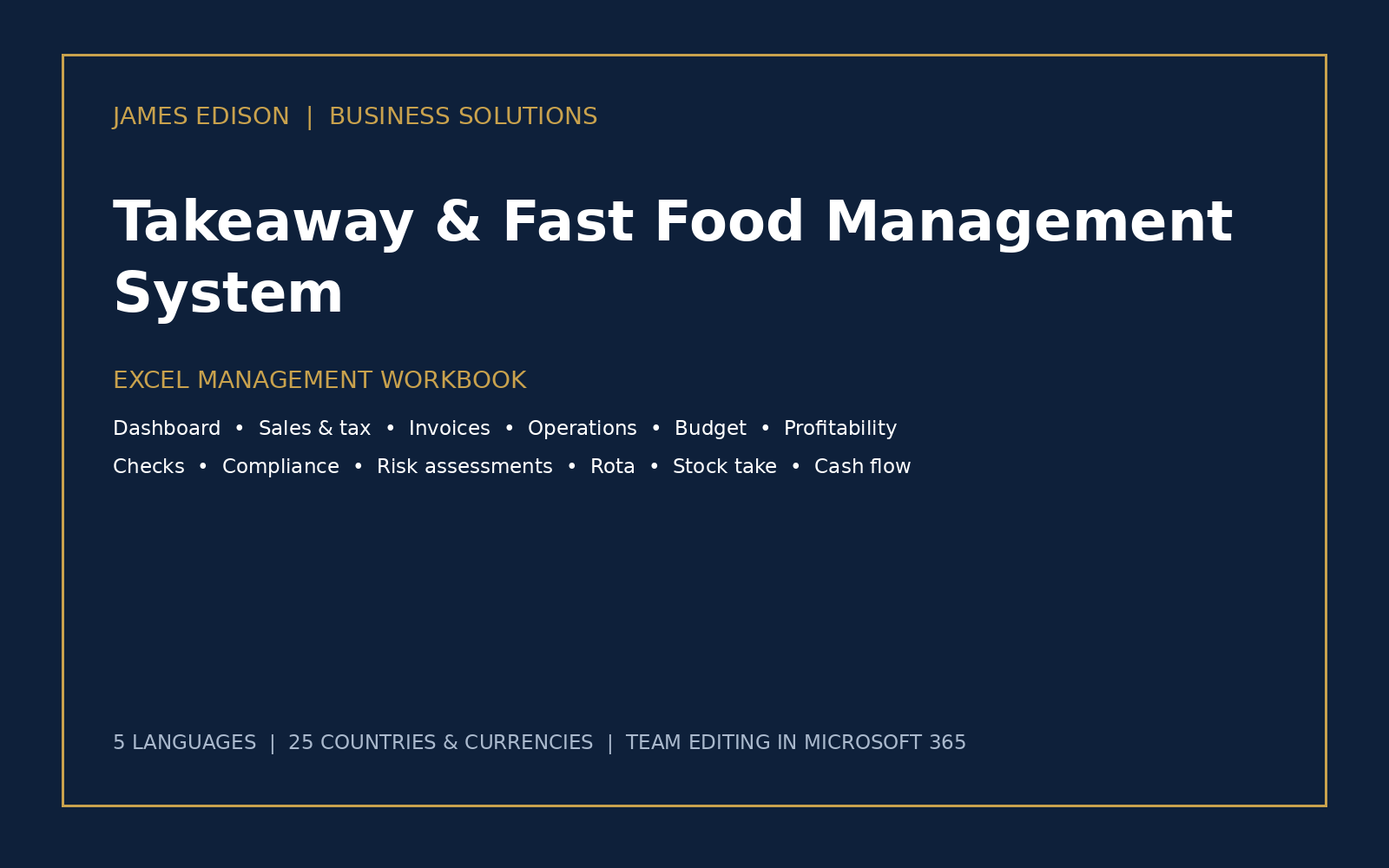
The Takeaway & Fast Food Management System is a takeaway management spreadsheet in Excel built for takeaways:
- Product tracker with items sold, selling price, cost per item, staff and other costs, revenue, food cost and gross profit
- Sales and VAT, invoices and aged debtors
- 12-week cash flow forecast with shortfall warnings
- Quarterly VAT summary, profit and loss, budget vs actual and a pricing calculator
- Daily food safety checks: fridges, probe, diary, fryer oil, delivery bags, use-by dates, opening and closing
- Compliance register pre-filled with food hygiene registration, late night refreshment licence, extraction duct cleaning, gas safety, insurance, fire risk, extinguishers, PAT testing and waste oil collection
- Risk assessments pre-filled for allergens, fryer fires, burns, slips, violence, delivery driver risk and chemicals
- Stock take pre-loaded with frying oil, potatoes, flour, boxes, bags, sauces, soft drinks and cleaning products
- Staff rota with wage cost
- Dashboard with income, profit, margin, items sold, average selling price, stock cost %, gross margin and a compliance score
It costs £15 once, with no subscription, alongside your till or EPOS. Works in Excel 2016 or later, Microsoft 365, Excel for Mac and Excel online, in 5 languages and 25 currencies.
**Get the takeaway management spreadsheet →**
Your takeaway opening checklist
1. Choose a focused concept and menu. 2. Write a business plan with break-even. 3. Check planning use and extraction requirements. 4. Register your food business 28 days before opening. 5. Apply for late night refreshment, alcohol and music licences if needed. 6. Set up your food safety system and daily diary. 7. Build an allergen matrix and train staff. 8. Arrange gas safety, fire risk assessment, extinguishers and PAT testing. 9. Arrange waste and waste cooking oil collection. 10. Cost every menu item and set prices to your target GP. 11. Price delivery app orders to cover commission. 12. Run a rota and a 12-week cash flow forecast.
Frequently asked questions
How much does it cost to open a takeaway? Costs vary with location and equipment. The main items are the lease, fit-out, extraction, cooking equipment, refrigeration and working capital.
Do I need a licence to open a takeaway? You must register as a food business. Late-night hot food sales and alcohol sales usually need licensing.
What is a good food cost percentage for a takeaway? It depends on your menu. Track food cost per item and overall so you know your own figures.
Are delivery apps worth it? They bring volume but charge commission. Price app orders to cover it and encourage direct orders.
What software do takeaways use? Most use an EPOS or till for sales and a spreadsheet for GP, stock, rota, food safety, compliance and cash flow.
A takeaway succeeds on consistent food, a top hygiene rating and tight control of food costs. The takeaway management spreadsheet puts it all in one Excel file for £15.