Tattoos and piercings are mainstream. Good artists have waiting lists, walk-in piercing brings steady trade, and a well-run studio can support several artists and a busy front desk. Opening your own studio is the natural step for many artists who want control over their work and income.
It is also a regulated, high-hygiene business. Council registration or licensing, sterilisation, single-use equipment, clinical waste, age checks and consent records are not optional. This guide explains how to open a tattoo studio or piercing studio in the UK and run it profitably and safely.
1. Choose your studio model
- Private studio: appointment-only custom work. Higher prices, smaller team.
- Street shop: walk-ins, flash and piercing alongside custom work. More volume.
- Piercing-led studio: high footfall, jewellery sales and lower prices per service.
- Guest spots and conventions: extra income and marketing for resident artists.
Decide whether artists will be employed, self-employed on a commission split, or renting space. It drives your costs, control and paperwork.
2. Council registration and licensing
Tattooing and skin piercing are regulated by local authorities. In much of England, both the premises and each practitioner must be registered with the council, which sets byelaws on hygiene. Some areas, including London boroughs, use a licensing system instead, and Scotland has its own licensing regime for skin piercing and tattooing. Expect an environmental health inspection before you open.
Log your registration or licence, its conditions and any renewal date in your compliance register. Make sure every new artist is registered before they start work.
3. Age checks and consent
It is illegal to tattoo anyone under 18 in Great Britain, whatever their parents say. Piercing rules vary by type and location, and some piercings require parental consent or are restricted for young people. Check ID for every client and keep a signed consent form recording health questions, allergies, the work done, aftercare advice and their confirmation of age.
Make it a daily check: consent forms signed and age checked, aftercare advice given to every client.
4. Hygiene and infection control
Infection control is the foundation of a studio's reputation and licence. Daily routine:
- Autoclave cycle logged and regular spore tests recorded (if you reprocess any equipment)
- Single-use needles and tubes used and logged
- Workstations and chairs disinfected between clients, with barrier film
- Sharps bins kept below the fill line
- Toilets cleaned, opening and closing checks
Train every artist in infection control, and arrange a clinical waste collection contract for sharps and contaminated waste.
5. Tattoo studio risk assessment
Your risk assessment should cover:
- Needlestick injuries: sharps bins, no recapping and safe disposal
- Cross-infection between clients: single-use needles, sterilisation, barrier film and hand hygiene
- Allergic reactions to inks, gloves or aftercare products
- Hazardous chemicals such as disinfectants
- Slips, aggression and fire
6. Insurance
You will need treatment liability insurance that covers tattooing and piercing, public liability insurance and employers' liability insurance if you employ anyone. Self-employed artists should have their own treatment cover. Keep proof on file.
7. Tattoo prices
Tattoo prices in the UK are usually set by the hour, half-day, full day or piece, with minimum charges for small work. Piercing is priced per piercing plus jewellery.
For each service, know:
- Sessions done
- Price per session
- Supplies cost per session (needle cartridges, ink, gloves, film, stencil paper)
- Artist and other costs (wages or commission)
Track average price per session, supplies cost as a percentage of sales and gross margin by artist and service. Take non-refundable deposits for appointments to protect against no-shows.
8. Retail: jewellery and aftercare
Piercing jewellery and aftercare products add profit with little extra time. Track them as their own lines with their own costs, and recommend aftercare to every client.
9. Stock
Track needle cartridges, inks, gloves, barrier film, piercing jewellery, stencil paper, aftercare balm and disinfectant with unit cost, opening stock, deliveries, closing count and reorder level. Running out of a needle size or ink colour mid-day costs bookings.
10. Payments, VAT and cash flow
Track deposits, balances and any invoices for guest artists or events as Paid, Open or Overdue.
Busy studios can pass the VAT threshold. Commission and chair-rental arrangements affect how turnover is counted, so take advice from an accountant who knows the industry. Keep a quarterly VAT summary once registered.
A 12-week cash flow forecast shows deposits and session income in, and rent, supplies, artist payments, waste contracts and tax out, with warnings for weeks the balance dips.
Common mistakes new studio owners make
Opening before registration is in place. Trading before the council has registered or licensed the premises and artists can lead to enforcement.
Weak consent records. Missing forms or age checks leave you exposed.
No deposit policy. No-shows on half-day and full-day bookings are expensive.
Underpricing small work. Set up time and supplies are similar for small and medium pieces. Use a minimum charge.
The numbers to check every month
Review services done, average price per session, supplies cost as a percentage of sales, gross margin, retail sales and your lowest cash balance in the next 12 weeks.
How to market your tattoo studio
Portfolios sell tattoos. Post healed work regularly, show each artist's style and reply to every review. Guest spots, conventions and collaborations bring new clients. A clean, welcoming studio and visible hygiene standards win piercing walk-ins. Track where new clients come from.
Your first 90 days as a studio owner
Month one: get council registration for the premises and every artist, insurance, clinical waste collection and hygiene logs in place before opening. Set prices, minimum charges and your deposit policy. Month two: track sessions, supplies cost and artist costs by artist and service, and review no-shows. Month three: look at average price per session and supplies cost as a percentage of sales, and adjust prices or artist arrangements if margins are thin.
Working with self-employed artists
Many studios work with self-employed artists on a commission split or chair rental. Put the arrangement in writing: the split or rent, who supplies needles and ink, who takes deposits, how no-shows are handled and who handles aftercare queries. Check each artist's registration and insurance before they start, and log renewal dates. Track artist costs as a share of revenue so you know what each arrangement really earns the studio.
Building a waiting list
A waiting list is a studio's best asset. Use deposits to secure bookings, keep a cancellation list to fill gaps, and release booking slots on a schedule so clients know when to book. Track the next aftercare check date for every client: a quick message after a few weeks improves healing, reviews and rebookings.
How to work out your break-even
Break-even is the number of sessions you need each month to cover all your costs. It is the single most useful number for a new tattoo studio.
1. Add up your monthly fixed costs: everything you pay whether you are busy or not, such as rent, insurance, vehicle finance, phone, software, marketing and your own minimum drawings. 2. Work out your contribution per session: your price per session minus the variable cost of delivering it (staff time, materials, fuel, products or fees). 3. Divide fixed costs by contribution.
For example, if your fixed costs were £3,500 a month, your average price per session was £120 and your variable cost per session was £50, each session would contribute £70 towards fixed costs. You would need about 50 sessions a month just to break even. Everything above that is profit. These figures are illustrations only: use your own.
Knowing your break-even tells you how busy you need to be, whether a quiet month is a problem, and what happens if you raise prices or cut costs. A price rise lowers your break-even straight away, which is why pricing is usually the fastest lever you have.
When and how to raise your prices
Costs rise every year: fuel, insurance, materials, wages and rent. If your prices stay still, your margin shrinks. Review prices at least once a year, and sooner if a major cost jumps.
Signs you are undercharging:
- You are fully booked weeks ahead
- Customers rarely question your price
- Your gross margin is falling month by month
- You are busy but your bank balance is not growing
Raise hourly and minimum charges for new bookings first, and give clients notice. In-demand artists can raise rates as their waiting lists grow. Track your average price and gross margin monthly after any change, so you can see the effect in your own numbers rather than guessing.
Studio policies
Write down and display your policies: deposits and cancellations, age and ID requirements, touch-ups, design changes and aftercare. Clear policies avoid disputes, protect artists' time and make the studio look professional.
The Tattoo & Piercing Studio Management System
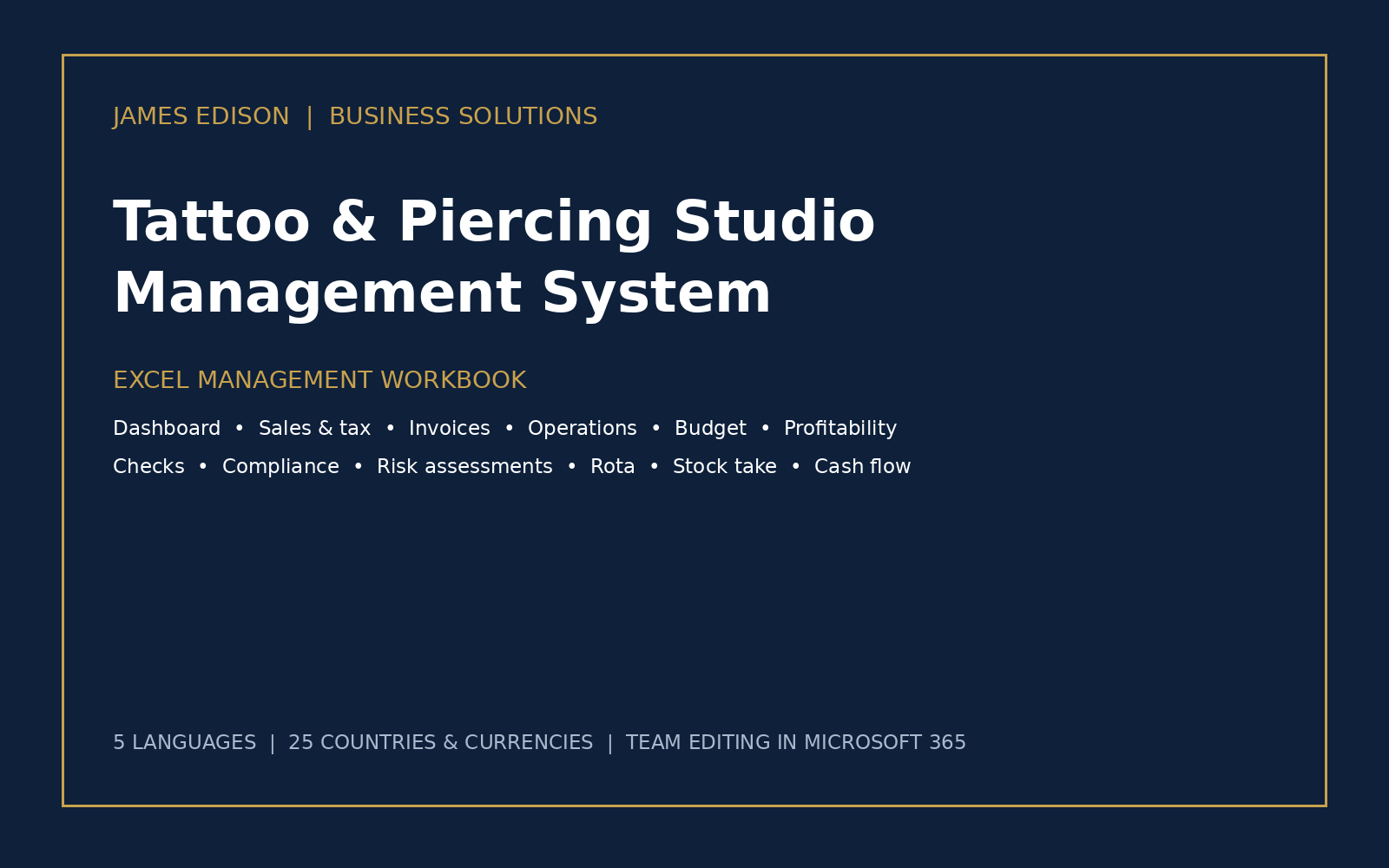
The Tattoo & Piercing Studio Management System is a tattoo studio spreadsheet in Excel built for studios:
- Services tracker by artist: sessions, price, supplies cost, artist and other costs, revenue and gross profit, with a next aftercare check date
- Sales and VAT, invoices and aged debtors
- 12-week cash flow forecast with shortfall warnings
- Quarterly VAT summary, profit and loss, budget vs actual and a pricing calculator
- Daily hygiene checks: autoclave log, single-use equipment, consent and age checks, aftercare, surfaces, sharps bins, toilets and cash
- Compliance register pre-filled with council registration or licence, clinical waste contract, infection control training, treatment liability, public and employers' liability, fire risk, extinguishers, PAT testing and data protection
- Risk assessments pre-filled for needlestick injuries, cross-infection, allergic reactions, chemicals, slips, aggression and fire
- Stock take pre-loaded with needle cartridges, ink, gloves, barrier film, jewellery, stencil paper, aftercare balm and disinfectant
- Staff rota with wage cost
- Dashboard with income, profit, margin, services done, average price, supplies cost %, gross margin and a compliance score
It costs £15 once, with no subscription. Works in Excel 2016 or later, Microsoft 365, Excel for Mac and Excel online, in 5 languages and 25 currencies.
**Get the tattoo studio spreadsheet →**
Your tattoo studio opening checklist
1. Choose your model: private, street shop or piercing-led. 2. Decide how artists are engaged: employed, commission or rental. 3. Find premises and check planning and council requirements. 4. Register or license the premises and every artist with the council. 5. Arrange treatment liability, public liability and employers' liability insurance. 6. Set up sterilisation, single-use equipment and daily hygiene logs. 7. Arrange a clinical waste collection contract. 8. Train everyone in infection control. 9. Use consent forms and ID checks for every client. 10. Set prices, minimum charges and a deposit policy. 11. Track supplies and retail stock with reorder levels. 12. Run a VAT summary and a 12-week cash flow forecast.
Frequently asked questions
Do I need a licence to open a tattoo studio? Tattooing and piercing are regulated by local councils through registration or licensing, depending on where you are. Check with your council before opening.
Can I tattoo someone under 18? No. Tattooing anyone under 18 is illegal in Great Britain, even with parental consent.
How much does it cost to open a tattoo studio? The main costs are premises and fit-out, chairs and workstations, sterilisation equipment, initial supplies, registration, insurance and marketing.
What records should a tattoo studio keep? Consent forms with age checks, hygiene and sterilisation logs, clinical waste records and treatment records.
What software do tattoo studios use? Many use a booking app for appointments and a spreadsheet for income, artist payments, supplies, compliance and cash flow.
A tattoo studio is built on great art and spotless standards. Keep your registration, hygiene and consent records tight and your numbers clear. The tattoo studio spreadsheet puts it all in one Excel file for £15.