The UK is a nation of dog owners, and many breeds need professional grooming every four to eight weeks. That makes dog grooming one of the most reliable repeat-booking businesses you can start. Good groomers often have waiting lists.
What separates a busy groomer from a profitable dog grooming business is the business side: pricing by breed and coat, insurance that actually covers dogs in your care, vaccination and behaviour records, stock control, hygiene and cash flow. This guide explains how to start a dog grooming business in the UK, from a home salon or van to a high street shop.
1. Choose your business model
- Home-based salon: low overheads, but check planning, your mortgage or lease, and your neighbours.
- Mobile dog grooming: a fitted van with water, power and drainage. You go to the customer, so no premises costs but higher vehicle costs.
- High street salon: visibility and walk-ins, plus room for more groomers and retail, but rent and rates.
- Rented space: a room in a vet practice or pet shop. Built-in referrals.
Each has different start-up costs, capacity and pricing. A mobile groomer can usually do fewer dogs a day than a salon but can charge for convenience.
2. Training and qualifications
There is no single legal qualification required to groom dogs in the UK, but recognised training (such as City & Guilds dog grooming qualifications) matters. Insurers often want proof of training, customers trust qualified groomers, and good training teaches safe handling, breed standards and how to spot skin and health problems. Log every groomer's qualifications in your compliance register.
3. Licensing and planning
Grooming on its own does not currently need a licence in England, but if you add services like day care or boarding, licensing rules for animal activities apply. Rules can differ in Scotland and Wales. Check with your local council, and check planning permission if you are converting a garage or outbuilding at home.
4. Insurance every groomer needs
Most dog groomers carry:
- Public liability insurance: covers injury to people or damage to property.
- Care, custody and control insurance: covers injury to or loss of dogs while they are in your care. Standard public liability often excludes animals in your custody, so this is essential.
- Employers' liability insurance: a legal requirement once you employ anyone.
- Equipment insurance and, for mobile groomers, specialist van insurance.
Log every policy in your compliance register with renewal reminders.
5. Vaccination and behaviour records
Before a dog's first groom, record the owner's details, the dog's breed, age, vaccinations, health conditions and behaviour notes, plus emergency contact and vet details. Check vaccination records on arrival and update them each year.
These records protect the dogs, your other customers' dogs and you. Have an emergency vet arrangement in place before you start, so you know exactly who to call if a dog is injured or unwell.
6. Dog grooming prices
Dog grooming prices in the UK vary by area, breed, size, coat condition and service. Build a price list that reflects time and product:
- Full groom by size: small, medium, large and giant breeds
- Bath and brush
- Puppy introduction
- Nail clip as a standalone service
- Hand stripping: slow, skilled and worth a premium
- De-shed treatment
- Matting surcharge for neglected coats
For each service, know the time it takes, product cost (shampoo, conditioner, ear cleaner, blade wear), your staff cost and price. Then calculate profit per hour. Hand stripping might take twice as long as a bath and brush, so price it accordingly. A pricing calculator that works back from your target margin removes the guesswork.
7. Track every groom
Record, by groomer and service:
- Dogs groomed
- Price per groom
- Product cost per groom
- Staff and other costs
- Revenue, total cost and gross profit
From this you can see dogs groomed per month, average price, product cost as a percentage of sales and gross margin. Those figures show you which services and groomers make the most money, and whether you are busy but underpaid.
8. Stock control
Grooming products are a steady cost. Track each item (dog shampoo, conditioner, clipper blades, ear cleaner, grooming towels, disinfectant, disposable gloves, retail treats) with unit cost, opening stock, deliveries, closing count and reorder level. Usage and stock value calculate automatically and items running low get flagged.
Retail (treats, shampoos, brushes) adds profit with almost no extra time. Track it as its own line.
9. Hygiene and safety
A clean, safe salon or van protects dogs, staff and your reputation. Daily checks should include:
- Opening and closing checks
- Vaccination records checked on arrival
- Baths and holding pens disinfected between dogs
- Grooming tables and restraints checked
- Dryers and clippers cleaned and checked
- Toilets cleaned and cash reconciled
Weekly: fire exits clear. Monthly: clipper blades sharpened, first aid kit stocked, chemicals stored and labelled.
Your dog grooming risk assessment should cover:
- Bites and scratches: behaviour notes from the owner, muzzles where needed, two-person handling for difficult dogs.
- Infections passed from animals: gloves, hand washing, vaccinations checked and disinfection.
- Manual handling: lifting large dogs, ideally with a lifting table.
- Slips: wet floors and hair.
- Electrical equipment, chemicals and fire.
10. Waste
Hair, used towels and animal waste need appropriate disposal. Arrange a suitable waste collection contract and log its renewal.
11. VAT
Busy grooming salons can approach the VAT threshold. Once you pass it, you must register and charge VAT, which can mean raising prices or losing margin. Plan ahead with an accountant. Once registered, keep a quarterly VAT summary.
12. Cash flow
Grooming has busy periods (spring shedding, summer and before Christmas) and quieter ones. A 12-week cash flow forecast shows money in, money out for wages, rent, van costs, stock and tax, and warns you of any week the balance goes negative.
13. Dog grooming software: app or spreadsheet?
Booking apps help with appointments and reminders. But most dog grooming software charges monthly and does little for your profit per service, stock, insurance renewals, risk assessments or cash flow. Many groomers use a booking app or diary for appointments and a spreadsheet for the business.
Common mistakes new dog groomers make
Undercharging for difficult coats. Matted, neglected or nervous dogs take far longer. A clear matting surcharge and honest time estimates protect your hourly rate.
Overbooking the day. Rushing dogs is unsafe and stressful. Track how long each breed and service really takes, then build your diary around it.
No records for new dogs. Missing vaccination, health or behaviour information puts you, the dog and other dogs at risk. Make the record a condition of the first booking.
Relying on standard public liability. Many policies do not cover dogs in your care. Check that care, custody and control cover is in place.
Forgetting to rebook. The easiest booking to get is the next one. Rebook every dog before they leave, at the right interval for their coat.
The numbers to check every month
Set aside time each month to review:
1. Dogs groomed compared with last month 2. Average price per groom 3. Product cost as a percentage of sales 4. Gross margin and net profit after wages, rent or van costs 5. Retail sales 6. Lowest cash balance over the next 12 weeks 7. Compliance score: checks up to date, insurance and certificates in date, high risks and stock to reorder
These numbers show whether you are busy and profitable, or just busy.
Growing a dog grooming business
Growth often comes from adding a second groomer or table, extending opening hours, offering add-ons like teeth cleaning, nail clips between grooms and de-shed treatments, and stocking retail products your clients already buy elsewhere. Track each change so you can see whether it adds profit as well as work.
How to market your dog grooming business
Marketing a dog grooming business is about being found, being trusted and being rebooked. Before and after photos are your best advert, so ask owners for permission and post them. Reply to every review, and build relationships with local vets, pet shops, dog walkers and breeders who can refer clients. Rebook every dog before they leave and send a reminder a few days before. A referral reward for existing customers costs little and brings in owners who already trust you. Track where each new client came from so you know which channels to keep.
The most effective marketing for most small dog grooming businesses is free: excellent work, prompt replies, honest prices and asking every happy customer for a review. Paid advertising works best once your pricing, capacity and customer records are in place, because you will know exactly what a new customer is worth to you over a year.
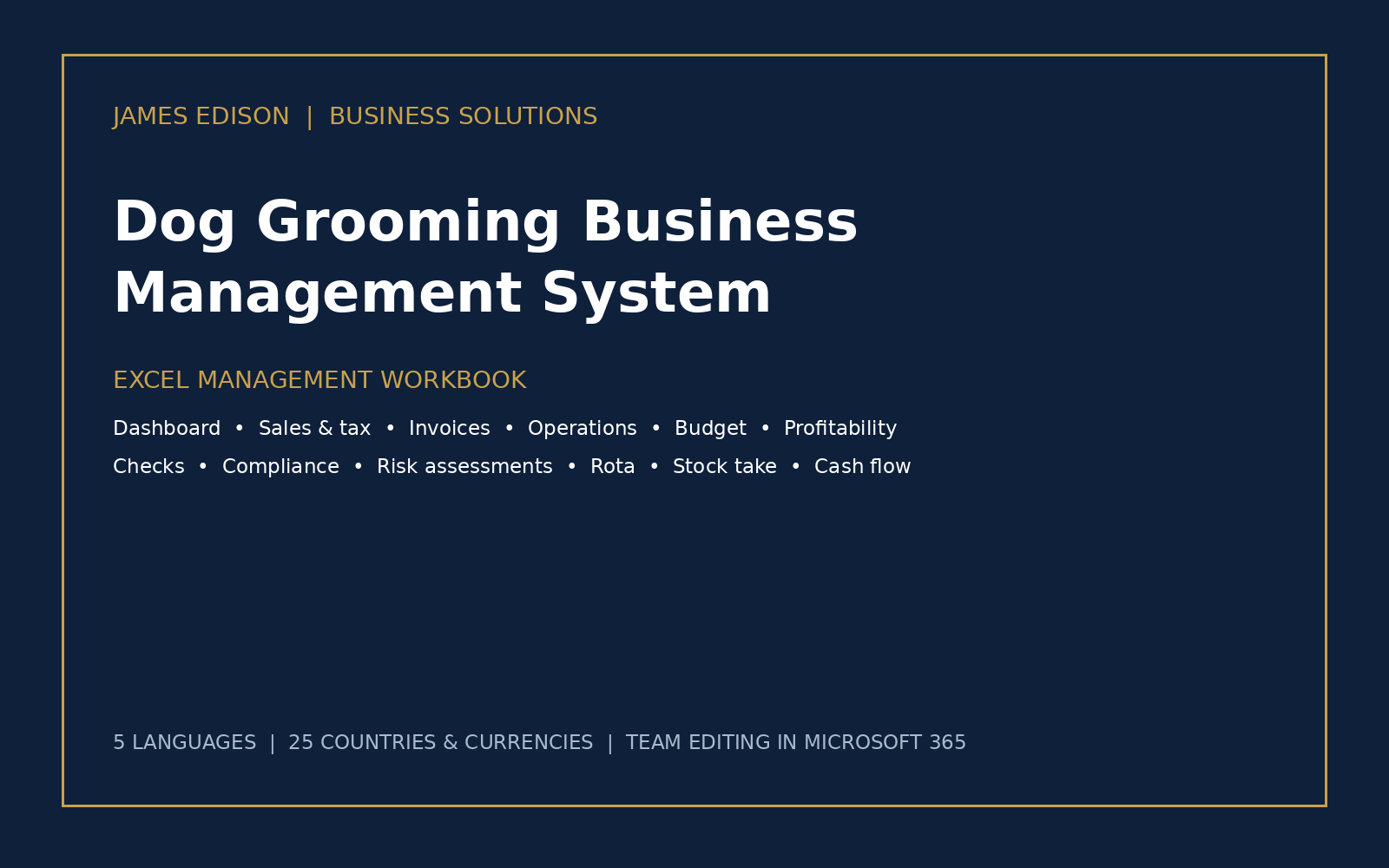
The Dog Grooming Business Management System
The Dog Grooming Business Management System is a dog grooming spreadsheet in Excel built for groomers:
- Grooming tracker by groomer and service: dogs groomed, price, product cost, staff and other costs, revenue and gross profit
- Sales and VAT, invoices and aged debtors
- 12-week cash flow forecast with shortfall warnings
- Quarterly VAT summary, profit and loss, budget vs actual and a pricing calculator
- Daily checks: vaccination records, disinfecting baths and pens, tables and restraints, dryers and clippers, toilets and cash
- Compliance register pre-filled with care, custody and control insurance, emergency vet arrangement, groomer qualifications, waste collection, public and employers' liability, fire risk assessment, PAT testing and data protection
- Risk assessments pre-filled for bites, infections from animals, manual handling, slips, electrical equipment, chemicals and fire
- Stock take pre-loaded with shampoo, conditioner, clipper blades, ear cleaner, treats, towels, disinfectant and gloves
- Staff rota with wage cost
- Dashboard with income, profit, margin, services done, average price, product cost % of sales, gross margin and a compliance score
It costs £15 once, with no subscription. Works in Excel 2016 or later, Microsoft 365, Excel for Mac and Excel online, in 5 languages and 25 currencies.
**Get the dog grooming spreadsheet →**
Your dog grooming start-up checklist
1. Choose your model: home salon, mobile, high street or rented space. 2. Complete recognised grooming training. 3. Check licensing and planning with your council. 4. Arrange public liability, care custody and control, and employers' liability insurance. 5. Set up an emergency vet arrangement. 6. Create client and dog records with vaccinations and behaviour notes. 7. Build a price list by size, coat and service, with a matting surcharge. 8. Set up stock control with reorder levels. 9. Write your risk assessments and daily hygiene checks. 10. Arrange waste collection. 11. Plan for VAT as you grow. 12. Run a rota and a 12-week cash flow forecast.
Frequently asked questions
How much does it cost to start a dog grooming business? A home salon is the cheapest option; a mobile van or high street salon costs more. The main costs are a grooming table, bath, dryers, clippers and blades, products, insurance, training and marketing.
Do you need a licence to be a dog groomer in the UK? Grooming alone does not currently need a licence in England, but rules change and other services like day care do need licences. Check with your local council.
How much do dog groomers charge? Prices vary by region, breed, size and coat. Base yours on the time each service takes, your product costs and your overheads, then compare with local groomers.
What insurance does a dog groomer need? Public liability plus care, custody and control insurance, which covers dogs in your care. Add employers' liability once you employ anyone.
How many dogs can a groomer do in a day? It depends on breeds and services. Track dogs groomed and revenue per hour to find your own sustainable number.
Dog grooming is a repeat-booking business with loyal customers. Price properly, keep good records, stay insured and watch your numbers. The dog grooming spreadsheet gives you all of it in one Excel file for £15.