Millions of UK dogs live with owners who work long days. That has created steady demand for dog walkers, pet sitters, home boarders and daycare. A dog walking business can start with almost no equipment, and the best ones grow into vans, staff, daycare premises and waiting lists.
The business side is where many walkers come unstuck: underpricing, too many dogs in a group, missing records, the wrong insurance, licensing for daycare and boarding, and keys and access codes for dozens of homes. This guide explains how to start a dog walking business in the UK and grow it safely and profitably.
1. Choose your services
- Group walks: several dogs together, usually an hour. Efficient and profitable, but group sizes need limits.
- Solo walks: for reactive, elderly or young dogs. Higher price per walk.
- Puppy visits: short visits for feeding, toilet breaks and play.
- Pet sitting: visits to feed and care for pets while owners are away.
- Home boarding: dogs stay in your home overnight.
- Dog daycare: dogs spend the day at your premises.
Walking and visits are easy to start. Daycare and boarding pay more but come with licensing, premises and staffing requirements.
2. Licensing
Dog walking on its own does not usually need a licence, but local rules can limit how many dogs one person can walk in parks and public spaces, so check your council's rules. Dog daycare and home boarding are licensable activities in England under animal activity licensing, and licensing also applies in Scotland. Expect an inspection, conditions on numbers and premises, and a renewal date. Log your licence in your compliance register.
3. Insurance
Dog walkers need specialist cover:
- Public liability insurance: if a dog in your care injures someone or damages property.
- Care, custody and control cover: for injury, illness or loss of dogs in your care. Standard public liability often excludes animals in your custody.
- Key cover: for lost client keys and the cost of changing locks.
- Employers' liability insurance: a legal requirement once you employ anyone.
- Business vehicle insurance if you transport dogs.
Many clients also want to see a criminal record check because you hold keys to their homes.
4. Client and dog records
Before the first walk, meet the owner and dog and record:
- Owner contact and emergency contact details
- Vet details and consent for emergency treatment
- Vaccination records, checked on arrival and updated yearly
- Health conditions, medication and allergies
- Behaviour notes: recall, reactivity, other dogs, people
- Keys, alarm codes and access instructions
Have an emergency vet arrangement ready, and take canine first aid training.
5. Dog walking prices
Dog walking prices in the UK vary by area. Build yours from your costs:
- Staff cost per walk or place if you employ walkers
- Fuel and van costs for collecting dogs
- Insurance, licensing, marketing and admin
- Your profit
Group walks earn more per hour than solo walks, but group size must stay safe and within local limits. Daycare is priced per full or half day; home boarding per night. Track average price per service and staff cost as a percentage of sales: if staff cost rises faster than prices, margins shrink.
6. Group walk safety
A safe group walk is a well-planned one:
- Count dogs on and off at every stop and at the end of every walk
- Leads, harnesses and recall lines checked daily
- Van crates secure and ventilated, never leaving dogs in a hot van
- Heat and weather checked, avoiding midday heat in summer
- Water, bowls and spare bags carried
- Client keys logged and secure
For daycare, clean and disinfect the area daily, check fire exits weekly and keep the first aid kit stocked.
7. Dog walking risk assessment
Your risk assessment should cover:
- Bites and scratches: behaviour notes, muzzles where needed and safe handling
- Dogs escaping or getting lost: secure leads, GPS tags, recall checks and counting dogs
- Dog fights in groups: group size limits, temperament checks and separating reactive dogs
- Heatstroke: avoiding heat, shade, water and never leaving dogs in vans
- Infections passed from animals: gloves, hand washing and vaccination checks
- Slips on wet and muddy ground
- Lone working
8. Track every service
For each walker and service record walks or places, price each, staff cost each, fuel and other costs, revenue, total cost and gross profit, plus the next booking review date. From this you see walks and places sold, average service price, staff cost as a percentage of sales and gross margin.
9. Stock
Track poo bags, treats, spare leads, towels, daycare dog food, disinfectant, bedding and gloves with unit cost, opening stock, deliveries, closing count and reorder level.
10. Payments, VAT and cash flow
Take payment in advance or by monthly invoice, and track every invoice as Paid, Open or Overdue. An aged debtors report shows who is late.
Most solo walkers stay under the VAT threshold. Daycare businesses can pass it, so plan ahead.
Dog walking income dips during school holidays when owners are at home, and boarding peaks at the same time. A 12-week cash flow forecast smooths the swings.
Common mistakes new dog walkers make
Groups that are too big. More dogs per walk feels profitable until something goes wrong. Keep groups manageable and within local rules.
No meet-and-greet. Taking a dog without knowing its behaviour is a risk. Always meet first.
Wrong insurance. Check that dogs in your care are covered.
Undercharging for solo walks. Solo walks take the same time as a group walk. Price them accordingly.
The numbers to check every month
Review walks and places sold, average service price, staff cost as a percentage of sales, gross margin, unpaid invoices and your lowest cash balance in the next 12 weeks.
How to market your dog walking business
Happy dogs photograph well. Post walk photos (with owner permission), ask for reviews, and get listed locally. Vets, groomers, pet shops and new housing developments are good referral partners. A referral reward costs little. Track where each client came from.
Your first 90 days as a dog walker
Month one: get insurance and a criminal record check, create client and dog record forms, and set prices for each service. Start with solo walks and puppy visits while you learn each dog. Month two: introduce small group walks with dogs that get on well, and track staff and fuel costs per walk. Month three: review which services earn the most per hour and whether you have enough demand to consider a van, a second walker or daycare.
Moving into daycare or boarding
Daycare and home boarding earn more per dog, but they are licensable and need suitable premises, staff ratios, cleaning routines and fire safety. Before applying, check your council's requirements, budget for the licence and any premises changes, and use your cash flow forecast to plan the transition. Track places sold and staff cost as a percentage of sales from the first week.
How to work out your break-even
Break-even is the number of walks you need each month to cover all your costs. It is the single most useful number for a new dog walking business.
1. Add up your monthly fixed costs: everything you pay whether you are busy or not, such as rent, insurance, vehicle finance, phone, software, marketing and your own minimum drawings. 2. Work out your contribution per walk: your price per walk minus the variable cost of delivering it (staff time, materials, fuel, products or fees). 3. Divide fixed costs by contribution.
For example, if your fixed costs were £1,200 a month, your average price per walk was £15 and your variable cost per walk was £6, each walk would contribute £9 towards fixed costs. You would need about 133 walks a month just to break even. Everything above that is profit. These figures are illustrations only: use your own.
Knowing your break-even tells you how busy you need to be, whether a quiet month is a problem, and what happens if you raise prices or cut costs. A price rise lowers your break-even straight away, which is why pricing is usually the fastest lever you have.
When and how to raise your prices
Costs rise every year: fuel, insurance, materials, wages and rent. If your prices stay still, your margin shrinks. Review prices at least once a year, and sooner if a major cost jumps.
Signs you are undercharging:
- You are fully booked weeks ahead
- Customers rarely question your price
- Your gross margin is falling month by month
- You are busy but your bank balance is not growing
Raise group walk prices first for new clients, then give existing clients a month's notice. Most owners value a reliable walker far more than a small saving. Track your average price and gross margin monthly after any change, so you can see the effect in your own numbers rather than guessing.
The Dog Walking & Daycare Business Management System
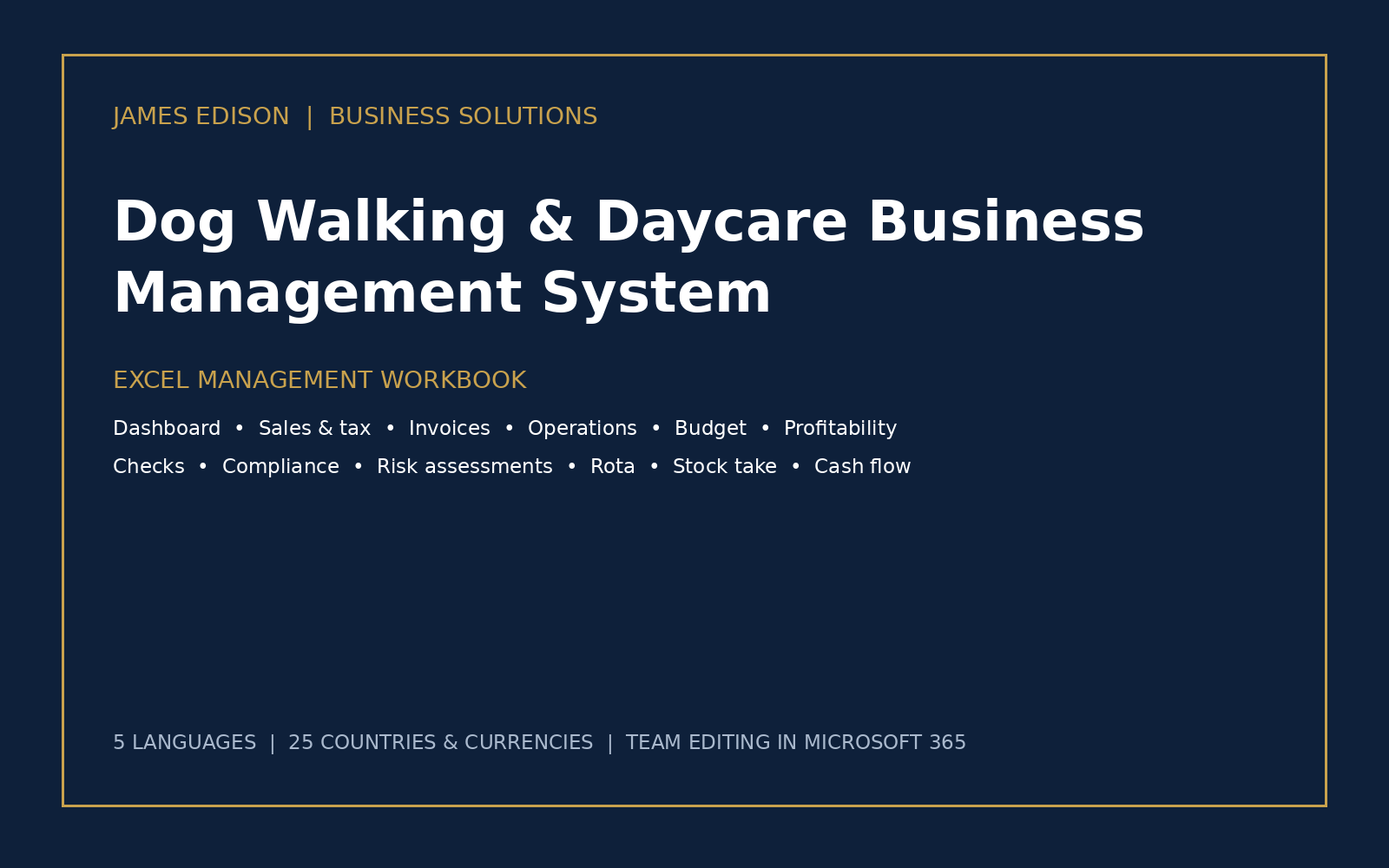
The Dog Walking & Daycare Business Management System is a dog walking business spreadsheet in Excel built for walkers, sitters, boarders and daycare:
- Services tracker by walker: walks or places, price, staff cost, fuel and other costs, revenue and gross profit
- Sales and VAT, invoices and aged debtors
- 12-week cash flow forecast with shortfall warnings
- Quarterly VAT summary, profit and loss, budget vs actual and a pricing calculator
- Daily checks: dogs counted, leads and harnesses, vaccinations, van crates, heat, keys, daycare cleaning and walk kit
- Compliance register pre-filled with animal activity licence, care custody and control insurance, canine first aid, emergency vet, public and employers' liability, vehicle insurance, criminal record checks, data protection and fire risk assessment
- Risk assessments pre-filled for bites, lost dogs, dog fights, heatstroke, animal infections, slips and lone working
- Stock take pre-loaded with poo bags, treats, leads, towels, dog food, disinfectant, bedding and gloves
- Staff rota with wage cost
- Dashboard with income, profit, margin, walks and places sold, average price, staff cost %, gross margin and a compliance score
It costs £15 once, with no subscription. Works in Excel 2016 or later, Microsoft 365, Excel for Mac and Excel online, in 5 languages and 25 currencies.
**Get the dog walking business spreadsheet →**
Your dog walking start-up checklist
1. Choose your services: group walks, solo walks, visits, sitting, boarding or daycare. 2. Check local rules on dogs per walker. 3. Apply for an animal activity licence if you board or run daycare. 4. Arrange public liability, care custody and control, and key insurance. 5. Get a criminal record check and canine first aid training. 6. Meet every dog and record vaccinations, health and behaviour. 7. Set up an emergency vet arrangement. 8. Set prices per walk, visit, day or night. 9. Keep group sizes safe and count dogs on and off. 10. Track stock with reorder levels. 11. Take payment in advance or invoice monthly. 12. Run a 12-week cash flow forecast.
Frequently asked questions
Do I need a licence to be a dog walker? Walking alone does not usually need a licence, but local rules may limit dog numbers. Daycare and home boarding are licensable.
What insurance does a dog walker need? Public liability, care custody and control cover for dogs in your care, and key cover. Add employers' liability if you employ staff.
How many dogs can I walk at once? It depends on local rules, your insurer and the dogs. Keep groups small enough to control safely.
How much do dog walkers charge? Prices vary by area and service. Base yours on your costs per walk plus your profit, then compare locally.
What software do dog walkers use? Many use a booking app or diary for scheduling and a spreadsheet for income, staff costs, records, compliance and cash flow.
A dog walking business is built on trust. Keep dogs safe, records complete and pricing realistic. The dog walking business spreadsheet puts it all in one Excel file for £15.