Flowers mark every big moment: birthdays, anniversaries, weddings, funerals, apologies and Valentine's Day. A florist with a good eye and a loyal local following can build a creative, rewarding business, from a home studio to a high street shop with weddings and corporate accounts.
Flowers are also one of the most perishable stocks in retail. Buy too much and it wilts; buy too little and you turn away orders. Pricing weddings, controlling waste and handling peak days decide whether a florist makes money. This guide explains how to start a florist business in the UK and run it profitably.
1. Choose your florist model
- High street shop: walk-ins, local deliveries, plants and gifts. Visibility, but rent and rates.
- Home or studio florist: online orders, weddings and events with low overheads.
- Wedding and events specialist: high-value work booked months ahead.
- Online delivery florist: built around your website and delivery area.
- Corporate florist: weekly arrangements for offices, hotels and restaurants. Recurring income.
Many florists combine walk-in sales with weddings, funerals and corporate contracts to smooth income through the year.
2. Write a florist business plan
Cover start-up costs (premises, chiller, workbenches, buckets, vases, van, website), monthly fixed costs (rent, rates, utilities, insurance, card fees), staff, expected sales by channel, flower and sundries cost as a percentage of sales, waste and break-even.
3. Setting up
Register the business with HMRC, open a business bank account and arrange public liability insurance, employers' liability insurance if you employ anyone, contents and stock cover, and business vehicle insurance for deliveries. If you play music in the shop, you may need a music licence. Many florists join a flower relay network to send and receive orders nationally. Log all of these in your compliance register.
4. Florist pricing
Florist pricing must cover flowers, sundries, labour and overheads, and still leave profit. For each product line, know:
- Items sold
- Selling price
- Flower and sundries cost per item (stems, foliage, wrap, ribbon, foam, vase)
- Staff and other costs
Track flower and sundries cost as a percentage of sales and gross margin by line. Bouquets, funeral tributes, weddings, plants and gifts all have different margins.
5. Wedding florist pricing
Weddings are high value but time-hungry. Price each wedding from a costed recipe: stems per bouquet, buttonholes, table centres, arches and installations, plus design consultations, preparation days, delivery, set-up and take-down. Take a deposit to secure the date and stage payments before the day. Record each event and its next payment or meeting date.
6. Stock, conditioning and waste
Florist stock control is about freshness as much as quantity. Track roses, seasonal stems, foliage, wrapping, ribbon, flower food, floral foam and vases with unit cost, opening stock, deliveries, closing count and reorder level.
Daily routine:
- Chiller temperature checked
- Buckets cleaned and water changed
- New stock conditioned and dated
- Wilted stock removed and logged as waste
- Delivery orders checked and van loaded
- Opening, closing and cash checks
Weekly: knives and scissors sharpened and cleaned, upcoming wedding and event orders reviewed, fire exits clear.
Logging waste shows you which stems you over-buy. Cutting waste is the fastest way to lift a florist's margin.
7. Peak days
Valentine's Day, Mother's Day and Christmas can bring a big share of the year's sales in a few days. Plan stock, staff, delivery routes and cash well in advance. Pre-orders at set prices help you buy accurately.
8. Deliveries
Deliveries add cost: driver time, fuel and van running. Charge a delivery fee by distance, plan routes and check every order before the van leaves.
9. Florist risk assessment
Cover cuts from knives and thorns, plant allergies and skin irritation, manual handling of heavy buckets, slips on wet floors, chemicals, delivery driving and fire.
10. VAT and cash flow
Busy florists often pass the VAT threshold. Plan your pricing and take advice. Keep a quarterly VAT summary once registered.
Florist cash flow swings with peak days and wedding season. A 12-week cash flow forecast shows money in from sales, deposits and corporate accounts, and money out for wholesale flowers, wages, rent and VAT, with warnings for weeks the balance dips.
Common mistakes new florists make
Over-buying. Unsold flowers go in the bin. Buy to orders and known demand, and log waste.
Underpricing weddings. Consultations, prep and installation take far longer than expected. Price every hour.
Free delivery. Delivery costs real money. Charge for it.
No peak plan. Peak days can make or break your year.
The numbers to check every month
Review items sold, average selling price, flower and sundries cost as a percentage of sales, gross margin, waste and your lowest cash balance in the next 12 weeks.
How to market your florist business
Flowers are made for social media. Post your work daily, show behind-the-scenes and tag venues for weddings. Get listed locally, ask for reviews, and build relationships with wedding venues, funeral directors, hotels and offices. Corporate weekly flowers turn one sale into a year of income.
Your first 90 days as a florist
Month one: set up suppliers, conditioning routines, chiller checks and a waste log. Cost every standard bouquet and set your prices. Month two: compare what you buy with what you sell each week and reduce over-ordering. Start a list of wedding enquiries and quote each from a costed recipe. Month three: approach local offices, hotels and restaurants with a weekly flowers offer, and plan your first peak day at least six weeks ahead.
Buying from wholesalers
Buy little and often to keep stock fresh, and build relationships with one or two wholesalers who understand your style. Compare prices regularly, especially before peak days. Record what you pay per stem so you can recost your bouquets when prices change. Seasonal flowers usually give better value and longer vase life than out-of-season stems.
Corporate accounts
Weekly or fortnightly arrangements for offices, hotels and restaurants turn one sale into recurring income. Agree the frequency, budget and style in writing, invoice monthly and track each account's next delivery date. Corporate work also smooths income between peak days and wedding season.
How to work out your break-even
Break-even is the number of bouquets you need each month to cover all your costs. It is the single most useful number for a new florist.
1. Add up your monthly fixed costs: everything you pay whether you are busy or not, such as rent, insurance, vehicle finance, phone, software, marketing and your own minimum drawings. 2. Work out your contribution per bouquet: your price per bouquet minus the variable cost of delivering it (staff time, materials, fuel, products or fees). 3. Divide fixed costs by contribution.
For example, if your fixed costs were £3,000 a month, your average price per bouquet was £35 and your variable cost per bouquet was £12, each bouquet would contribute £23 towards fixed costs. You would need about 130 bouquets a month just to break even. Everything above that is profit. These figures are illustrations only: use your own.
Knowing your break-even tells you how busy you need to be, whether a quiet month is a problem, and what happens if you raise prices or cut costs. A price rise lowers your break-even straight away, which is why pricing is usually the fastest lever you have.
When and how to raise your prices
Costs rise every year: fuel, insurance, materials, wages and rent. If your prices stay still, your margin shrinks. Review prices at least once a year, and sooner if a major cost jumps.
Signs you are undercharging:
- You are fully booked weeks ahead
- Customers rarely question your price
- Your gross margin is falling month by month
- You are busy but your bank balance is not growing
Recost your core bouquets whenever wholesale prices move, and round prices to clear price points. Introduce new prices on new designs and seasonal ranges first. Track your average price and gross margin monthly after any change, so you can see the effect in your own numbers rather than guessing.
Sustainable floristry
More customers now ask where their flowers come from. Seasonal and locally grown stems, foam-free mechanics, recyclable wrapping and composting waste can all become selling points, especially for weddings. Track the cost of these choices in your product costs so they strengthen your brand without quietly cutting your margin. Mention them clearly on your website and price list, because customers who care about sustainability are often willing to pay for it.
Funeral flowers
Funeral work needs care, speed and accuracy. Confirm the funeral director, date, time and delivery address, the exact wording for cards, and the family's colour and style wishes. Build relationships with local funeral directors, who often recommend florists to families. Price tributes from costed recipes, as with weddings, and take payment at order. Record each order with its delivery date so nothing is missed on a busy day.
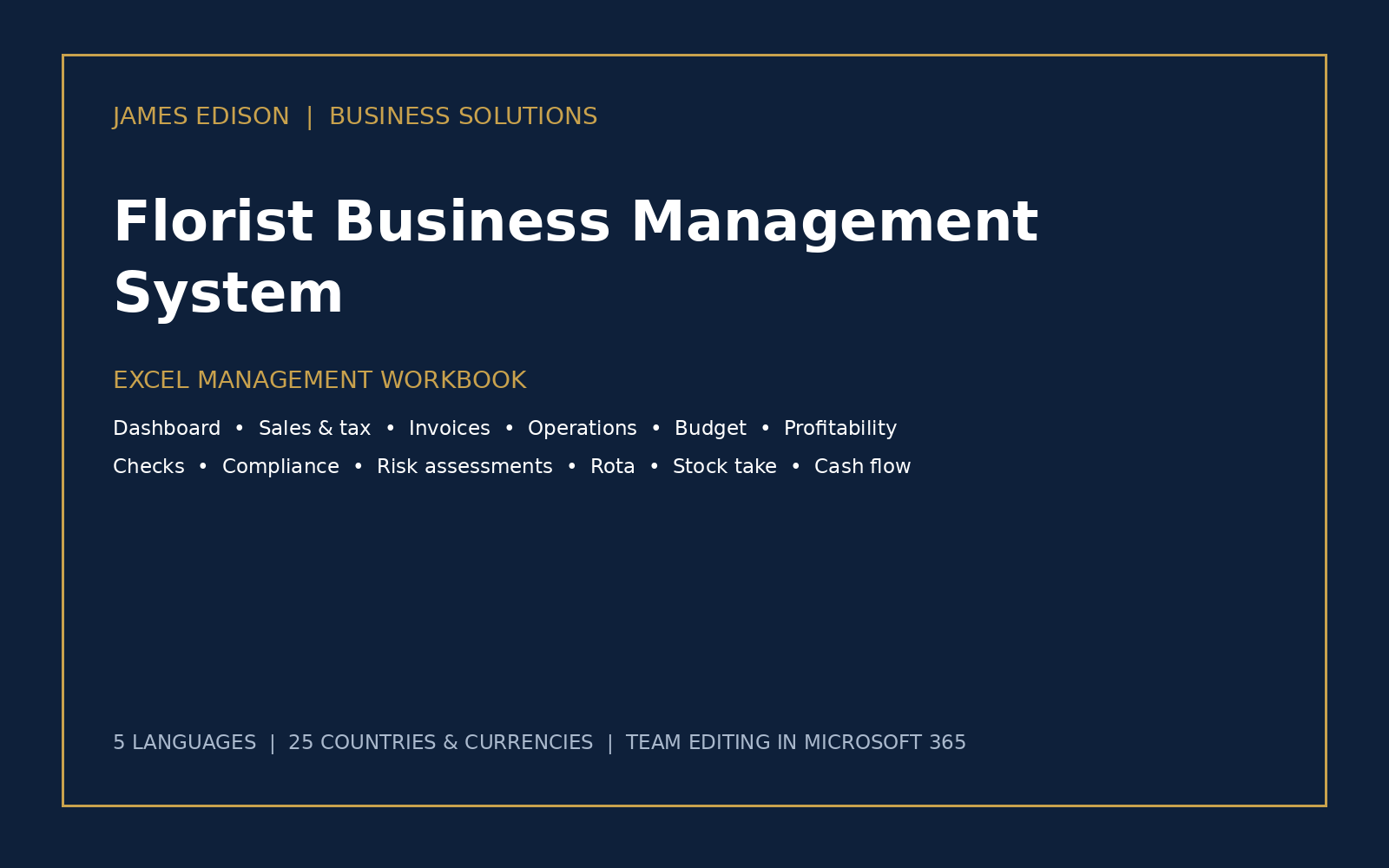
The Florist Business Management System
The Florist Business Management System is a florist business spreadsheet in Excel built for florists:
- Product tracker by channel: items sold, selling price, flower and sundries cost, staff and other costs, revenue and gross profit, with a next order / event due date
- Sales and VAT, invoices and aged debtors for weddings and corporate accounts
- 12-week cash flow forecast with shortfall warnings
- Quarterly VAT summary, profit and loss, budget vs actual and a pricing calculator
- Daily checks: chiller temperature, buckets and water, conditioning, waste, deliveries, opening, closing and cash
- Compliance register pre-filled with flower relay membership, public and employers' liability, fire risk, extinguishers, PAT testing, vehicle insurance, waste carrier, music licence and data protection
- Risk assessments pre-filled for cuts, plant allergies, manual handling, slips, chemicals, delivery driving and fire
- Stock take pre-loaded with roses, seasonal stems, foliage, wrap, ribbon, flower food, floral foam and vases
- Staff rota with wage cost
- Dashboard with income, profit, margin, items sold, average selling price, stock cost %, gross margin and a compliance score
It costs £15 once, with no subscription. Works in Excel 2016 or later, Microsoft 365, Excel for Mac and Excel online, in 5 languages and 25 currencies.
**Get the florist business spreadsheet →**
Your florist start-up checklist
1. Choose your model: shop, studio, weddings, online or corporate. 2. Write a business plan with waste and peak days built in. 3. Register the business and open a business account. 4. Arrange public liability, employers' liability, stock and vehicle insurance. 5. Join a flower relay network if you want national orders. 6. Cost every product line and wedding recipe. 7. Take deposits and stage payments for weddings. 8. Set up daily conditioning, chiller and waste checks. 9. Track stock with reorder levels. 10. Charge for delivery and plan routes. 11. Plan peak days months ahead. 12. Run a VAT summary and a 12-week cash flow forecast.
Frequently asked questions
How much does it cost to start a florist business? A home studio costs far less than a shop. The main items are a chiller or cool space, buckets and tools, initial stock, a van or delivery arrangement, insurance and marketing.
Can I run a florist business from home? Many florists do, focusing on online orders and weddings. Check your lease or mortgage terms and any planning issues if customers visit.
How do florists price weddings? By costing every item from a recipe of stems and sundries, adding design, preparation, delivery and set-up time, then adding profit.
How do I reduce waste as a florist? Buy to orders, condition stock properly, keep the chiller at the right temperature and log every stem you throw away.
What software do florists use? Many use a website and order system for sales and a spreadsheet for costs, stock, waste, events, compliance and cash flow.
A florist business blooms when creativity meets control. Cost every design, cut waste and plan for peak days. The florist business spreadsheet puts it all in one Excel file for £15.