Holiday lets and Airbnb-style short stays can earn more per night than a long-term rental, and the UK's coast, countryside and cities draw visitors all year. Many owners start with one cottage or flat and build a small portfolio.
The rules have tightened. Licensing and registration schemes, gas and fire safety, tax changes, insurance, platform fees, changeovers and reviews all affect whether a holiday let is a good business or an expensive hobby. This guide explains how to start a holiday let business in the UK, whether you list on Airbnb, Booking.com, Vrbo or take direct bookings.
1. Check the rules where your property is
Short-term letting rules vary across the UK and keep changing:
- Scotland: short-term lets need a licence from the local council, with safety conditions. Some areas also have control zones requiring planning permission.
- England: a national registration scheme for short-term lets has been planned, and some areas restrict letting, such as limits on nights in London without planning permission.
- Wales: registration and licensing changes for visitor accommodation are being introduced.
Also check your mortgage, lease and insurance terms; many residential mortgages and leases forbid holiday letting without consent. Log every licence and renewal in your compliance register.
2. Safety: gas, fire, electrics and water
Holiday lets carry legal safety duties:
- Gas safety certificate: an annual check of gas appliances by a registered engineer.
- Fire risk assessment: holiday lets are treated as non-domestic premises for fire safety, so you need a written assessment and suitable alarms, extinguishers or fire blankets and clear escape routes.
- Electrical safety: a periodic inspection of the installation and PAT testing of appliances you provide.
- Smoke and carbon monoxide alarms tested regularly.
- Legionella risk assessment: water left standing between stays can harbour bacteria.
Your holiday let risk assessment should also cover falls on stairs and balconies, slips and cleaning chemicals.
3. Insurance
Standard home insurance usually excludes holiday letting. You need holiday let insurance covering the building, contents, public liability for guests and loss of income. Check whether platform guarantees really cover what you need; they are not a substitute for insurance.
4. Tax
Holiday let income is taxable. The special furnished holiday lettings tax regime was abolished from April 2025, so holiday lets are now taxed more like other property income. VAT can also apply to holiday accommodation once turnover passes the threshold. Take advice from an accountant before you buy or convert a property.
5. Holiday let pricing
Holiday let pricing should be built from costs and demand:
- Nightly rate by season, weekends and events
- Cost per night: cleaning, laundry, utilities, consumables
- Platform and other fees: commission varies by platform and fee model
- Fixed costs: mortgage or rent, insurance, council tax or business rates, maintenance, licensing
Track nights booked, average nightly rate, running cost as a percentage of revenue and gross margin by property and channel. Minimum stays and cleaning fees protect you from short, low-value bookings.
6. Booking channels
Airbnb, Booking.com and Vrbo bring guests but charge fees. Direct bookings through your own website and repeat guests cost less. Track each channel separately so you can see which actually earns the most after fees, not just which brings the most bookings.
7. Changeovers
The changeover is your product. Every stay should follow a checklist:
- Changeover clean done and photographed
- Linen and towels changed
- Welcome pack and essentials restocked
- Damage and breakage check after each stay
- Key safe code changed between guests
Weekly: smoke and CO alarms tested, heating and hot water checked, Wi-Fi and TV working, fire exits clear, guest reviews replied to. Monthly: pest check, first aid kit stocked.
8. Stock
Toilet roll, tea and coffee, toiletries, bin bags, dishwasher tablets, spare linen sets, cleaning products and batteries all need tracking with unit cost, opening stock, deliveries, closing count and reorder level. Running out mid-season costs reviews.
9. Reviews
Reviews drive bookings on every platform. Reply to every review, fix issues quickly and use recurring comments to improve the property.
10. Cash flow
Holiday lets are seasonal. Summer and school holidays may fill the calendar while winter is quiet, but the mortgage, insurance and bills arrive every month. A 12-week cash flow forecast shows bookings income and platform payouts in, and costs, maintenance and tax out, with warnings for any week the balance goes negative.
Common mistakes new holiday let owners make
Ignoring licensing. Letting without a required licence or permission can lead to fines.
Using home insurance. It often does not cover paying guests.
Underestimating costs. Cleaning, laundry, utilities, fees and maintenance add up quickly.
Not tracking by channel. A busy channel can earn less than a quieter one after fees.
The numbers to check every month
Review nights booked, average nightly rate, running cost as a percentage of revenue, gross margin by property and channel, and your lowest cash balance in the next 12 weeks.
How to market your holiday let
Professional photos, a clear description and fast replies win bookings. Encourage repeat guests to book direct, build a simple website and use local events and seasons in your marketing. Track which channels bring the most profit, not just the most nights.
Your first 90 days as a host
Month one: confirm licensing and permissions, get insurance, gas safety, electrical checks and a fire risk assessment, and create your changeover checklist and guest guide. Month two: list on one or two channels, set seasonal rates and minimum stays, and track nights, rates and costs per booking. Month three: compare channels after fees, review your cleaning and laundry costs per night and adjust prices or minimum stays where margins are thin.
Cleaners and changeovers
Reliable cleaners are the backbone of a holiday let. Agree a price per changeover or per hour, provide a clear checklist with photos of how the property should look, and ask for photos after each clean. Keep a backup cleaner for busy weekends. Track cleaning cost per night so you know how short stays affect your margin.
Maintenance and wear
Guests use a holiday let harder than a home. Budget for regular replacement of linen, towels, crockery and small appliances, and schedule deep cleans and maintenance in quiet periods. Record damage after every stay and claim deposits or platform damage protection promptly.
How to work out your break-even
Break-even is the number of nights you need each month to cover all your costs. It is the single most useful number for a new holiday let.
1. Add up your monthly fixed costs: everything you pay whether you are busy or not, such as rent, insurance, vehicle finance, phone, software, marketing and your own minimum drawings. 2. Work out your contribution per night: your price per night minus the variable cost of delivering it (staff time, materials, fuel, products or fees). 3. Divide fixed costs by contribution.
For example, if your fixed costs were £1,400 a month, your average price per night was £95 and your variable cost per night was £24, each night would contribute £71 towards fixed costs. You would need about 20 nights a month just to break even. Everything above that is profit. These figures are illustrations only: use your own.
Knowing your break-even tells you how busy you need to be, whether a quiet month is a problem, and what happens if you raise prices or cut costs. A price rise lowers your break-even straight away, which is why pricing is usually the fastest lever you have.
When and how to raise your prices
Costs rise every year: fuel, insurance, materials, wages and rent. If your prices stay still, your margin shrinks. Review prices at least once a year, and sooner if a major cost jumps.
Signs you are undercharging:
- You are fully booked weeks ahead
- Customers rarely question your price
- Your gross margin is falling month by month
- You are busy but your bank balance is not growing
Raise rates first for peak weeks and events, then review shoulder seasons. Watch occupancy for a few weeks after any change and adjust if bookings fall sharply. Track your average price and gross margin monthly after any change, so you can see the effect in your own numbers rather than guessing.
Guest communication
Clear communication prevents most problems. Send a booking confirmation, a check-in message a few days before arrival with directions, parking and key safe details, and a short check-in message on the first evening to ask if everything is fine. A digital guest guide covering Wi-Fi, heating, appliances, bins, local tips and emergency contacts reduces calls and improves reviews. After checkout, thank guests and invite them to book direct next time.
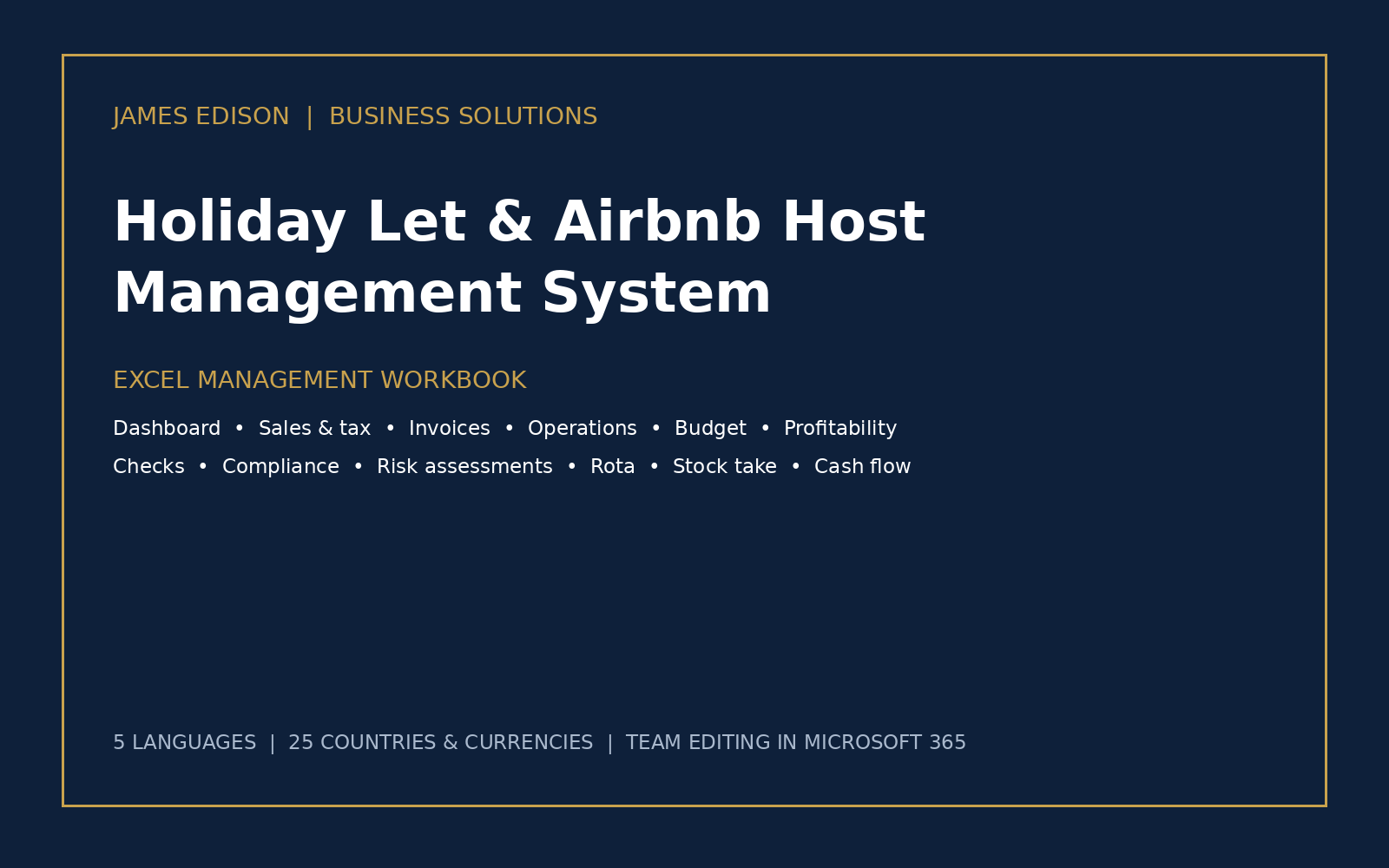
The Holiday Let & Airbnb Host Management System
The Holiday Let & Airbnb Host Management System is a holiday let spreadsheet in Excel built for owners and hosts:
- Bookings tracker by property and channel: nights, nightly rate, cost per night, platform and other fees, revenue and gross profit, with a next safety check / changeover date
- Sales and VAT, invoices and aged debtors
- 12-week cash flow forecast with shortfall warnings
- Quarterly VAT summary, profit and loss, budget vs actual and a pricing calculator
- Changeover and weekly checks: cleaning, linen, welcome pack, damage, key safe, alarms, heating, Wi-Fi, fire exits and reviews
- Compliance register pre-filled with gas safety, electrical inspection, PAT testing, fire risk assessment, extinguishers, holiday let insurance, short-term let licence, legionella assessment, fire alarm service and data protection
- Risk assessments pre-filled for fire, carbon monoxide, slips, legionella, electrics, falls and chemicals
- Stock take pre-loaded with toilet roll, welcome pack items, toiletries, bin bags, dishwasher tablets, spare linen, cleaning products and batteries
- Cleaner rota with wage cost
- Dashboard with income, profit, margin, nights booked, average nightly rate, running cost %, gross margin and a compliance score
It costs £15 once, with no subscription. Works in Excel 2016 or later, Microsoft 365, Excel for Mac and Excel online, in 5 languages and 25 currencies.
**Get the holiday let spreadsheet →**
Your holiday let start-up checklist
1. Check licensing, registration and planning rules for your area. 2. Check mortgage, lease and insurance permissions. 3. Arrange holiday let insurance. 4. Get a gas safety certificate and electrical inspection. 5. Complete a fire risk assessment and fit alarms and equipment. 6. Complete a legionella risk assessment. 7. Take advice on tax and VAT. 8. Set seasonal nightly rates, minimum stays and cleaning fees. 9. Choose channels and track each separately. 10. Create a changeover checklist and stock list. 11. Reply to every review. 12. Run a 12-week cash flow forecast.
Frequently asked questions
Do I need a licence to run an Airbnb in the UK? In Scotland, short-term lets need a licence. Rules in England and Wales are changing, so check with your council before you start.
Does a holiday let need a gas safety certificate? Yes, gas appliances in holiday lets need an annual safety check by a registered engineer.
Do I need a fire risk assessment for a holiday let? Yes. Holiday lets have fire safety duties similar to other non-domestic premises, so a written fire risk assessment is needed.
How should I price my holiday let? Set seasonal nightly rates from your costs and local demand, add cleaning fees and minimum stays, and track profit by channel.
What software do holiday let owners use? Many use a channel manager or platform calendar for bookings and a spreadsheet for income, costs, compliance, changeovers and cash flow.
A holiday let is a property business and a hospitality business at once. Get the licences and safety right, price for profit and run every changeover like clockwork. The holiday let spreadsheet puts it all in one Excel file for £15.