Craft beer has a loyal following across the UK, and many successful breweries started small: a few hundred litres a week, local pubs, bottle shops and a taproom. A microbrewery combines brewing with manufacturing, logistics, sales and hospitality.
It is also regulated and capital-hungry. You need HMRC approval and duty accounting, licensing to sell, food business registration, pressure systems and gas safety, and a clear grip on cost per unit including duty and packaging. This guide explains how to start a microbrewery in the UK.
1. Plan your brewery
Decide your brew length, beer range, packaging (cask, keg, can or bottle) and routes to market: pubs and bars, bottle shops, online, festivals and a taproom. Your packaging choice drives equipment, cost per unit and who you can sell to.
2. Alcohol duty approval and returns
To produce alcohol you need approval from HMRC and must account for alcohol duty. Duty is based on alcohol strength and volume, and small producers may be eligible for relief. Keep accurate brew sheets and batch records, record production volumes and file duty returns on time. Make duty records and volumes updated a weekly check.
3. Licensing and registration
Selling alcohol direct to the public, through a taproom, shop or online, usually needs a premises licence and a personal licence holder to supervise sales. Register with your council as a food business. Check planning permission for brewing and any taproom, including noise, odour and opening hours.
4. Equipment and premises
Brewhouse, fermenters, conditioning tanks, cold storage, cask or keg washer, canning or bottling, water treatment and drainage all cost money and space. Many breweries start with second-hand kit. Pressure systems such as vessels and CO2 installations need examination under a written scheme. Log the examination and renewal dates.
5. Cost per unit and pricing
Work out a full cost per unit for every product: malt, hops, yeast, water, packaging, duty, energy and wastage. Then price for each channel:
- Trade: casks and kegs to pubs and bars
- Retail: cases and cans through shops and online
- Taproom: pints and snacks at higher margin
- Events and festivals
- Merchandise
Track units sold, price per unit, product cost and gross profit by channel. Trade volume keeps the brewery running; taproom and direct sales often carry the margin.
6. Casks, kegs and stock
Casks and kegs are expensive and easy to lose. Track them out and back, clean and check them weekly, and chase missing containers. Track malt, hops, yeast, bottles and caps, labels, CO2, cleaning chemicals and finings with unit cost, opening stock, deliveries, closing count and reorder level.
7. Brewery safety
Your brewery risk assessment should cover:
- CO2 build-up in enclosed spaces: ventilation, CO2 monitors and never entering vessels alone
- Burns from hot liquor and wort
- Cleaning chemicals: caustic and acid cleaners with proper PPE
- Manual handling of sacks, casks and kegs
- Slips on wet floors
- Pressure systems
- Aggression in the taproom
Daily: fermenters and lines cleaned and sanitised, brew sheets completed, fermentation temperatures logged. Weekly: casks and kegs checked, CO2 cylinders secured, duty records updated.
Getting into pubs and bars
Many pubs are tied to breweries or pub companies, which limits where small brewers can sell. Free houses, independent bars, bottle shops and restaurants are the natural first customers. Visit with samples, offer a consistent core range and deliver reliably. A guest beer slot can turn into a permanent line if your beer sells well and arrives on time. Track every trade customer's orders and payment terms, and chase late payments promptly.
Planning brews and stock
Brewing takes time: from brew day to ready beer can take weeks. Plan brews against forecast orders so you neither run out nor tie up cash and tank space in unsold beer. Record a next brew or order date for every core product and review it weekly. Watch best-before dates on packaged beer and freshness on hop-forward styles, because stale beer damages your reputation faster than anything else.
Taproom and events
A taproom turns your brewery into a destination. Regular opening hours, a small food offer, events such as quizzes, tap takeovers and brewery tours, and a shop selling cans and merchandise all add higher-margin sales. Track taproom sales separately from trade so you can see what each channel really earns. Licensing conditions, staffing and noise all need managing from the start.
Packaging decisions
Cask suits local pubs; keg suits bars and longer distances; cans and bottles suit shops and online. Each format has different equipment, cost and shelf life. Many small breweries start with cask and add canning through a mobile canning service before investing in their own line.
Quality control
Taste every batch, record results and keep samples. Consistency builds trade accounts; one bad batch can lose them.
Water and energy
Brewing uses a lot of both. Meter them, fix leaks and review tariffs every year.
VAT and tax
Most small businesses register with HMRC for Self Assessment as sole traders, or run as a limited company once profits grow. You must register for VAT once taxable turnover passes the HMRC threshold, and some services in this sector have specific VAT treatment, so take advice from an accountant before you set prices. Once registered, a quarterly VAT summary of VAT charged, VAT reclaimable and net to pay keeps you ready for every return.
Cash flow: the number that keeps you open
Profitable businesses still run out of money when payments arrive later than bills. A 12-week cash flow forecast shows money in from customers and money out for wages, rent, supplies, insurance and tax, week by week, with a warning for any week the balance goes negative. Review it every week in your first year. It gives you time to chase payments, delay a purchase or arrange finance before a shortfall becomes a crisis.
Your first 90 days
Month one: secure approval, licensing and safety, and brew small test batches to fix recipes and costs. Month two: sign up a first group of local pubs and shops, and track every cask and keg out and back. Month three: review margin by channel and product, and decide where to focus production.
How to work out your break-even
Break-even is the number of firkins you need each month to cover all your costs.
1. Add up your monthly fixed costs: rent, insurance, software, marketing, loan payments and your own minimum drawings. 2. Work out your contribution per firkin: your price minus the variable cost of delivering it. 3. Divide fixed costs by contribution.
For example, with fixed costs of £5,000 a month, a price of £95 per firkin and a variable cost of £45, each firkin contributes £50, so you would need about 100 firkins a month to break even. These figures are illustrations only: use your own. A price rise lowers your break-even straight away, which is why pricing is usually the fastest lever you have.
When to raise your prices
Costs rise every year. If your prices stay still, your margin shrinks. Signs you are undercharging include being fully booked weeks ahead, customers rarely questioning your price and a gross margin that falls month by month. Review trade prices annually with notice to customers, and recheck cost per unit whenever malt, packaging or duty rates change.
Common mistakes
Ignoring duty in pricing. Duty is a major part of cost per unit. Include it from day one.
Losing casks. Untracked containers are expensive to replace.
Too many beers too soon. A short core range is easier to brew consistently and sell.
Thin trade margins. Trade volume alone may not pay the bills. Build direct sales.
The numbers to check every month
Review units sold, average selling price, stock cost % of sales, gross margin, plus overdue invoices and your lowest cash balance in the next 12 weeks. Those numbers tell you whether the business is profitable, not just busy.
How to market your microbrewery
Local identity sells craft beer. Tell your story, show the brewing process, run tap takeovers and meet-the-brewer events, enter festivals and build relationships with independent pubs and bottle shops. A mailing list and online shop turn local fans into regular buyers.
The Microbrewery Management System
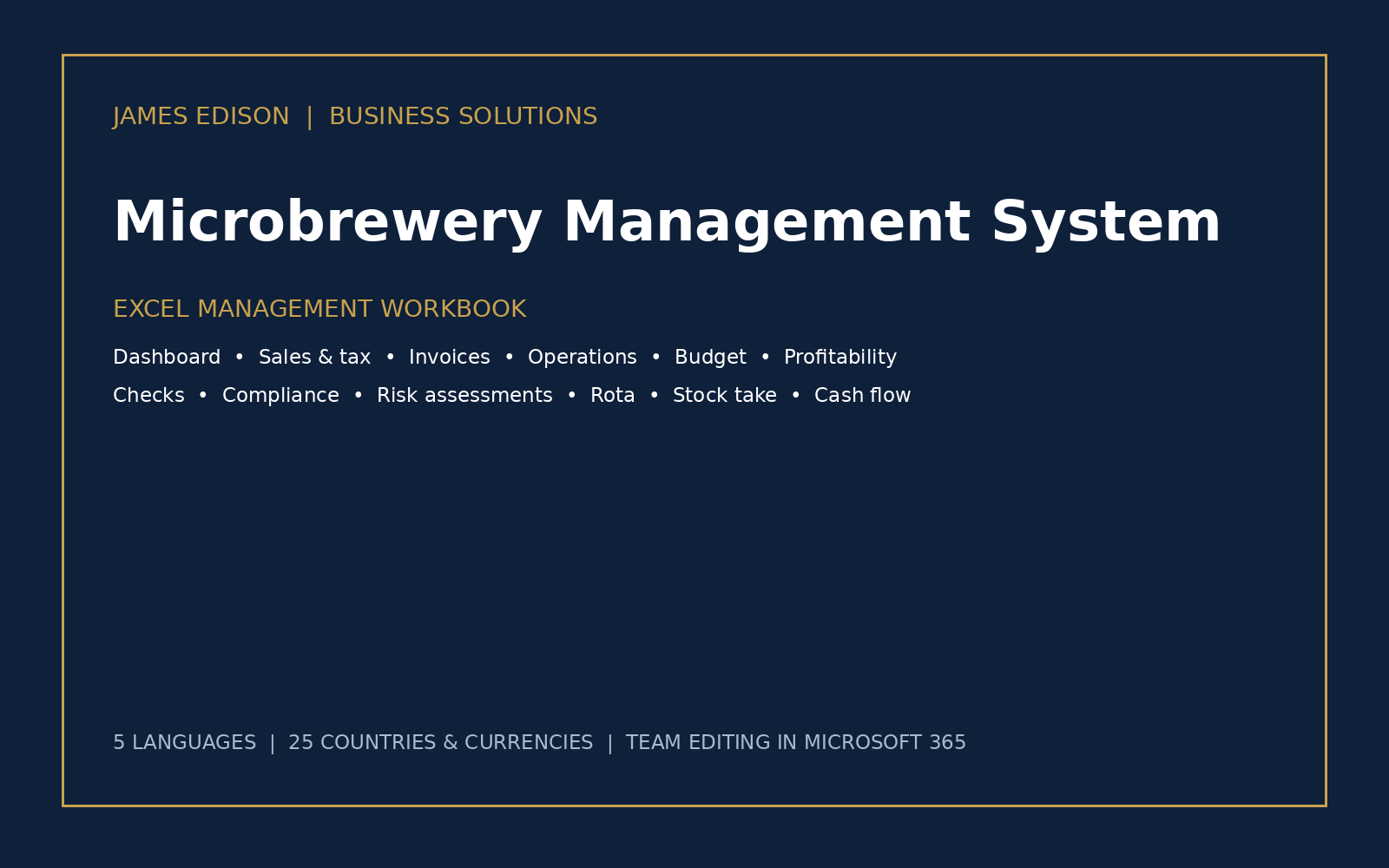
The Microbrewery Management System is a microbrewery spreadsheet in Excel built around this guide:
- Product tracker with units sold, price per unit, cost per unit (ingredients, packaging, duty), staff & other costs, revenue, gross profit and a next brew / order due reminder
- Sales and VAT, invoices and aged debtors with a "chase these first" list
- 12-week cash flow forecast with shortfall warnings
- Quarterly VAT summary, profit and loss, budget vs actual and a pricing calculator
- Daily, weekly and monthly checks including fermenters and lines cleaned and sanitised, brew sheet and batch record completed, fermentation temperatures logged, opening checks completed, closing and lock-up checks completed and more
- Compliance register pre-filled with alcohol duty approval and returns, premises licence (taproom and sales), food hygiene inspection / registration, personal licence holder, pressure systems examination (vessels and CO2), public liability insurance and more, with renewal reminders
- Risk assessments pre-filled for CO2 build-up in enclosed spaces, hot surfaces and burns, hazardous chemicals, manual handling and lifting, slips, trips and falls, high-pressure water, violence and aggression
- Stock take pre-loaded with malt (25kg sacks), hops, yeast, bottles and caps, labels, CO2 gas, brewery cleaning chemicals, finings
- Staff rota with wage cost
- Dashboard with income, profit, margin, units sold, average selling price, stock cost % of sales, gross margin and a compliance score
It costs £15 once, with no subscription and no app. It works in Excel 2016 or later, Microsoft 365, Excel for Mac and Excel online, in 5 languages and 25 currencies.
**Get the microbrewery spreadsheet →**
Your start-up checklist
1. Plan brew length, range, packaging and channels. 2. Apply for HMRC approval to produce alcohol. 3. Set up duty records and returns. 4. Register as a food business with your council. 5. Apply for a premises licence and appoint a personal licence holder if selling direct. 6. Check planning for brewing and a taproom. 7. Arrange pressure systems examination for vessels and CO2. 8. Arrange insurance, fire risk assessment and PAT testing. 9. Calculate cost per unit including duty and packaging. 10. Set prices by channel. 11. Track casks, kegs and ingredients. 12. Run a 12-week cash flow forecast.
Frequently asked questions
Do I need a licence to start a brewery? You need HMRC approval to produce alcohol and must pay duty. Selling direct to the public usually also needs a premises licence and a personal licence holder.
How is alcohol duty calculated? Duty is based on alcohol strength and volume, and small producers may qualify for relief. Check HMRC guidance and keep accurate production records.
How much does it cost to start a microbrewery? Costs depend on brew length, new or used equipment and premises. The main items are brewing kit, fermenters, cold storage, packaging, licences and working capital.
Is a taproom worth it? A taproom can add higher-margin sales and build your brand, but it needs licensing, staff and planning approval.
What software do small breweries use? Many use a spreadsheet for batch costs, duty, sales by channel, stock, compliance and cash flow before investing in brewery software.
How much beer does a microbrewery need to sell to break even? Divide your monthly fixed costs by the contribution per unit after ingredients, packaging and duty. Track it by product and channel.
Should I start with cask, keg or cans? Cask suits local pubs and is cheaper to start; cans and kegs reach wider markets but need more equipment or a mobile canning service.
Getting the systems right from day one is what turns a good microbrewery into a lasting one. The microbrewery spreadsheet puts it all in one Excel file for £15.