Painting and decorating has one of the lowest start-up costs of any trade. A van, ladders, dust sheets and good brushes and you can be working within weeks. That low barrier is also the challenge: there is a lot of competition, and the decorators who earn well are the ones who quote accurately, control materials, manage their diary and look professional.
This guide explains how to start a painting and decorating business in the UK: choosing your market, setting up, insurance, pricing and quoting, materials, job tracking, VAT, cash flow, safety and the systems that keep it all running.
1. Choose your market
Decorators who specialise can charge more and fill their diaries faster. Options include:
- Domestic interiors: living rooms, bedrooms, full house repaints.
- Exteriors: masonry, woodwork, fascias. Seasonal but high value.
- Wallpapering: a skilled niche many decorators avoid, so it often pays well.
- Spraying: kitchen cabinet and furniture respraying is a growing premium niche.
- Commercial: offices, shops and schools, often out of hours.
- Landlord and letting agent turnarounds: fast repaints between tenancies. Steady, repeat work.
Your choice drives your kit, your pricing and your marketing. A cabinet sprayer and a rental turnaround specialist run very different businesses.
2. Setting up the business
Most decorators start as sole traders registered with HMRC for Self Assessment. A limited company can make sense later as profits grow; ask an accountant.
Open a business bank account straight away. Materials, fuel and van costs need to be separate from personal spending so you can see what each job really earns.
3. Insurance and credentials
Most painters and decorators carry:
- Public liability insurance: covers damage to customers' property, such as paint spilled on a carpet, or injury to the public.
- Employers' liability insurance: a legal requirement once you employ anyone.
- Tools and equipment insurance and business van insurance.
Credentials help you stand out: trade body membership, access tower (PASMA) training if you use towers, and clear written guarantee terms. Log every policy, training certificate and membership in a compliance register with expiry dates.
4. How to price painting and decorating
Painter and decorator pricing starts with your real daily cost. Add up yearly overheads (van, fuel, insurance, tools, ladders, sprayer, phone, marketing, accountant) and divide by realistic working days. Preparation days, quoting visits, buying materials and bad-weather days for exterior work all reduce billable time.
Then choose a method:
- Day rate: simple and common, especially for subcontract and commercial work.
- Price per room or per area: customers like it, and you profit if you are efficient.
- Fixed price per job: for defined jobs like a full house interior or a cabinet spray.
Always include materials clearly, either at cost, with a mark-up or within a fixed price. A pricing calculator that works back from your target margin stops you leaving money on the table.
5. How to quote for decorating jobs
Learning how to quote for decorating properly is the biggest single improvement most new decorators can make. A good quote covers:
- Preparation: filling, sanding, caulking, masking. Prep often takes longer than painting.
- Number of coats and the paint system, especially on new plaster or bare wood.
- Materials: paint by litre per area, primer, caulk, filler, masking tape, sanding sheets.
- Access: ladders, towers or scaffold for high areas and exteriors.
- Furniture moving and protection.
- Clean-up and snagging.
Put everything in writing with what is included and excluded. Clear quotes win work and prevent arguments.
6. Control your materials
Paint is expensive, and half-used tins pile up in vans and garages. A simple paint stock spreadsheet with each item (trade emulsion, satinwood, primer and undercoat, decorators caulk, filler, masking tape, sanding sheets, dust sheets), unit cost, opening count, deliveries, closing count and reorder level tells you exactly what you have and what to buy.
Record materials used on every job. It shows whether your quoting assumptions are right and stops you giving away paint for free.
7. Track every job
A decorator job tracker should record:
- Client and address
- Job type (room repaint, full interior, exterior, wallpapering, spraying, commercial, rental turnaround)
- Labour hours, charge per hour and labour cost per hour
- Materials
- Revenue, total cost and gross profit
- Job date and a follow-up due date
The follow-up date is your repeat business engine. Exteriors need redoing every few years; letting agents need regular turnarounds; happy customers often want another room done. Record when to get back in touch and set a reminder.
Over a season your job log shows which work earns most per hour. Many decorators find that spraying and wallpapering beat general repaints, and that rental turnarounds are the most reliable earners.
8. Invoices and getting paid
Invoice on completion, the same day if you can. For larger jobs, take a deposit to cover materials. Track every invoice as Paid, Open or Overdue, and use an aged debtors report to chase late payers in order of size and age.
9. VAT
Register for VAT once taxable turnover passes the HMRC threshold. If most of your customers are homeowners, being VAT-registered makes you more expensive than a non-registered competitor, so plan your pricing carefully as you approach the threshold. An accountant can help you decide.
Once registered, a quarterly VAT summary of VAT charged, VAT reclaimable and net to pay keeps you ready for each return.
10. Cash flow and seasonality
Decorating is seasonal. Exterior work stops in winter, and many homeowners avoid decorating around Christmas. A 12-week cash flow forecast shows money in from invoices due and money out for wages, materials, van costs and tax, with warnings for any week the balance goes negative.
Use the busy months to build a cash buffer, and line up interior and commercial work for winter.
11. Health and safety for decorators
Your painter risk assessment should cover:
- Working at height: the right ladder, three points of contact, no overreaching, towers for longer high work.
- Paint fumes and solvents: low-VOC paints, good ventilation, masks for spraying, regular breaks.
- Lead in old paint: test older surfaces first, use wet sanding, never burn off lead paint, and use FFP3 masks.
- Slips and trips: dust sheets, cables and tins on the floor.
- Manual handling, hazardous chemicals and lone working.
Support it with simple checks: dust sheets and masking in place, rooms ventilated, lead tested on older surfaces, brushes and rollers cleaned, ladders inspected and tagged weekly, spray kit cleaned and filters changed, PPE in good condition.
12. Painting contractor software: do you need it?
Painting contractor software and decorator apps usually charge a monthly subscription. For a busy multi-team firm they can help. For a sole trader or small team, you need one place for quotes, jobs, materials, invoices, VAT, cash flow and compliance, plus a dashboard. A good spreadsheet does that without a monthly fee.
Common mistakes new decorators make
Underestimating preparation. Prep is usually the slowest part of the job. Quote it properly and show it on your quote so customers understand what they are paying for.
Including materials vaguely. "Paint included" invites disputes over brand, colour and number of coats. Specify the product and coats.
No deposit on big jobs. Materials for a full house can be hundreds of pounds. A deposit covers them and confirms the booking.
Not following up. Every finished job is a lead for the next room, the exterior in a few years or a neighbour's house. Record a follow-up date and use it.
The numbers to check every month
Review average job value, labour hours sold, materials billed, labour margin, overdue invoices and your lowest cash balance in the next 12 weeks. Together they tell you whether your quotes are accurate and whether you can afford the quieter winter months.
Growing your decorating business
Most decorators grow by adding a skilled niche (spraying, wallpaper, period properties), taking on a second decorator or apprentice, or winning letting agent and commercial accounts that provide steady work through winter. Track each job type so you know which direction is most profitable.
How to market your painting and decorating business
Marketing a decorating business is about being found, being trusted and being rebooked. Photos of finished rooms and exteriors sell your work better than anything you can write, so take them on every job. Ask happy customers for reviews straight away, and leave a card with neighbours when you work on a street. Letting agents, property managers and builders can provide a steady flow of work if you are reliable and quick. Track where each enquiry comes from so you invest in the channels that actually bring paying jobs.
The most effective marketing for most small decorating businesses is free: excellent work, prompt replies, honest prices and asking every happy customer for a review. Paid advertising works best once your pricing, capacity and customer records are in place, because you will know exactly what a new customer is worth to you over a year.
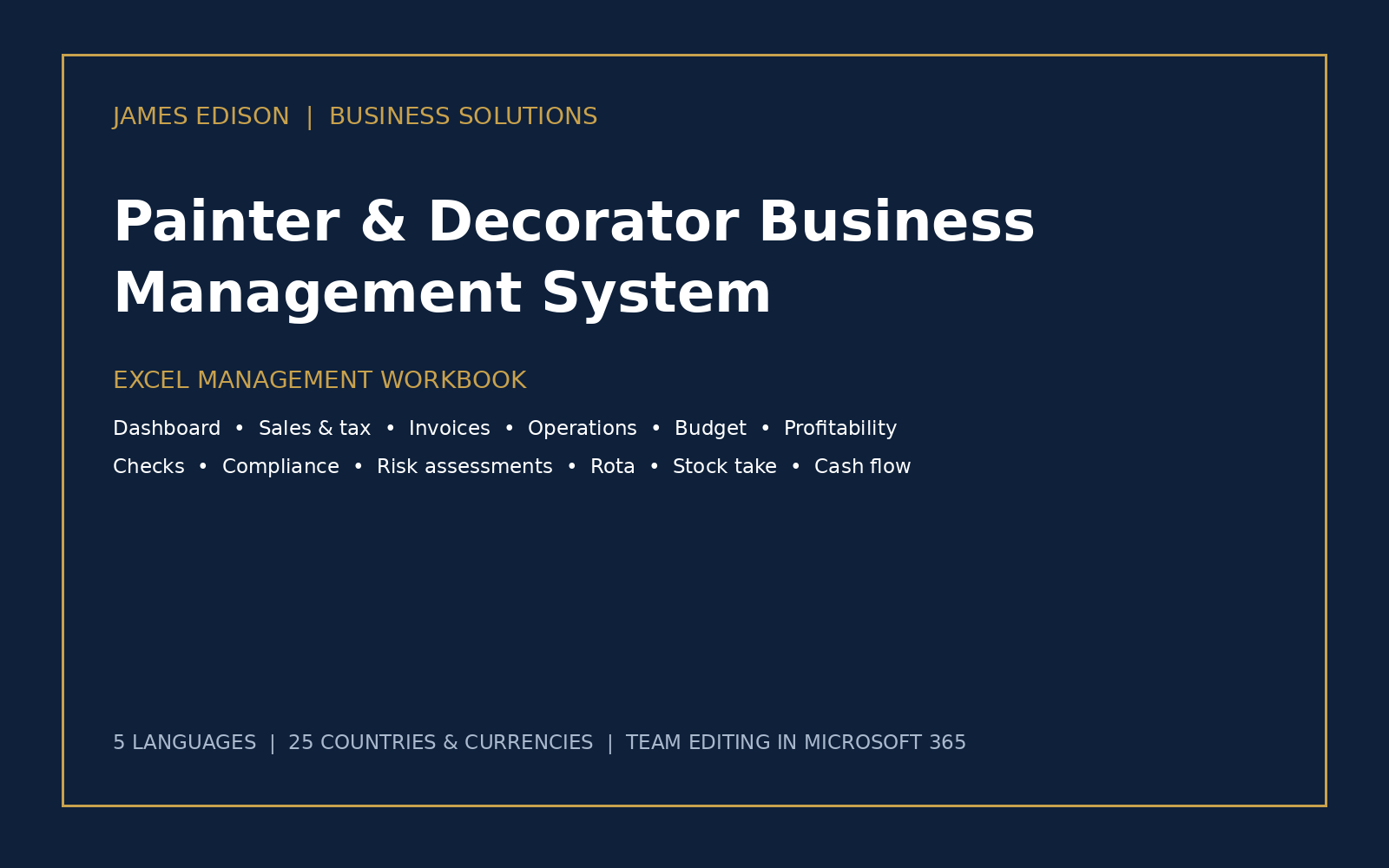
The Painter & Decorator Business Management System
The Painter & Decorator Business Management System is a painter and decorator spreadsheet in Excel built around this guide:
- Job tracker with labour hours, charge and cost per hour, materials, revenue, gross profit and a follow-up due reminder
- Sales and VAT, invoices and aged debtors with a "chase these first" list
- 12-week cash flow forecast with shortfall warnings
- Quarterly VAT summary, profit and loss, budget vs actual and a pricing calculator
- Daily and weekly checks: protection, ventilation, lead testing, brush cleaning, ladder inspection, spray kit and PPE
- Compliance register pre-filled with access tower training, guarantee terms, trade body membership, insurance, waste carrier registration and hazardous substances assessment
- Risk assessments pre-filled for working at height, paint fumes, lead, slips, manual handling, chemicals and lone working
- Materials stock take pre-loaded with emulsion, satinwood, primer, caulk, filler, masking tape, sanding sheets and dust sheets
- Staff rota with wage cost
- Dashboard with income, profit, margin, average job value, labour hours sold, materials billed, labour margin and a compliance score
It costs £15 once, with no subscription and no app. Works in Excel 2016 or later, Microsoft 365, Excel for Mac and Excel online, in 5 languages and 25 currencies.
**Get the painter and decorator spreadsheet →**
Your decorating business start-up checklist
1. Choose your market: interiors, exteriors, wallpapering, spraying, commercial or rental turnarounds. 2. Register as a sole trader or limited company and open a business account. 3. Arrange public liability, employers' liability, tools and van insurance. 4. Get access tower training if you use towers and log the renewal. 5. Work out your daily cost and choose day rate, per room or fixed price. 6. Write detailed quotes covering prep, coats, materials and access. 7. Keep a paint and materials stock list with reorder levels. 8. Log every job with hours, materials and a follow-up date. 9. Take deposits on larger jobs and invoice on completion. 10. Plan for VAT as you approach the threshold. 11. Run a 12-week cash flow forecast for the winter dip. 12. Write risk assessments for height, fumes and lead, and keep weekly ladder checks.
Frequently asked questions
How much does it cost to start a painting and decorating business? It is one of the cheapest trades to start. The main costs are a van, ladders and access equipment, brushes, rollers and dust sheets, insurance and marketing.
How much should a painter and decorator charge per day? Work out your daily cost from yearly overheads and realistic working days, add your profit, and check local rates. Specialist work like spraying and wallpapering usually commands higher rates.
How do I quote for a decorating job? Measure the areas, allow for preparation, coats, materials, access, furniture moving and clean-up, and put the inclusions and exclusions in writing.
Do painters and decorators need insurance? Public liability insurance is strongly recommended, and employers' liability is a legal requirement once you employ anyone.
What software do decorators use? Many sole traders use a spreadsheet for quotes, jobs, materials, invoices and cash flow, which avoids monthly app subscriptions.
A decorating business is built on accurate quotes, controlled materials and repeat customers. Get those systems right from day one and the work keeps coming back. The painter and decorator spreadsheet gives you all of it in one Excel file for £15.