With millions of privately rented homes in the UK, landlords need help finding tenants, collecting rent, handling repairs and keeping up with fast-changing regulation. A property management business can build recurring monthly income from a growing portfolio of managed properties.
Letting is one of the most regulated small businesses in the UK. Redress schemes, client money protection, deposit protection, safety certificates, tenant checks, anti-money laundering rules and data protection all apply. This guide explains how to start a property management business or letting agency in the UK.
1. Choose your services
- Fully managed: monthly fee for rent collection, maintenance, inspections and compliance.
- Rent collection only: lower fee, less work.
- Tenant find: one-off fee for marketing, viewings, referencing and set-up.
- Block management: service charges, communal repairs and freeholder or residents' company work.
- Extras: inventories, renewals and maintenance arranging fees.
Fully managed and block management build recurring income; tenant find brings one-off fees.
2. Regulation
Key obligations include:
- Redress scheme membership: letting agents in England must belong to a government-approved redress scheme.
- Client money protection: agents in England holding client money must belong to an approved scheme.
- Letting agent registration and a code of practice in Scotland.
- Tenant fees rules: in England most fees charged to tenants are banned.
- Deposit protection in a government-approved scheme.
- Anti-money laundering supervision for letting agents above certain rent levels.
- Data protection registration.
Log each in your compliance register with renewal dates.
3. Property compliance
For every property track gas safety certificates, electrical safety reports, energy performance certificates, smoke and carbon monoxide alarms, licensing where required and deposit protection. A missed certificate can stop a landlord serving notice or lead to fines. Make certificates tracked per property a weekly check.
4. Client money
Hold client money in a separate client account, reconcile it daily, use dual sign-off for payments and send landlords regular statements. Fraud and errors with client money are among the biggest risks in the industry.
5. Pricing
Fees are usually a percentage of rent or a fixed monthly fee per property, plus one-off fees. Track units managed and fees, average fee per unit, direct cost per unit and gross margin. Know your cost per managed property: staff time, inspections, software, marketing and insurance.
6. Daily and weekly operations
- Daily: maintenance requests logged and assigned, client money reconciled, keys logged out and back in
- Weekly: deposits protected and certificates issued, tenant referencing and right to rent checks where required, rent arrears chased, inspections booked, certificates tracked, alarms tested at tenancy start, complaints logged
- Monthly: landlord statements sent
Your risk assessment should cover lone working at viewings and inspections, aggression, driving, slips, asbestos in older properties, carbon monoxide and client money fraud.
Rent arrears and difficult tenancies
Arrears are the most stressful part of property management for landlords and agents. Chase late rent the day it is missed, keep a written record of every contact and agree payment plans in writing. Know the notice and court processes that apply where you operate, and make sure the property's compliance paperwork is in order, because missing certificates or unprotected deposits can affect a landlord's ability to recover possession. Report arrears to landlords quickly and clearly.
Inspections and maintenance
Regular inspections protect the property, the landlord and the tenant. Schedule them at sensible intervals, give proper notice, take photos and send a short report to the landlord. Log every maintenance request, assign it to a trusted contractor, and follow it through to completion. Agree spending limits with each landlord so you can act quickly on urgent repairs. Record a next inspection or renewal date for every property so nothing slips.
A small network of reliable plumbers, electricians, gas engineers and handymen is one of your most valuable assets. Pay them promptly and they will prioritise your properties.
Growing your portfolio
Most letting agencies grow through referrals from existing landlords, local networking and partnerships with mortgage brokers, solicitors and accountants. Buying a small rent roll from a retiring agent can also add managed properties quickly. Before taking on any portfolio, check the compliance status of every property, because problem properties take far more time than average.
Track units under management, fees per unit and time spent per property each month. Growth that brings more work but lower average fees is not real growth.
Communicating with landlords and tenants
Respond to messages quickly, put important decisions in writing and keep a log of every call and email. Landlords stay with agents who keep them informed; tenants who feel heard look after the property and pay on time. Clear communication also protects you if a dispute reaches a redress scheme.
Choosing software and systems
Start simple: a reliable way to track tenancies, certificates, rent, arrears and maintenance. Add property software as the portfolio grows, but keep your own record of profitability per landlord.
Ending tenancies well
Check-outs, inventory comparisons and deposit returns are where disputes happen. Use dated photos and a clear inventory at the start, and follow the deposit scheme's process at the end.
VAT and tax
Most small businesses register with HMRC for Self Assessment as sole traders, or run as a limited company once profits grow. You must register for VAT once taxable turnover passes the HMRC threshold, and some services in this sector have specific VAT treatment, so take advice from an accountant before you set prices. Once registered, a quarterly VAT summary of VAT charged, VAT reclaimable and net to pay keeps you ready for every return.
Cash flow: the number that keeps you open
Profitable businesses still run out of money when payments arrive later than bills. A 12-week cash flow forecast shows money in from customers and money out for wages, rent, supplies, insurance and tax, week by week, with a warning for any week the balance goes negative. Review it every week in your first year. It gives you time to chase payments, delay a purchase or arrange finance before a shortfall becomes a crisis.
Your first 90 days
Month one: complete registrations, schemes, client account and insurance, and set your fee structure. Month two: win your first landlords, often through referrals and existing contacts, and set up certificate and inspection tracking for every property. Month three: review fee income per unit against the time each property takes, and reprice or change services where needed.
How to work out your break-even
Break-even is the number of managed properties you need each month to cover all your costs.
1. Add up your monthly fixed costs: rent, insurance, software, marketing, loan payments and your own minimum drawings. 2. Work out your contribution per managed property: your price minus the variable cost of delivering it. 3. Divide fixed costs by contribution.
For example, with fixed costs of £4,000 a month, a price of £90 per managed property and a variable cost of £10, each managed property contributes £80, so you would need about 50 managed properties a month to break even. These figures are illustrations only: use your own. A price rise lowers your break-even straight away, which is why pricing is usually the fastest lever you have.
When to raise your prices
Costs rise every year. If your prices stay still, your margin shrinks. Signs you are undercharging include being fully booked weeks ahead, customers rarely questioning your price and a gross margin that falls month by month. Review fees annually with notice to landlords, and charge separately for extra work rather than absorbing it.
Common mistakes
Missing certificates. Lapsed gas or electrical certificates can cause serious problems for landlords and agents.
Mixing client money. Always use a separate client account.
Underpricing management. Problem properties take far more time than average. Price for it.
Ignoring arrears. Chase early and consistently.
The numbers to check every month
Review units managed and fees, average fee per unit, direct cost % of sales, gross margin, plus overdue invoices and your lowest cash balance in the next 12 weeks. Those numbers tell you whether the business is profitable, not just busy.
How to market your property management business
Landlords choose agents on trust, compliance knowledge and responsiveness. Publish clear fees, share compliance guides, ask landlords for reviews and build relationships with mortgage brokers, solicitors and accountants. Track where each landlord came from.
The Property Management Business Management System
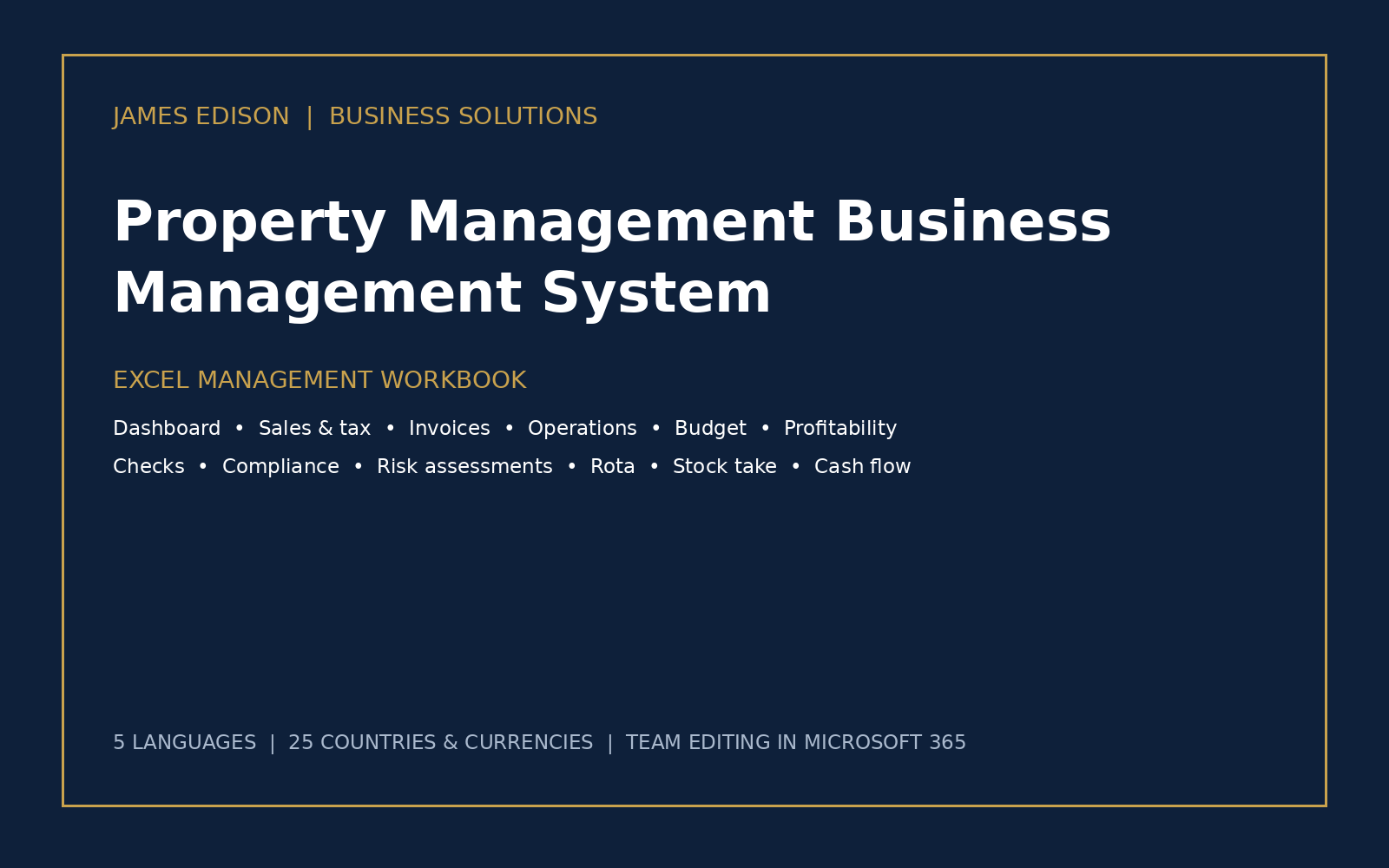
The Property Management Business Management System is a property management spreadsheet in Excel built around this guide:
- Service tracker with units, fee per unit, direct cost per unit, staff & other costs, revenue, gross profit and a next inspection / renewal reminder
- Sales and VAT, invoices and aged debtors with a "chase these first" list
- 12-week cash flow forecast with shortfall warnings
- Quarterly VAT summary, profit and loss, budget vs actual and a pricing calculator
- Daily, weekly and monthly checks including maintenance requests logged and assigned, client money reconciled, keys logged out and back in, deposits protected and certificates issued, tenant referencing and right to rent checks done and more
- Compliance register pre-filled with property redress scheme membership, client money protection scheme, professional indemnity insurance, anti-money laundering supervision, letting agent registration, data protection registration and more, with renewal reminders
- Risk assessments pre-filled for lone working, violence and aggression, long hours driving, slips, trips and falls, asbestos in older buildings, carbon monoxide from appliances, fraud and client money errors
- Stock take pre-loaded with key tags and key safes, spare smoke and CO alarms, batteries for alarms and remotes, to let boards, inventory packs, euro cylinders, office stationery, disposable gloves
- Staff rota with wage cost
- Dashboard with income, profit, margin, units managed and fees, average fee per unit, direct cost % of sales, gross margin and a compliance score
It costs £15 once, with no subscription and no app. It works in Excel 2016 or later, Microsoft 365, Excel for Mac and Excel online, in 5 languages and 25 currencies.
**Get the property management spreadsheet →**
Your start-up checklist
1. Choose services: fully managed, rent collection, tenant find or block. 2. Register the business and open a separate client account. 3. Join a redress scheme and client money protection scheme where required. 4. Register as a letting agent where required. 5. Register for anti-money laundering supervision if needed. 6. Register for data protection. 7. Arrange professional indemnity and public liability insurance. 8. Set fees and publish them clearly. 9. Track certificates, deposits and alarms for every property. 10. Reconcile client money daily. 11. Schedule inspections and send landlord statements. 12. Run a 12-week cash flow forecast.
Frequently asked questions
Do letting agents need a licence? There is no single UK licence, but agents in England must join a redress scheme and client money protection scheme, and agents in Scotland must register.
Can letting agents charge tenants fees? In England, the Tenant Fees Act bans most fees charged to tenants. Check the rules where you operate.
How do property managers charge? Usually a percentage of rent or a fixed monthly fee per property, plus one-off fees for tenant finding, renewals and inventories.
What insurance does a letting agent need? Professional indemnity is essential, plus public liability, and employers' liability if you employ staff.
What software do letting agents use? Many use property software for tenancies and a spreadsheet for fees, costs, compliance tracking and cash flow.
How many properties do I need to make a living? Divide your monthly costs and target income by your average fee per property after direct costs. Track it as you grow.
Should I offer tenant find only? Tenant find brings one-off fees but no recurring income. Most agencies aim to convert landlords to fully managed services over time.
Getting the systems right from day one is what turns a good property management business into a lasting one. The property management spreadsheet puts it all in one Excel file for £15.