People move house, flats, offices and student rooms all year round, and most of them need help. A removals business or man and van service can start with one vehicle and grow into a fleet. The barrier to entry is low, which means competition is fierce on price. The firms that make real money are the ones that price by the crew hour properly, control fuel and materials, look after customers' belongings and stay compliant with vehicle and driver rules.
This guide explains how to start a removals business in the UK: choosing your model, vehicles and licences, insurance, pricing, crews, inventories, materials, VAT, cash flow and safety.
1. Choose your removals model
- Man and van: one van, one or two people. Small moves, single items, student moves, deliveries. Low start-up cost.
- Domestic removals: house moves with a larger van or lorry and a crew of two to four. Higher ticket, more planning.
- Office relocations: weekend and out-of-hours work, IT and furniture. Good margins, demanding customers.
- Long-distance moves: high value but long days, overnight costs and driver hours rules.
- Extra services: packing, storage, cleaning, furniture assembly and boxes.
Most firms start as man and van and add services and vehicles as demand grows.
2. Vehicles and the operator licence
Your vehicle decision drives your licensing:
- Vans up to 3.5 tonnes: the most common start point. A standard car licence may cover you, depending on when you passed your test and the vehicle's weight.
- Goods vehicles over 3.5 tonnes used for hire or reward: you need a goods vehicle operator licence from the Traffic Commissioner, drivers need the right licence category, and driver CPC training and tachograph rules apply.
Check the rules carefully before you buy, and log your operator licence, driver CPC and vehicle MOTs and services in your compliance register.
3. Insurance for removals firms
Most removals businesses need:
- Goods in transit insurance: covers customers' belongings while in your care. Essential, and customers will ask.
- Public liability insurance: damage to properties and injury to the public.
- Employers' liability insurance: a legal requirement once you employ anyone.
- Commercial vehicle insurance for hire and reward.
Read the small print on goods in transit cover: limits per item, exclusions for owner-packed boxes and conditions about securing loads all matter.
4. Removals pricing
Removals pricing is usually based on crew hours, volume or a fixed quote:
- Hourly rate per crew: common for man and van work. Set a minimum charge.
- Fixed price from a survey: for house moves and office relocations.
- Volume-based quotes for long-distance moves.
- Extras: packing, materials, storage, stairs with no lift, long carries and parking.
Your price must cover the crew's wages, fuel, materials, vehicle costs (finance, insurance, servicing, tyres), overheads and profit. The key number is revenue per crew hour compared with crew cost per hour. If you charge £55 an hour and a two-person crew costs you £27 an hour, the difference must cover fuel, the vehicle and everything else.
A pricing calculator that works back from your target margin is the quickest way to get this right.
5. Surveys and quotes
For anything larger than a man and van job, do a survey: in person or by video. List rooms and large items, access, parking, stairs and lifts, and anything fragile or valuable. A good survey means an accurate quote, the right size crew and vehicle, and fewer surprises on the day.
6. Inventories protect you
Record what you collect and what you deliver. A removals inventory signed by the customer at collection and delivery is your best defence in any damage dispute. Make it a daily check: inventory signed at both ends of every job.
7. Crew and rota
Your crew is your product. A removals crew rota with each person's shifts, hours and wage cost helps you plan for busy periods (month ends, Fridays, summer and student moves) and avoid paying crews to sit idle on quiet days.
8. Track every job
For each job, record:
- Customer
- Move type (flat, house, office, single item, packing, storage, long-distance, student)
- Crew hours
- Charge per crew hour
- Crew cost per hour
- Fuel and materials
- Revenue, total cost and gross profit
- Move date and a follow-up due date
From this you can see average job value, crew hours sold, revenue per hour and fuel and materials as a percentage of revenue. The follow-up date matters too: a review request, a storage collection or a business relocating again.
9. Materials and equipment
Boxes, tape, bubble wrap, furniture covers, removal blankets, mattress bags and wardrobe boxes all cost money and are often sold to customers. Track each item with unit cost, opening stock, deliveries, closing count and reorder level so you never run out on a job and always bill what you use.
Count your equipment too: straps, blankets and trolleys go missing across jobs.
10. Invoices and debtors
Take a deposit for larger moves and get the balance before or on the day. For commercial customers, invoice promptly and track every invoice as Paid, Open or Overdue, with an aged debtors report to chase the oldest and biggest first.
11. VAT
Register for VAT once taxable turnover passes the HMRC threshold. Many domestic customers cannot reclaim VAT, so registration effectively raises your price to them. Plan with an accountant. Once registered, keep a quarterly VAT summary.
12. Cash flow
Vehicle finance, fuel and wages go out every week or month whether you are busy or not. A 12-week cash flow forecast shows money in from deposits and invoices and money out for wages, fuel, finance, insurance and tax, with warnings for any week the balance goes negative.
13. Safety in removals
Your removals risk assessment should cover:
- Manual handling: training, trolleys and team lifts.
- Carrying loads on stairs: two-person lifts, stair trolleys, clear routes and no rushing.
- Vehicles and traffic: safe parking, reversing with a banksman, hi-vis.
- Long hours of driving: planned breaks, driver hours rules and two drivers on long trips.
- Slips, heavy items and racking in storage, and members of the public.
Daily checks: vehicle walk-around, load secured and within weight limits, inventory signed, straps and blankets counted, job cards completed, client keys logged. Weekly: tail lift checked, driver hours and tachograph checked, PPE and equipment cleaned. Your tail lift also needs a periodic thorough examination as lifting equipment.
14. Removals software: app or spreadsheet?
Removals software usually charges monthly per user and focuses on quotes and scheduling. A small firm needs one place for jobs, crew hours, materials, invoices, VAT, cash flow, insurance renewals and safety checks. A good spreadsheet does that with no monthly fee.
Common mistakes new removals firms make
Quoting without enough information. "Three-bed house" can mean anything from half a van to two lorries. Survey properly or ask for photos and a room-by-room list.
No minimum charge. Short jobs still involve travel, loading and paperwork. A minimum charge protects your time.
Underestimating access. Stairs, long carries and parking restrictions add hours. Ask about them and price them in.
Not counting kit. Blankets, straps and trolleys walk away across jobs. Count them daily.
The numbers to check every month
Review average job value, crew hours sold, revenue per crew hour, fuel and materials as a percentage of revenue, overdue invoices and your lowest cash balance over the next 12 weeks. These show whether your rates cover your crews, vehicles and overheads.
Growing a removals business
Growth usually comes from adding a second vehicle and crew, packing services, storage and partnerships with estate agents and letting agents who refer moves. Each step adds cost, so check your revenue per crew hour and cash flow before committing to new vehicles.
How to market your removals business
Marketing a man and van business is about being found, being trusted and being rebooked. Most moves start with an online search, so a clear website with prices, areas covered and reviews matters. Ask every customer for a review the day after the move while the experience is fresh. Build relationships with estate agents, letting agents, storage firms and student accommodation providers who see moving customers every day. Track enquiries, quotes and wins by source so you know which channels deliver jobs, not just calls.
The most effective marketing for most small man and van businesses is free: excellent work, prompt replies, honest prices and asking every happy customer for a review. Paid advertising works best once your pricing, capacity and customer records are in place, because you will know exactly what a new customer is worth to you over a year.
The Removals Business Management System
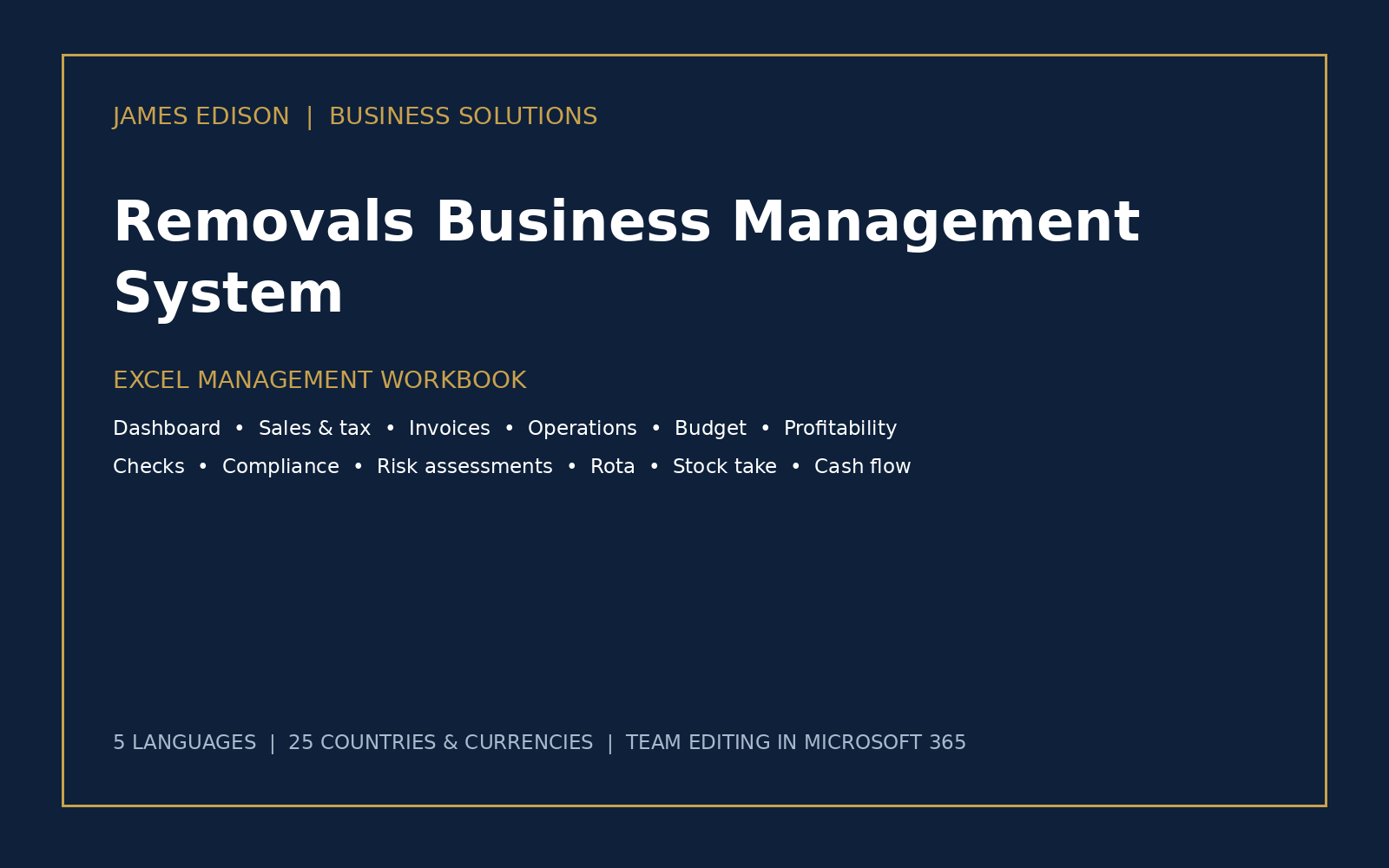
The Removals Business Management System is a removals business spreadsheet in Excel built around this guide:
- Job tracker with move type, crew hours, charge per crew hour, crew cost, fuel and materials, revenue, gross profit and a follow-up due reminder
- Sales and VAT, invoices and aged debtors with a "chase these first" list
- 12-week cash flow forecast with shortfall warnings
- Quarterly VAT summary, profit and loss, budget vs actual and a pricing calculator
- Daily and weekly checks: vehicle walk-around, load secured, inventory signed, straps and blankets, tail lift, driver hours and tachograph
- Compliance register pre-filled with goods in transit insurance, operator licence, driver CPC training, tail lift thorough examination, public and employers' liability, vehicle insurance, waste carrier registration and trade body membership
- Risk assessments pre-filled for manual handling, stairs, vehicles, long driving hours, slips, racking and the public
- Materials stock take pre-loaded with boxes, tape, bubble wrap, furniture covers, blankets, mattress bags, wardrobe boxes and trolley wheels
- Crew rota with wage cost
- Dashboard with income, profit, margin, average job value, crew hours sold, revenue per hour, fuel and materials % of revenue and a compliance score
It costs £15 once, with no subscription. Works in Excel 2016 or later, Microsoft 365, Excel for Mac and Excel online, in 5 languages and 25 currencies.
**Get the removals business spreadsheet →**
Your removals start-up checklist
1. Choose your model: man and van, domestic, office or long-distance. 2. Choose vehicles and check whether you need an operator licence. 3. Check driver licence categories, CPC and tachograph rules. 4. Arrange goods in transit, public liability, employers' liability and vehicle insurance. 5. Register the business and open a business account. 6. Set crew-hour rates, minimum charges and fixed survey-based quotes. 7. Use signed inventories at collection and delivery. 8. Track materials and equipment with reorder levels. 9. Log every job with crew hours, costs and a follow-up date. 10. Take deposits and chase debtors weekly. 11. Plan for VAT and run a 12-week cash flow forecast. 12. Write risk assessments and keep daily vehicle and load checks.
Frequently asked questions
How much does it cost to start a removals business? A man and van business can start with one van, blankets, straps, trolleys, insurance and marketing. Larger vehicles, operator licences and crews increase costs significantly.
Do I need an operator licence for a removals van? You need a goods vehicle operator licence for vehicles over 3.5 tonnes used for hire or reward. Vans at or below 3.5 tonnes usually do not need one, but check current rules.
What insurance does a man and van need? Goods in transit, public liability and hire and reward vehicle insurance, plus employers' liability once you employ anyone.
How should I price removals? By crew hour with a minimum charge for small jobs, or a fixed quote from a survey for larger moves. Make sure the rate covers crew, fuel, vehicle costs, overheads and profit.
What software do removal companies use? Many small firms use a spreadsheet for jobs, crew hours, materials, invoices, VAT, cash flow and compliance before moving to paid removals software.
A removals business is won on price and kept on reliability. Price by the crew hour properly, protect yourself with inventories and insurance, and keep your vehicles and drivers compliant. The removals business spreadsheet gives you all of it in one Excel file for £15.