Roofing is one of the most in-demand trades in the country. Every storm brings a wave of call-outs, older housing stock needs constant repair, and a full re-roof is one of the biggest-ticket jobs a homeowner will ever pay for. Good roofers are rarely short of work.
What separates a busy roofer from a profitable roofing business is control: of pricing, materials, stage payments, cash flow and, above all, safety at height. This guide explains how to start a roofing business in the UK, whether you are a roofer going self-employed or a small firm ready to take on bigger jobs.
1. Choose the roofing work you want
Roofing covers very different jobs with very different economics:
- Repairs: slipped tiles, flashing, leaks and storm damage. Fast, frequent and good hourly rates, but lots of travel and small invoices.
- Re-roofing: pitched roofs stripped and re-covered. Big materials bills, scaffold, multi-day jobs and stage payments.
- Flat roofing: felt, EPDM rubber, GRP fibreglass and liquid systems. Specialist products and warranties.
- Fascias, soffits and guttering: steady add-on work.
- Chimney work: repointing, flashing and leadwork.
- Inspections and reports: for homebuyers, landlords and insurers.
Many firms start with repairs to build cash and reputation, then move into re-roofs and flat roofs as their team and cash flow allow.
2. Business structure and CIS
Most roofers start as sole traders registered with HMRC for Self Assessment and consider a limited company as profits grow. An accountant can tell you when that makes sense for you.
The Construction Industry Scheme (CIS) applies to roofing. If you work as a subcontractor for contractors, they may deduct tax from your payments. If you pay subcontractors yourself, you must register as a contractor, verify each subcontractor with HMRC and file monthly returns. Log your CIS registration and verify every subcontractor before paying them.
Open a separate business bank account from day one. Roofing involves large materials bills and stage payments, and mixing them with personal spending hides your real profit.
3. Insurance, cards and schemes
Most roofing businesses need:
- Public liability insurance: essential. Falling tiles, water ingress and damage to neighbouring property can lead to large claims. Many customers and contractors ask for proof.
- Employers' liability insurance: a legal requirement once you employ anyone.
- Contract works insurance: covers work in progress.
- Tools and van insurance.
Many sites require CSCS cards. Trade association membership and an insurance-backed guarantee scheme for re-roofs reassure homeowners on big jobs. In England and Wales, joining a competent person scheme for roofing lets you self-certify certain re-roofing work under building regulations. Log every policy, card, scheme and guarantee in a compliance register with expiry dates.
4. Working at height: the heart of roofing safety
Falls from height are one of the biggest causes of death and serious injury at work in the UK, and roofing is where many of them happen. The Work at Height Regulations apply to every roofing job. Your roofing risk assessment and daily routine should cover:
- Falls from edges: scaffold with edge protection, guard rails and toe boards; roof ladders on pitched roofs; harnesses and lanyards where needed.
- Falls through fragile roofs and rooflights: mark and cover fragile areas, use crawling boards and safety nets. Never walk on fragile materials.
- Falling materials: exclusion zones, debris chutes, netting and hard hats.
- Asbestos: many older garage and outbuilding roofs contain asbestos cement. Check before you touch it.
- Weather: wind, rain, ice and frost make roofs lethal. Check the forecast and stop when conditions are unsafe.
- Manual handling of tiles, slates and rolls, and the public below.
Back it up with daily checks: harnesses and lanyards inspected before use, edge protection and roof ladders in place, wind and weather checked, fragile areas marked and covered, asbestos checked. Weekly: scaffold inspected and tagged, ladders checked, PPE in good condition. These records protect your team and your business.
5. Roofer pricing that actually makes money
Roofer pricing starts with your true daily cost. Add up yearly overheads (van, fuel, insurance, tools, scaffold, skips, phone, marketing, accountant) and divide by realistic working days. Bad weather, quoting visits, collecting materials and admin all cut into billable time, so do not assume five full days a week all year.
Then choose a structure:
- Fixed price for defined jobs: slipped tile repairs, ridge re-bedding, flashing, inspections.
- Day rate for uncertain repair work.
- Detailed quote for re-roofs and flat roofs, broken down into labour, materials, scaffold, skips and contingency.
Price materials clearly: at cost, with a mark-up or within a fixed price. Use a pricing calculator that works back from your target margin so every quote covers your costs and profit.
6. Job costing and stage payments
Roofing job costing is where profit is won or lost. For every job, record:
- Labour hours at your charge rate and your real cost per hour
- Materials: tiles, slates, membrane, battens, lead, nails, EPDM, sealant
- Scaffold hire, skips and waste disposal
- Revenue, total cost and gross profit
Compare actual against your estimate after each job. Within a few months you will know your real productivity and your quotes will sharpen.
On re-roofs and bigger flat roofs, agree stage payments in writing: a deposit to cover materials, then payments at milestones such as strip-off complete, felt and batten, and completion. Record the next stage or payment due and invoice on time. Never fund a whole re-roof yourself.
7. Materials and stock
Tiles, slates and lead are expensive and easy to lose track of across sites and the yard. A roofing materials tracker lists each item (roof tiles, natural slates, breathable membrane, treated battens, lead flashing, roofing nails, EPDM membrane and sealant) with unit cost, opening stock, deliveries, closing count and reorder level. Usage and stock value calculate automatically, and low items are flagged before you run out on a roof.
8. Repeat work and inspections
A roof is not a one-off. Record a next roof inspection due date for every customer, especially landlords, commercial clients and anyone whose roof you repaired after a storm. A reminder 30 days before lets you offer an inspection or gutter clean. It is the cheapest marketing you will ever do.
9. Invoices, debtors and VAT
Invoice on completion or at each stage, the same day. Track every invoice as Paid, Open or Overdue, and use an aged debtors report to chase the biggest, oldest debts first.
Register for VAT once taxable turnover passes the HMRC threshold. The domestic reverse charge applies to some construction work between VAT-registered businesses, so take advice from an accountant who knows construction. A quarterly VAT summary of VAT charged, reclaimable and net to pay keeps you ready for each return.
10. Cash flow and seasonality
Roofing is weather-dependent. Winter brings storm repairs but fewer re-roofs; summer brings the big jobs. A 12-week cash flow forecast shows money in from stage payments and money out for wages, materials, scaffold, van costs and tax, with a warning for any week the balance goes negative. Review it weekly and build a buffer in the busy months.
Common mistakes new roofers make
Quoting from the ground. Many problems only show when you get up close. Inspect properly, or price a contingency.
Underpricing scaffold and waste. Scaffold hire and skips can be a large part of a re-roof. Get firm prices before you quote.
No written variations. Rotten timbers and hidden damage are common. Agree extra work and its price in writing before you do it.
Taking shortcuts on safety when busy. One fall can end a business and a life. Make the daily checks non-negotiable.
The numbers to check every month
Review average job value, labour hours sold, materials billed, labour margin, overdue invoices and your lowest cash balance in the next 12 weeks. Those six numbers tell you whether you are pricing properly and whether you can fund the next big re-roof.
How to market your roofing business
Roofing is a trust purchase. Photos of finished roofs, genuine reviews and clear trade association and guarantee badges win work. Reply quickly after storms, when demand spikes and customers call the first roofer who answers. Build relationships with letting agents, property managers, builders and surveyors who need reliable roofers. Track where each enquiry comes from so you invest in what brings paying jobs.
Your first 90 days as a roofing business
In the first month, focus on repairs: they build cash, reviews and a list of homeowners who will call you for a re-roof later. Set up your compliance register, job tracker and pricing before the first job, not after. In month two, start tracking your real labour hours against your estimates. By month three you should know your average job value and your best-paying work, and be ready to quote bigger jobs with confidence.
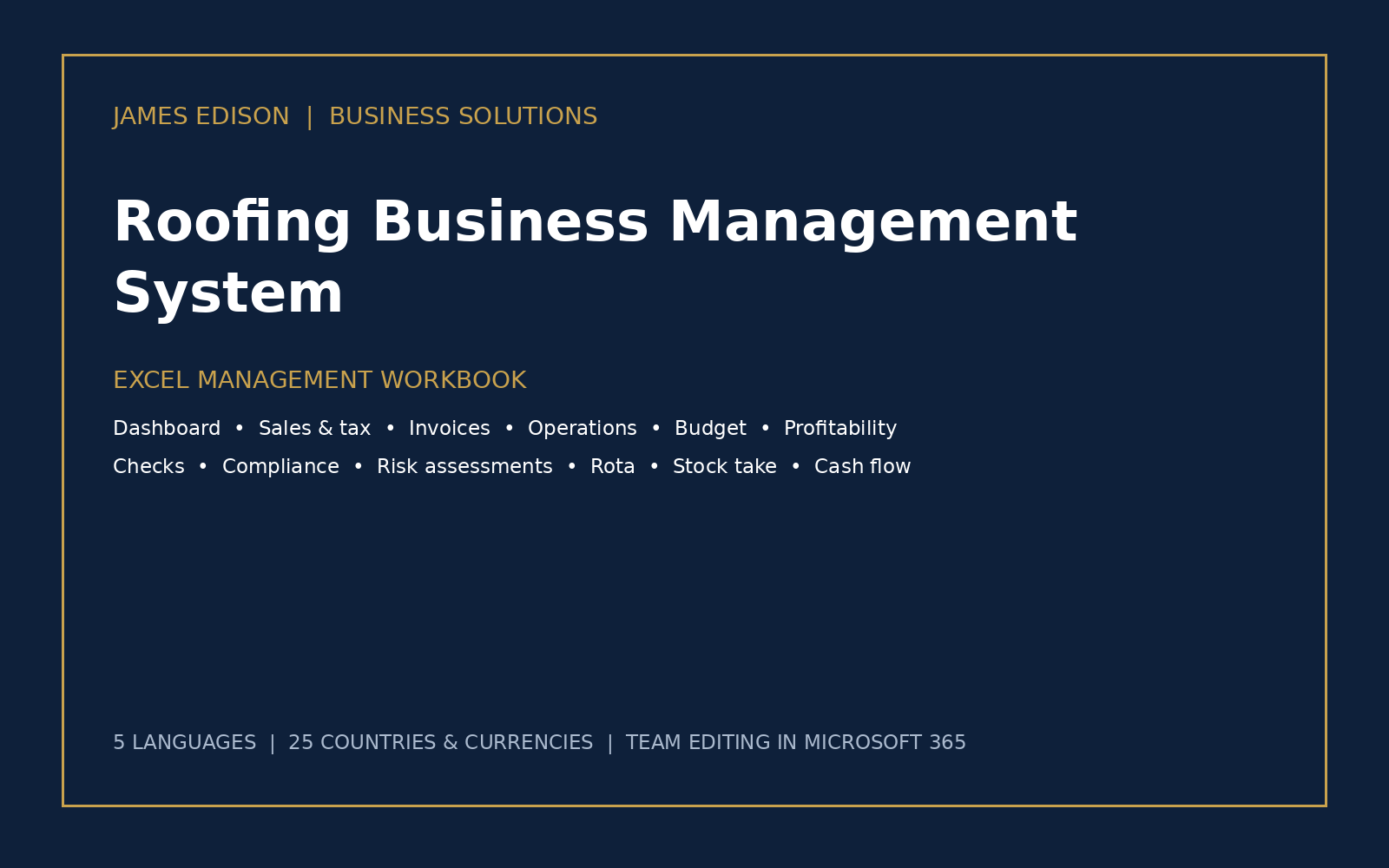
The Roofing Business Management System
The Roofing Business Management System is a roofing business spreadsheet in Excel built around this guide:
- Job tracker with labour hours, charge and cost per hour, materials, revenue, gross profit and a next roof inspection due reminder
- Sales and VAT, invoices and aged debtors with a "chase these first" list
- 12-week cash flow forecast with shortfall warnings
- Quarterly VAT summary, profit and loss, budget vs actual and a pricing calculator
- Daily and weekly safety checks: harnesses, edge protection, weather, fragile roofs, asbestos, scaffold, ladders and PPE
- Compliance register pre-filled with working at height training, trade association, guarantee scheme, CSCS cards, CIS, insurance, vehicle, waste carrier and tools
- Risk assessments pre-filled for working at height, fragile roofs, falling materials, asbestos, weather, manual handling and the public
- Materials stock take pre-loaded with tiles, slates, membrane, battens, lead, nails, EPDM and sealant
- Staff rota with wage cost
- Dashboard with income, profit, margin, average job value, labour hours, materials billed, labour margin and a compliance score
It costs £15 once, with no subscription and no app. Works in Excel 2016 or later, Microsoft 365, Excel for Mac and Excel online, in 5 languages and 25 currencies.
**Get the roofing business spreadsheet →**
Your roofing business start-up checklist
1. Choose your focus: repairs, re-roofs, flat roofs, fascias or chimneys. 2. Register as a sole trader or limited company and open a business account. 3. Register for CIS and verify subcontractors. 4. Arrange public liability, employers' liability, contract works and tools insurance. 5. Get CSCS cards and working at height training. 6. Join a trade association and guarantee scheme for bigger jobs. 7. Work out your daily cost and set fixed prices for standard repairs. 8. Cost every job and agree stage payments on re-roofs. 9. Track materials with reorder levels. 10. Record a next inspection date for every customer. 11. Run a quarterly VAT summary and a 12-week cash flow forecast. 12. Write your risk assessments and keep daily height safety checks.
Frequently asked questions
How much does it cost to start a roofing business? It depends on the van, tools and access equipment you already own. The main costs are a van, tools, ladders, roof ladders and harnesses, insurance, cards and marketing. Hiring scaffold per job keeps start-up costs down.
Do roofers need insurance? Public liability insurance is essential in practice, and employers' liability is a legal requirement once you employ anyone.
Do roofers need to register for CIS? Roofing falls under the Construction Industry Scheme. Register as a subcontractor if you work for contractors, and as a contractor if you pay subcontractors.
How should a roofer price a re-roof? Break it down into labour, materials, scaffold, skips, contingency and profit, and agree stage payments in writing.
What software do roofers use? Many small roofing firms use a spreadsheet for job costing, materials, invoices, VAT, cash flow and safety checks before moving to paid software.
A roofing business is built on safe work, accurate quotes and getting paid in stages. Put those systems in place from the start and the work keeps coming. The roofing business spreadsheet puts it all in one Excel file for £15.