Parents across the UK pay for tutoring to help with 11+, GCSEs, A-levels and primary basics. A good tutor can fill evenings and weekends quickly through word of mouth, and many grow into small agencies or tuition centres with associate tutors.
Tutoring is largely unregulated, which makes trust and safeguarding essential. Parents want to know their child is safe, progressing and taught by someone reliable. This guide explains how to start a tutoring business in the UK and run it professionally.
1. Choose your offer
- One-to-one tutoring in person or online
- Small group revision sessions
- Exam preparation: 11+, GCSE, A-level
- Primary support in maths and English
- Associate tutors working under your brand
- Tuition centre with premises
Most tutors start one-to-one, then add groups and associates to grow income beyond their own hours.
2. Safeguarding and checks
Parents will ask about criminal record checks. Self-employed tutors can usually only apply for a basic check directly; enhanced checks normally go through an employer, agency or umbrella body. Complete safeguarding training, write safeguarding and online safety policies, and keep consent and contact forms for every student.
Daily: log and report safeguarding concerns, keep lesson notes, and follow your online safety policy for virtual lessons.
3. Online tutoring
Online lessons widen your market beyond your local area. Use approved platforms, agree whether sessions are recorded, avoid private messaging with students and make sure a parent knows when lessons are happening.
4. Tutor rates
Rates vary by subject, level, location and experience, with exam years and specialist subjects usually commanding more. Offer lesson packages paid in advance and a clear cancellation policy. Track lesson hours, rate per hour, tutor cost for associates, resources and other costs, revenue per student and gross margin.
5. Associate tutors
When demand outgrows your hours, associates can teach under your brand. Agree a written arrangement covering pay, safeguarding, quality and who owns the client relationship. Check their qualifications and criminal record checks before they start, and review agreements yearly.
6. Records and progress
Parents want progress. Keep lesson notes, send regular progress reports, check exam dates and specifications, and ask for feedback. Record a next exam or review date for every student.
7. Tax and insurance
Most tutors are self-employed and register for Self Assessment. Keep records of income and expenses. Professional indemnity and public liability insurance are sensible, and you should register for data protection because you hold children's data.
Exam years and seasonality
Tutoring demand follows the school year. Enquiries rise in September and January, peak before mock exams and finals, and fall in summer. Plan for it: offer summer revision courses, 11+ preparation in the spring and summer before the test, and catch-up packages in September. Keep a waiting list for peak periods and use your progress records to show parents the value of continuing through quieter months.
Running group sessions and courses
Small group sessions earn more per hour than one-to-one tutoring while keeping prices affordable for families. Keep groups small and matched by level, set clear objectives for each session and send a short summary to parents afterwards. Holiday revision courses, exam technique workshops and online group classes can all add income without adding many hours.
Track revenue per hour for one-to-one, group and associate lessons separately. That shows you where your time is best spent and which formats to grow.
Communicating with parents
Parents are your customers, even when the student is the learner. Agree goals at the start, send a short update after each lesson or each month, and share progress clearly before exams. Be honest about what is realistic. Parents who understand progress keep booking and recommend you to friends.
Setting up your teaching space
Whether you teach at home, at the student's home or online, set up a professional space: a quiet, visible area, good lighting, the right resources and a reliable internet connection for online lessons. Keep doors open or a parent nearby for in-person lessons with children, and follow your safeguarding policy at all times.
A typical week
Most tutoring happens after school and at weekends, so mornings are for preparation, marking, resources and admin. Plan lessons in advance, batch preparation by subject and level, and keep an hour each week for invoicing, progress reports and parent messages.
Pricing lesson packages
Packages of six or ten lessons paid in advance give families commitment and give you steady cash. Offer a small saving for longer packages, set an expiry date, and apply your cancellation policy consistently. Track packages sold and lessons remaining so you can remind families to renew before their package runs out.
Building a reputation
Results, reliability and communication build a tutoring reputation. Turn up on time, prepare every lesson and share progress honestly.
Keeping records safe
Store student details, progress notes and parent contacts securely, share only what is needed and delete data you no longer need.
VAT and tax
Most small businesses register with HMRC for Self Assessment as sole traders, or run as a limited company once profits grow. You must register for VAT once taxable turnover passes the HMRC threshold, and some services in this sector have specific VAT treatment, so take advice from an accountant before you set prices. Once registered, a quarterly VAT summary of VAT charged, VAT reclaimable and net to pay keeps you ready for every return.
Cash flow: the number that keeps you open
Profitable businesses still run out of money when payments arrive later than bills. A 12-week cash flow forecast shows money in from customers and money out for wages, rent, supplies, insurance and tax, week by week, with a warning for any week the balance goes negative. Review it every week in your first year. It gives you time to chase payments, delay a purchase or arrange finance before a shortfall becomes a crisis.
Your first 90 days
Month one: set up checks, policies, insurance, prices and packages. Month two: track lesson hours, cancellations and preparation time, and send first progress reports. Month three: review demand by subject and level, raise prices for new students where you are fully booked, and consider an associate tutor if you are turning work away.
How to work out your break-even
Break-even is the number of lesson hours you need each month to cover all your costs.
1. Add up your monthly fixed costs: rent, insurance, software, marketing, loan payments and your own minimum drawings. 2. Work out your contribution per lesson hour: your price minus the variable cost of delivering it. 3. Divide fixed costs by contribution.
For example, with fixed costs of £300 a month, a price of £40 per lesson hour and a variable cost of £2, each lesson hour contributes £38, so you would need about 8 lesson hours a month to break even. These figures are illustrations only: use your own. A price rise lowers your break-even straight away, which is why pricing is usually the fastest lever you have.
When to raise your prices
Costs rise every year. If your prices stay still, your margin shrinks. Signs you are undercharging include being fully booked weeks ahead, customers rarely questioning your price and a gross margin that falls month by month. Raise rates for new students first and give existing families notice before exam-year changes.
Common mistakes
No cancellation policy. Last-minute cancellations are lost income.
Pay-as-you-go only. Packages paid in advance smooth cash flow.
Forgetting preparation time. Price for planning and marking, not just contact time.
Weak safeguarding. Parents need to see clear policies and checks.
The numbers to check every month
Review average revenue per student, lesson hours sold, revenue per hour, resources & other % of revenue, plus overdue invoices and your lowest cash balance in the next 12 weeks. Those numbers tell you whether the business is profitable, not just busy.
How to market your tutoring business
Word of mouth among parents is the strongest channel. Ask for reviews and referrals, get listed on tutoring directories, post helpful exam tips locally and partner with schools, clubs and community groups. Track where each student came from.
The Tutoring Business Management System
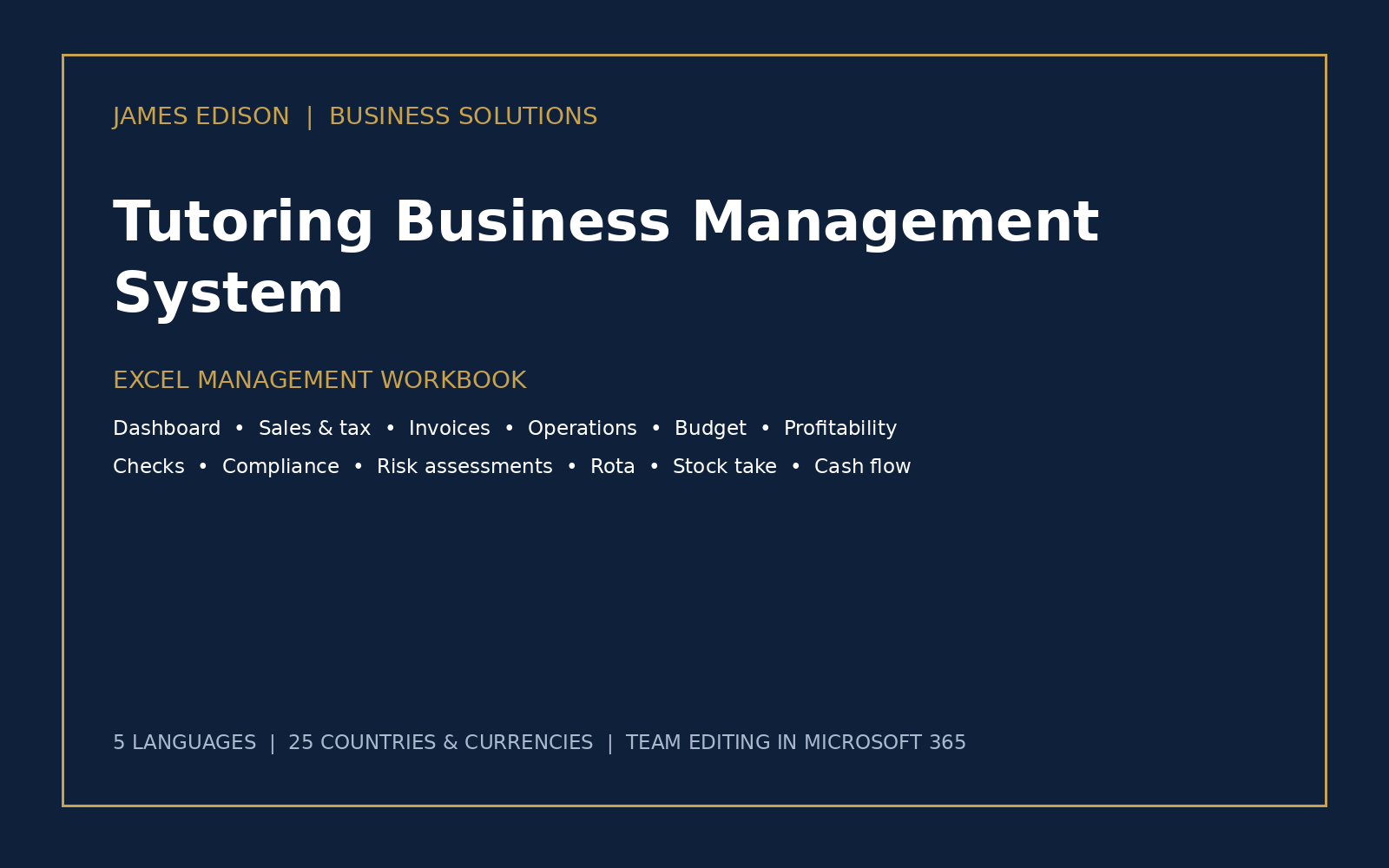
The Tutoring Business Management System is a tutoring business spreadsheet in Excel built around this guide:
- Subject / level tracker with lesson hours, rate per hour, tutor cost per hour, resources & other costs, revenue, gross profit and a next exam / review reminder
- Sales and VAT, invoices and aged debtors with a "chase these first" list
- 12-week cash flow forecast with shortfall warnings
- Quarterly VAT summary, profit and loss, budget vs actual and a pricing calculator
- Daily, weekly and monthly checks including safeguarding concerns logged and reported, lesson notes and progress updated, online lessons follow the online safety policy, payments and lesson packages reconciled, resources prepared for the week and more
- Compliance register pre-filled with staff background checks, safeguarding training, professional indemnity insurance, public liability insurance, data protection registration, safeguarding and online safety policies reviewed and more, with renewal reminders
- Risk assessments pre-filled for safeguarding of children, online safety in virtual lessons, allegations against tutors, lone working, long hours driving, screen use and posture, slips, trips and falls
- Stock take pre-loaded with revision workbooks, past paper printing, printer paper, printer ink, pens, pencils and calculators, whiteboard pens, flash cards, hand sanitiser
- Staff rota with wage cost
- Dashboard with income, profit, margin, average revenue per student, lesson hours sold, revenue per hour, resources & other % of revenue and a compliance score
It costs £15 once, with no subscription and no app. It works in Excel 2016 or later, Microsoft 365, Excel for Mac and Excel online, in 5 languages and 25 currencies.
**Get the tutoring business spreadsheet →**
Your start-up checklist
1. Choose subjects, levels and formats. 2. Get a criminal record check and safeguarding training. 3. Write safeguarding and online safety policies. 4. Register for data protection. 5. Arrange professional indemnity and public liability insurance. 6. Set rates, packages and a cancellation policy. 7. Use consent and contact forms for every student. 8. Choose an approved online lesson platform. 9. Keep lesson notes and send progress reports. 10. Agree written terms with associate tutors. 11. Track income and expenses for Self Assessment. 12. Run a 12-week cash flow forecast.
Frequently asked questions
Do I need qualifications to be a tutor? There is no legal requirement, but subject expertise, teaching experience and qualifications help parents trust you.
Do tutors need a DBS check? It is not a legal requirement for self-employed tutors, but parents expect checks. Self-employed tutors can usually get a basic check directly; enhanced checks go through an organisation.
How much should a tutor charge? Rates depend on subject, level, location and experience. Base yours on your time, preparation and costs, and compare with local tutors.
Is online tutoring as good as in person? It works well for many students and widens your market, as long as safety and engagement are managed.
What software do tutors use? Many use a scheduling tool and a spreadsheet for lessons, payments, progress, compliance and cash flow.
How many hours a week can a tutor teach? Most lessons fall after school and at weekends, which limits capacity. Groups and associate tutors are the main ways to grow beyond your own hours.
Should I teach online or in person? Online lessons widen your market and cut travel time, while in-person lessons suit younger children and some families. Many tutors offer both.
How do I keep students over the summer? Offer revision courses, exam preparation and catch-up packages, and use progress records to show the value of continuing.
Getting the systems right from day one is what turns a good tutoring business into a lasting one. The tutoring business spreadsheet puts it all in one Excel file for £15.