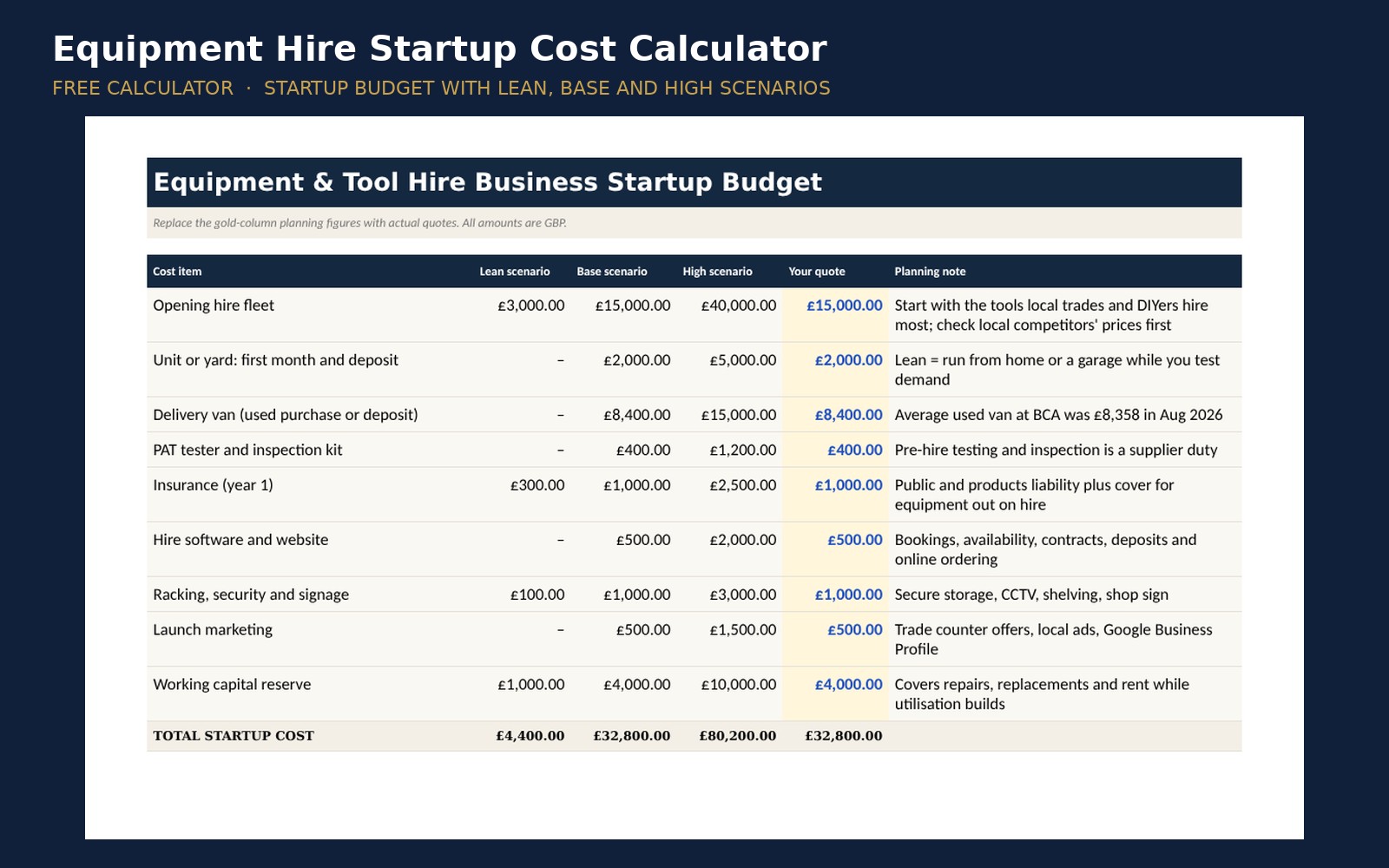
Running a small fleet from home, you can start for about £4,400. A base hire shop with a unit, a used van, £15,000 of stock, testing kit, insurance and a cash reserve comes to around £32,800. These are planning figures from our free calculator, so replace them with your own quotes.
| Item | Lean | Base | High |
|---|---|---|---|
| Opening hire fleet | £3,000 | £15,000 | £40,000 |
| Unit or yard: first month and deposit | £0 | £2,000 | £5,000 |
| Delivery van (used purchase or deposit) | £0 | £8,400 | £15,000 |
| PAT tester and inspection kit | £0 | £400 | £1,200 |
| Insurance (year 1) | £300 | £1,000 | £2,500 |
| Hire software and website | £0 | £500 | £2,000 |
| Racking, security and signage | £100 | £1,000 | £3,000 |
| Launch marketing | £0 | £500 | £1,500 |
| Working capital reserve | £1,000 | £4,000 | £10,000 |
| Total | £4,400 | £32,800 | £80,200 |
Find your break-even
At £35 per item per day, £5 per hire day in cleaning, parts and testing and £3,000 a month of costs and pay, you need about 100 hire days a month, roughly 23 item-days a week across the fleet.
Free downloads
- Equipment Hire Startup Calculator (Excel): startup budget, break-even and 12-month forecast
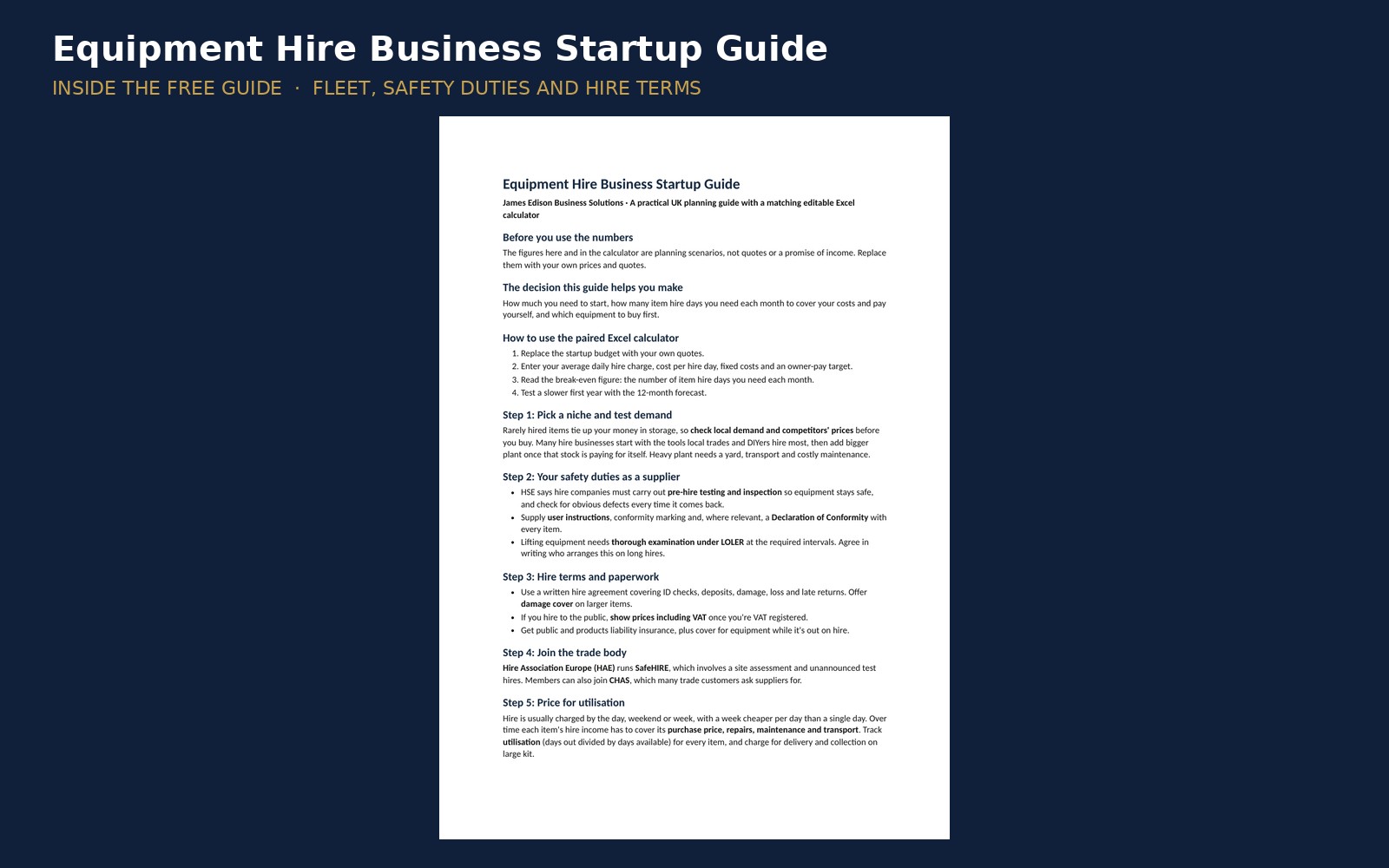
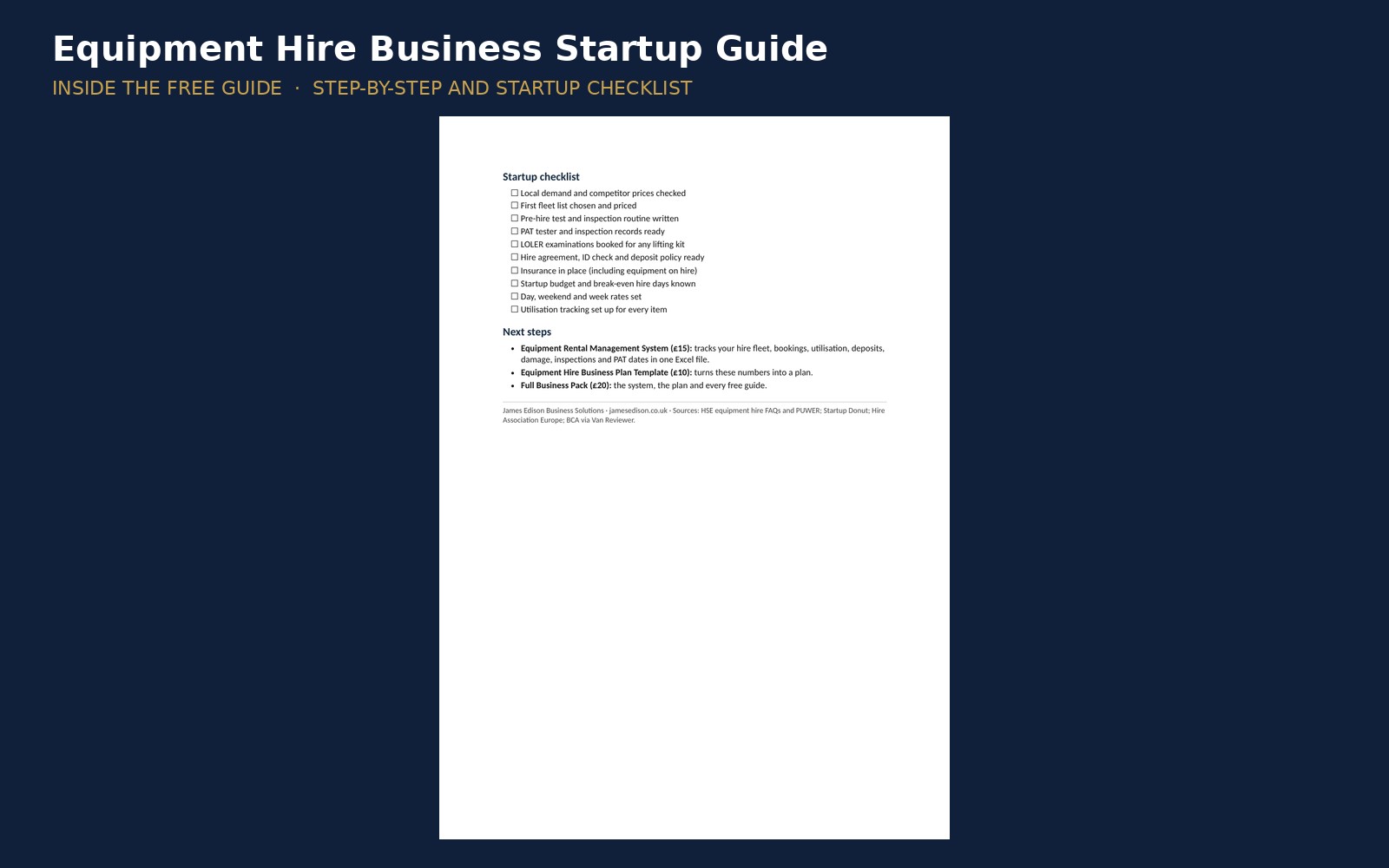
- Equipment Hire Business Startup Guide (PDF): choosing your fleet, supplier safety duties, hire terms, SafeHIRE, utilisation and pricing, and a checklist
Ready to run it?
Starting soon? Run it properly from day one. The Equipment Rental Management System tracks your hire fleet, bookings, utilisation, deposits, damage, inspections and PAT dates in one Excel file. £15 one-off, no subscription. See the system →
Read the full guide: Equipment hire business KPIs: the numbers to track Also read: How much does an equipment hire owner earn in the UK?