
Kitchen fitting is one of the higher-earning trades for sole traders, and showrooms and retailers always need reliable fitters. The joinery is the skill. Knowing which work the law reserves for gas and electrical trades, pricing per unit, and getting paid decide whether the business makes money.
This guide covers skills, registration, the gas and electrical rules, what it costs to start, real rates, and how many days you need to bill to break even.
1. Skills and training
Most kitchen fitters come from joinery, carpentry, plumbing or tiling, or train through a Fitted Interiors Installer apprenticeship (National Careers Service). Qualifications aren't a legal requirement, but they help win showroom and retailer work.
2. Register the business
Register for Self Assessment or set up a limited company. If you work for builders, register for the Construction Industry Scheme (CIS): contractors deduct 20% from your labour, or 30% if you're not registered.
3. Gas and electrics: what you can't do
- By law, only a Gas Safe registered engineer can connect or disconnect gas hobs and cookers (RoSPA).
- In England, a new circuit, such as for a cooker, is notifiable under Part P. Use an electrician registered with a competent person scheme, who can self-certify the work (Planning Portal).
- Agree your gas and electrical partners, and their prices, before you quote.
4. What it costs to start
Our free calculator's planning figures:
| Item | Lean | Base | High |
|---|---|---|---|
| CSCS card (site work only) | £0 | £59 | £59 |
| Insurance (year 1) | £80 | £400 | £1,000 |
| Van (used purchase or deposit) | £0 | £8,400 | £15,000 |
| Hand tools | £200 | £800 | £2,000 |
| Power tools and worktop jig | £300 | £1,500 | £3,500 |
| Dust extraction and PPE | £50 | £400 | £1,200 |
| Waste carrier registration | £0 | £191 | £191 |
| Software, signage and launch | £0 | £600 | £2,000 |
| Working capital reserve | £1,000 | £3,000 | £6,000 |
| Total | £1,630 | £15,350 | £30,950 |
Work through your own figures with the free kitchen fitting startup calculator.
5. Dust and safety
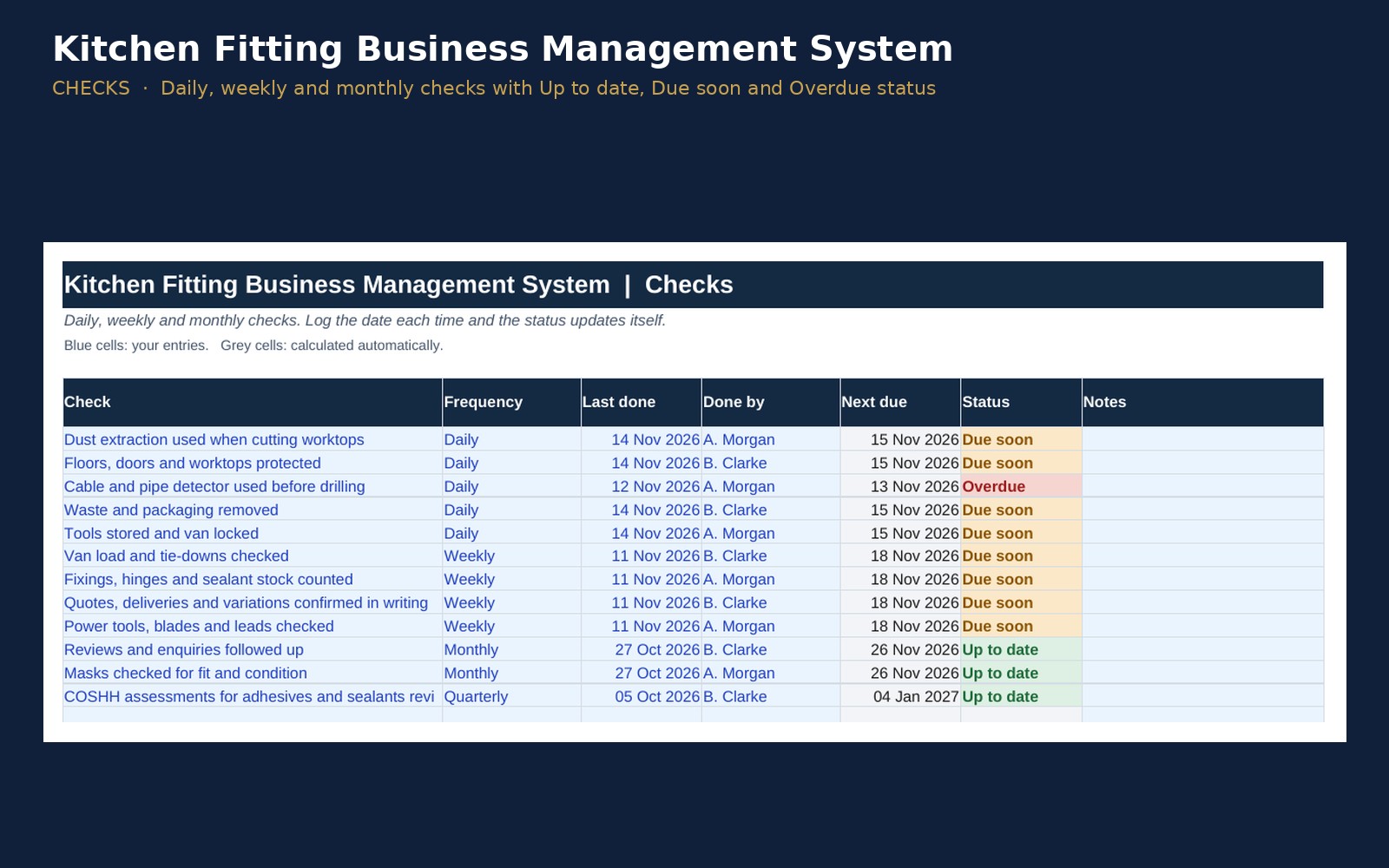
Cutting worktops creates dust, and stone and quartz can release silica. HSE says wet cutting greatly reduces dust. Use on-tool extraction or water, wear fit-tested FFP3 masks, and use a detector before drilling to avoid hidden cables and pipes.
6. Insurance
Get public liability before your first job. MoneySuperMarket's August–October 2026 data put the average at £78.27 a year for up to £2m. Add employers' liability when you take on help, and cover tools and any customer stock you store.
7. Price your work
Checkatrade's guide puts kitchen fitters at £250 to £350 a day (about £37 an hour), or around £120 per unit. An average family kitchen is £2,000 to £6,000 in labour (average £3,500), with worktops £300 to £1,000 and sinks £100 to £300 extra. Customers who sign in their home usually have a 14-day right to cancel.
8. Work out your break-even
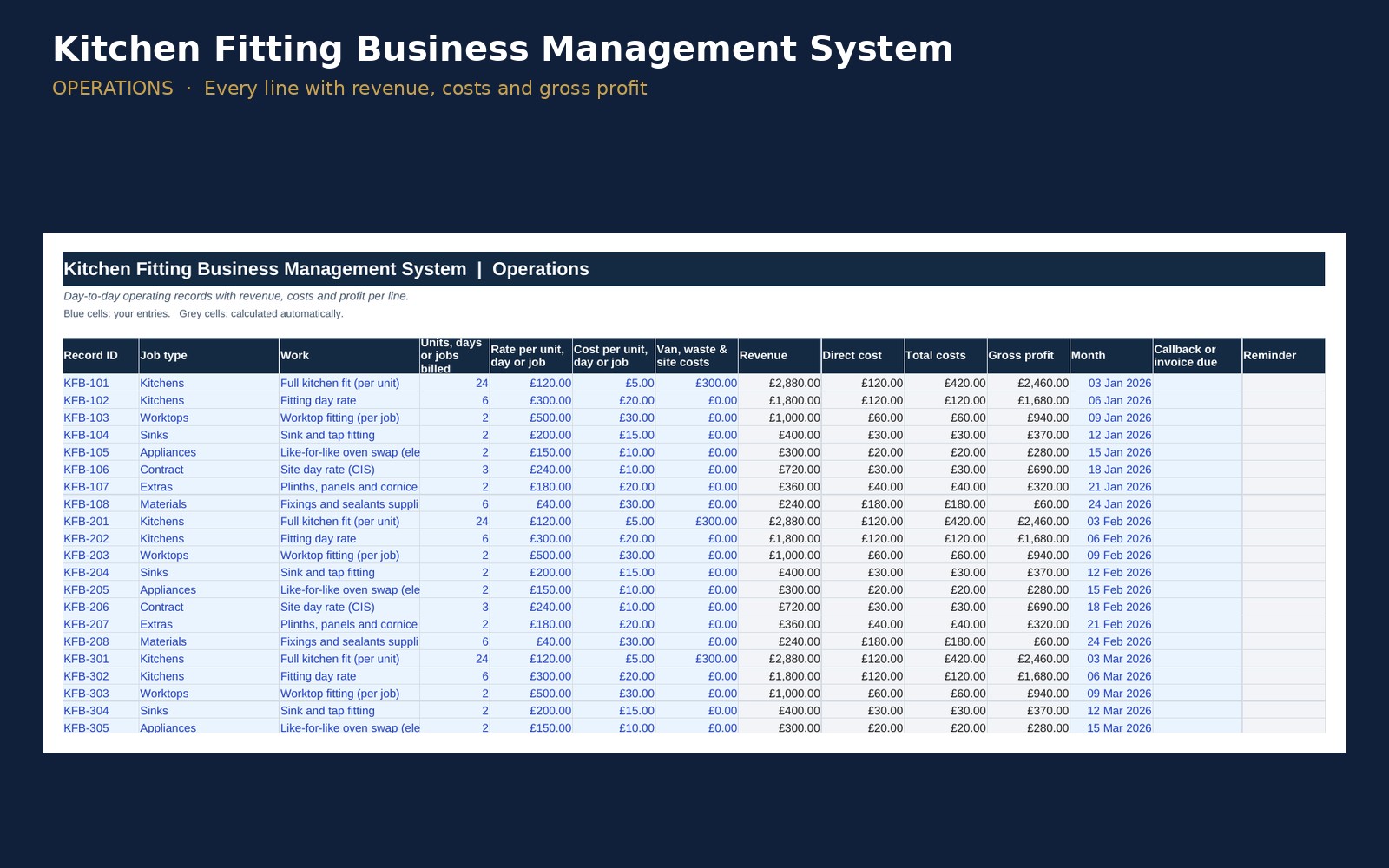
Our calculator's base example earns £280 a day in labour with £20 of daily costs, against £400 of monthly fixed costs and a £1,800 owner-pay target. That needs about 9 days a month, roughly 3 a week. Days lost to late or damaged deliveries are unpaid, so build them into your prices.
9. Keep the diary full
- Before-and-after photos of every kitchen
- Fitting work from showrooms and retailers
- Google reviews from every happy customer
- Fast fixed-price quotes per unit and per kitchen
10. Run it like a business
Track days billed, average labour per day, callbacks, delivery delays and debtor days every month. Keep insurance, partner details and CIS statements in one place with renewal dates.
Your kitchen fitting business start-up checklist
- [ ] Skills and experience
- [ ] Self Assessment or company set up
- [ ] CIS registration
- [ ] Gas Safe engineer partner
- [ ] Registered electrician partner
- [ ] Insurance in place
- [ ] Dust extraction and fit-tested masks
- [ ] Break-even days known
- [ ] Per-unit and day prices
- [ ] Debtor follow-up routine
Run it properly from day one
The **Kitchen Fitting Business Management System** is a kitchen fitting business spreadsheet that tracks every order, cost, invoice and VAT return, with checks, compliance dates, risks and stock in one Excel file. It costs £15 once, with no subscription. Planning to borrow? The Kitchen Fitting Business Plan Template (£10) is laid out the way lenders expect, or get both with every free guide in the Full Business Pack for £20.
Next, read how much a kitchen fitter earns and the KPIs to track.
Related: Tiling business startup costs
Related: Carpentry and joinery startup costs
Frequently asked questions
How much does it cost to start a kitchen fitting business? If you already own a vehicle and some tools, about £1,600 in our calculator. A base setup with a used van, power tools, worktop jig and insurance is around £15,350.
How much do kitchen fitters charge? Checkatrade's guide puts them at £250 to £350 a day, or about £120 per unit, with an average family kitchen around £3,500 in labour.
Can a kitchen fitter connect a gas hob? Only if they're Gas Safe registered. By law, gas appliances must be fitted by a Gas Safe registered engineer.
Can a kitchen fitter do the electrics? Minor work may be fine, but in England a new circuit, such as for a cooker, is notifiable under Part P and should be done by a registered electrician.
Do I need to register for CIS? If you work for builders or contractors, yes. They deduct 20% from your labour if you're registered, or 30% if you're not.