Lockouts, lost keys, burglaries, landlord lock changes and failed uPVC mechanisms mean there is always work for a reliable local locksmith. Many jobs are urgent, so customers call the first trustworthy name they find, and a good locksmith can build a strong reputation quickly.
There is no licence required to be a locksmith in the UK, which makes trust everything. Customers are letting you into their homes and businesses, and opening locks for the wrong person is a serious risk. This guide explains how to start a locksmith business in the UK, from training and accreditation to pricing, van stock, ID checks and cash flow.
1. Training and accreditation
Good training covers non-destructive entry, lock fitting, uPVC mechanisms, master key systems, safes and security advice. Accreditation through a recognised locksmith trade association, and a criminal record check, are strong trust signals because there is no legal licence. Log every accreditation and renewal date in your compliance register.
2. Choose your services
- Emergency lockouts: domestic and commercial, often out of hours.
- Lock changes and upgrades: including insurance-approved locks and anti-snap cylinders.
- uPVC door and window repairs: mechanisms, handles and hinges.
- Burglary repairs: often urgent and insurance-related.
- Commercial work: master key systems, access control and shop front locks.
- Safes: opening, servicing and installation.
- Landlord and letting agent work: lock changes between tenants. Steady repeat work.
3. Insurance
Most locksmiths carry public liability insurance, professional indemnity insurance for security advice, tools insurance and business van insurance, plus employers' liability once they employ anyone.
4. ID checks protect you
Before opening any property, check proof of residence or ownership, and record who you let in, with their ID details. If anything feels wrong, refuse the job. Keep job records with customer ID for every entry. Key codes and blanks must be secured and logged, especially for master key systems.
5. Locksmith prices
Locksmith prices usually combine a call-out or labour charge with the parts and locks fitted:
- Fixed price for standard jobs such as a lockout entry or cylinder change
- Labour per hour for repairs and installations
- Parts and locks at a clear price
- Out-of-hours rates for nights, weekends and bank holidays
Be transparent: give the price before you start. Track average job value, labour hours sold, parts and locks billed and labour margin.
6. Van stock
A locksmith who has the right cylinder on the van finishes the job; one who does not loses it. Track euro cylinders, mortice locks, uPVC multipoint mechanisms, key blanks, door handles, padlocks, drill bits and lock lubricant with unit cost, opening stock, deliveries, closing count and reorder level. Check van stock weekly.
7. Daily and weekly checks
- Daily: key codes and blanks secured, proof of residence checked, job records with ID kept, van walk-around, job cards completed, client keys secured
- Weekly: picks, drills and decoders checked, van stock restocked, key cutting machine checked, PPE inspected
- Monthly: hazardous substances reviewed, first aid kit stocked
Your locksmith risk assessment should cover being used for unlawful entry, aggression from customers, lone working at night, drilling and power tools, driving and manual handling.
Working with letting agents and landlords
Letting agents and landlords need lock changes between every tenancy, emergency entry for repairs and security upgrades to meet insurance conditions. They are among the steadiest sources of work for a locksmith. Offer a clear price list, quick response and invoices with photos and the lock specification. Agree payment terms in writing, and record a next security review date for each managed property so you can offer upgrades and checks before they are needed.
Security advice and upselling
Many customers call after a lockout or burglary without knowing their locks are weak. A short security check while you are on site, such as anti-snap cylinders, window locks, door chains and garage security, adds value and revenue. Explain the options and prices clearly, never pressure customers, and record what you advised. Insurance-approved locks are a strong selling point because many home insurance policies require them.
Track how often a call-out turns into extra work. If it is rare, add a simple checklist to every visit; if it is common, carry more of the upgrade stock so you can fit it the same day.
A typical day for a mobile locksmith
Mornings often bring lock changes, upgrades and booked jobs for landlords and businesses. Afternoons bring repairs and lockouts as people return home. Evenings and weekends bring emergency calls at higher rates. Plan booked work around the hours when urgent calls are least likely, keep the van stocked for the most common jobs and record every job, part and ID check as you go.
At the end of each day, update job records, restock the van from your stock list and send invoices to account customers.
Insurance work
Burglary repairs are often paid for by insurers. Keep clear photos, invoices and lock specifications so customers can claim easily.
VAT and tax
Most small businesses register with HMRC for Self Assessment as sole traders, or run as a limited company once profits grow. You must register for VAT once taxable turnover passes the HMRC threshold, and some services in this sector have specific VAT treatment, so take advice from an accountant before you set prices. Once registered, a quarterly VAT summary of VAT charged, VAT reclaimable and net to pay keeps you ready for every return.
Cash flow: the number that keeps you open
Profitable businesses still run out of money when payments arrive later than bills. A 12-week cash flow forecast shows money in from customers and money out for wages, rent, supplies, insurance and tax, week by week, with a warning for any week the balance goes negative. Review it every week in your first year. It gives you time to chase payments, delay a purchase or arrange finance before a shortfall becomes a crisis.
Your first 90 days
Month one: set up insurance, accreditation, prices and van stock, and get listed locally for emergency searches. Month two: track every job's time, parts and travel, and build relationships with letting agents and property managers. Month three: review which jobs earn the most per hour and adjust your stock and pricing to match.
How to work out your break-even
Break-even is the number of jobs you need each month to cover all your costs.
1. Add up your monthly fixed costs: rent, insurance, software, marketing, loan payments and your own minimum drawings. 2. Work out your contribution per job: your price minus the variable cost of delivering it. 3. Divide fixed costs by contribution.
For example, with fixed costs of £1,800 a month, a price of £110 per job and a variable cost of £35, each job contributes £75, so you would need about 24 jobs a month to break even. These figures are illustrations only: use your own. A price rise lowers your break-even straight away, which is why pricing is usually the fastest lever you have.
When to raise your prices
Costs rise every year. If your prices stay still, your margin shrinks. Signs you are undercharging include being fully booked weeks ahead, customers rarely questioning your price and a gross margin that falls month by month. Review prices for new customers first, keep fixed prices for standard jobs, and price out-of-hours work properly.
Common mistakes
Vague pricing. Customers fear rogue locksmiths. Clear prices win trust and reviews.
Running out of common cylinders. Lost jobs and repeat visits cost more than carrying stock.
Skipping ID checks. One wrongful entry can destroy your reputation.
Undercharging out of hours. Night and weekend work should be priced for the disruption.
The numbers to check every month
Review average job value, labour hours sold, parts & materials billed, labour margin, plus overdue invoices and your lowest cash balance in the next 12 weeks. Those numbers tell you whether the business is profitable, not just busy.
How to market your locksmith business
Most locksmith jobs start with an urgent local search, so a fast mobile website, accurate local listings, clear prices and genuine reviews matter most. Letting agents, property managers, insurers and builders can provide steady work. Track where each job came from.
The Locksmith Business Management System
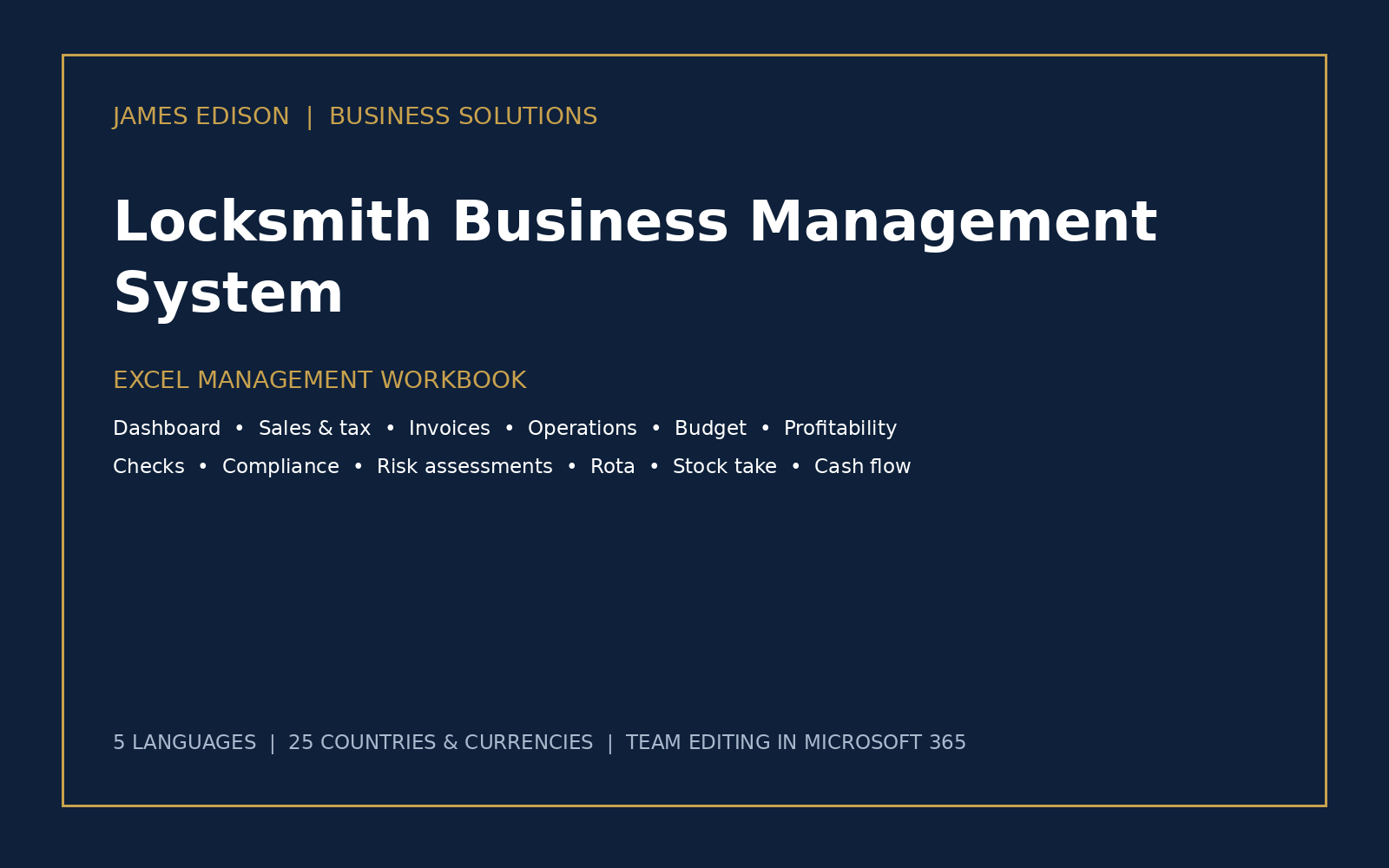
The Locksmith Business Management System is a locksmith business spreadsheet in Excel built around this guide:
- Job type tracker with labour hours, labour charge per hour, labour cost per hour, parts & locks, revenue, gross profit and a next security review due reminder
- Sales and VAT, invoices and aged debtors with a "chase these first" list
- 12-week cash flow forecast with shortfall warnings
- Quarterly VAT summary, profit and loss, budget vs actual and a pricing calculator
- Daily, weekly and monthly checks including key codes and blanks secured and logged, proof of residence checked before entry, job records with customer ID kept, vehicle walk-around check, job cards completed and signed and more
- Compliance register pre-filled with trade body membership / accreditation, staff background checks, locksmith training and accreditation, public liability insurance, professional indemnity insurance, employers’ liability insurance and more, with renewal reminders
- Risk assessments pre-filled for being used to break in unlawfully, violence and aggression, lone working, machinery and power tools, long hours driving, manual handling and lifting, slips, trips and falls
- Stock take pre-loaded with euro cylinders, mortice locks, uPVC multipoint mechanisms, key blanks, door handles, padlocks, drill bits, lock lubricant
- Staff rota with wage cost
- Dashboard with income, profit, margin, average job value, labour hours sold, parts & materials billed, labour margin and a compliance score
It costs £15 once, with no subscription and no app. It works in Excel 2016 or later, Microsoft 365, Excel for Mac and Excel online, in 5 languages and 25 currencies.
**Get the locksmith business spreadsheet →**
Your start-up checklist
1. Complete recognised locksmith training. 2. Join a trade association and get a criminal record check. 3. Register the business and open a business account. 4. Arrange public liability, professional indemnity, tools and van insurance. 5. Set fixed prices for common jobs and clear out-of-hours rates. 6. Build a van stock list with reorder levels. 7. Check ID and proof of residence before every entry. 8. Keep job records with customer ID. 9. Secure and log key codes and blanks. 10. Track average job value and labour margin. 11. Run a VAT summary once registered. 12. Run a 12-week cash flow forecast.
Frequently asked questions
Do you need a licence to be a locksmith in the UK? No legal licence is required, which is why training, accreditation and criminal record checks matter so much for trust.
How much do locksmiths charge? Prices vary by area, time of day and job. Give clear prices before starting, with fixed prices for common jobs.
How do locksmiths check they are not helping a burglar? By checking proof of residence or ownership before opening a property, recording ID details and refusing jobs that seem suspicious.
What insurance does a locksmith need? Public liability and professional indemnity are typical, plus tools and van insurance, and employers' liability if you employ staff.
What software do locksmiths use? Many use a spreadsheet for jobs, parts, van stock, ID records, invoices and cash flow before moving to paid software.
Can I start as a mobile locksmith? Yes. Most locksmiths start mobile with a well-stocked van, which keeps overheads low and lets you respond quickly to emergencies.
What jobs earn locksmiths the most? Emergency call-outs, commercial master key systems and security upgrades often earn more per hour than standard lock changes. Track your own figures to see which jobs pay best.
Getting the systems right from day one is what turns a good locksmith business into a lasting one. The locksmith business spreadsheet puts it all in one Excel file for £15.