Health and wellness tops the list of sectors Brits say they'd most like to start a business in, according to a September 2026 Uswitch survey, and personal training is one of the most accessible ways in. You can qualify in months, start with a few hundred pounds of kit, and work in a gym, in clients' homes, online or in the park.
Most guides stop at "get qualified and find clients". This one covers the business side that decides whether you make a living: where you train and what it costs, permits most new trainers don't know about, honest numbers on pay, and how many sessions you need to break even.
1. Get qualified properly
The standard route into personal training in the UK is a Level 3 Diploma in Personal Training, usually taken alongside or after Level 2 gym instruction. CIMSPA-endorsed qualifications are the industry benchmark, and most gyms and insurers expect them.
Before you train a paying client, also have: - Public liability and professional indemnity insurance. 2026 quotes for PT cover are reported at roughly £40 to £120 a year. - A current first aid certificate. - A DBS check if you'll train under-18s.
Specialist Level 4 qualifications (strength and conditioning, nutrition, exercise referral, pre- and post-natal) let you charge more later. Start with the basics done properly.
2. Choose where you'll train: the decision that shapes your income
| Model | How you're paid | Main costs | Trade-off |
|---|---|---|---|
| Employed by a gym | Salary plus commission | None | Clients provided, but a lower ceiling |
| Self-employed in a gym | You keep your session fees | Rent, typically £200 to £800 a month, or a revenue share | More freedom, but you must fill your own diary |
| Mobile or home visits | Your fees | Travel, kit | Low overheads, more unpaid travel time |
| Outdoor or park | Your fees | Permit, kit | Cheapest base, but weather and permits apply |
| Online coaching | Monthly fees | Apps, platform fees | Not limited by your diary, but competitive |
Many trainers combine two or three. A common pattern is gym-based one-to-ones, a weekly park bootcamp and a handful of online clients.
3. The permit most new trainers don't know about
Training paying clients in a public park usually needs a permit, and there's no single UK-wide licence. Every council and landowner sets its own rules. Some examples:
- London's Royal Parks require a fitness training licence from The Royal Parks charity to run personal training or group fitness sessions.
- Merton charges £308 + VAT a year for 1 to 3 sessions a week with up to 10 clients.
- Lambeth's 2025/26 group fitness licence for 3 to 10 clients costs £530 to £729 a year, depending on sessions a week.
Before your first outdoor session, check with the council or landowner, budget for the permit, and follow its conditions on locations and group size. Training without one can mean being moved on and losing clients' trust.
4. What personal trainers really earn
Be careful with pay figures online. One 2026 analysis found there is no credible, openly sourced survey of what UK personal trainers charge: no trade body or regulator publishes one, and many blogs repeat each other's numbers.
What we can say: - The National Careers Service puts employed fitness instructor pay at £17,000 to £27,000. - Earnings platforms report an average of about £30,000 to £37,000 for personal trainers. Self-employed trainers have a median of roughly £29,000 to £30,000, with the middle half earning about £20,000 to £48,000. - Reported session rates for new Level 3 trainers outside London are around £25 to £35 an hour, with experienced trainers and London rates well above that.
Treat these as indications. Your income depends on your price, how full your diary is and your rent. The next section shows how to work out your own.
5. What it costs to start
Our free start-up calculator uses three scenarios. These are planning figures, not quotes:
| Item | Lean | Base | High |
|---|---|---|---|
| Level 2 and 3 qualifications | £0 | £1,200 | £2,500 |
| Insurance (year 1) | £40 | £100 | £250 |
| First aid course | £0 | £100 | £200 |
| Equipment | £50 | £400 | £1,500 |
| Gym rent: first month or deposit | £0 | £300 | £800 |
| Park or outdoor fitness permit | £0 | £310 | £730 |
| Booking software and website | £0 | £150 | £600 |
| Launch marketing | £0 | £200 | £800 |
| Working capital reserve | £500 | £2,000 | £5,000 |
| Total | £590 | £4,760 | £12,380 |
If you're already qualified, the lean column is realistic: insurance, a few bands and mats, and a cash reserve.
6. Work out your break-even sessions
In the calculator's base example: - £38 average price per session - £1.50 of consumables and kit wear per session - £450 a month of fixed costs (gym rent £300, plus insurance, software and phone) - £1,500 a month owner-pay target
Each session contributes £36.50. Fixed costs plus pay are £1,950. £1,950 ÷ £36.50 = about 53 sessions a month to break even, roughly 13 a week. At 80 sessions a month, this trainer has about £970 a month above their pay target.
That's the real lesson of personal training maths: your diary is your income. Raising your price from £38 to £42 cuts break-even to about 48 sessions. Losing four regular clients for the summer can wipe out your margin.
7. Price and package your time
- Sell packages, not single sessions. A 10-session package paid upfront secures commitment and cash flow.
- Add small group training. Four people at £15 each earns £60 an hour, compared with £35 to £40 for one-to-one, and many clients prefer it.
- Add online coaching for clients who can't make regular sessions. It isn't limited by your diary.
- Have a cancellation policy. Late cancellations are lost income. A 24-hour rule with a charge protects you.
- Review prices every year, and raise them for new clients first.
A note on memberships: if you sell auto-renewing monthly memberships to consumers, the UK's new subscription rules apply from 1 January 2027. They require reminder notices, easy online cancellation and cooling-off rights. Pay-as-you-go sessions and fixed packages are simpler to run.
8. Find your first clients
New trainers rarely struggle with training. They struggle with filling the diary. What works:
- Work the gym floor. If you rent in a gym, its members are your market. Offer technique checks, introduce yourself, and be visible at busy times.
- Free taster sessions or a short paid starter offer, such as three sessions at a reduced price, with a clear path into a package afterwards.
- Results-led marketing. Before-and-after progress (with written consent), client stories and clear specialisms such as beginners, older adults, pre- and post-natal, or strength for runners.
- A Google Business Profile and reviews. Local searches like "personal trainer near me" drive steady enquiries.
- Referrals. Ask happy clients directly and reward referrals with a free session.
- Corporate and community work. Workplace classes and local clubs fill daytime gaps when one-to-one demand is low.
Track where every client came from, so you spend time and money on the channels that work.
9. Screen clients and protect their data
Use a health questionnaire (PAR-Q) for every new client, get GP clearance where it's needed, and stop at warning signs. That protects your client, your insurance and your reputation.
The health information you collect is special category data under UK GDPR. Store it securely, collect only what you need, and pay the ICO data protection fee.
10. Keep yourself safe
- Lone working: share your schedule with someone, keep your phone on, and meet new clients in public places first.
- Outdoor sessions: check the site, plan for weather, and use high-vis in low light.
- Equipment: check kit before every session and retire anything damaged.
- Burnout: split shifts from 6am to 9pm burn trainers out. Block rest days and cap your weekly sessions.
11. Run it like a business
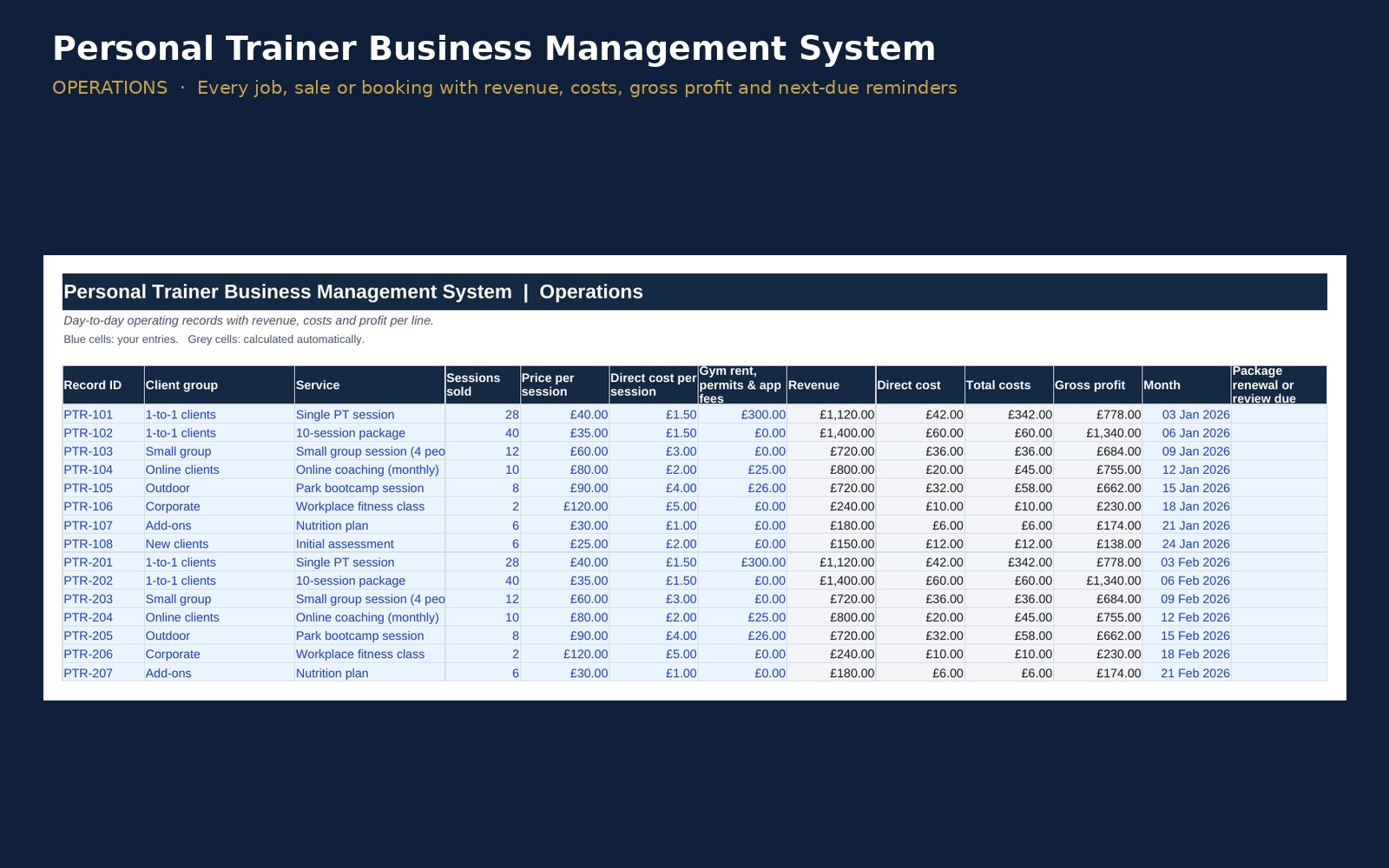
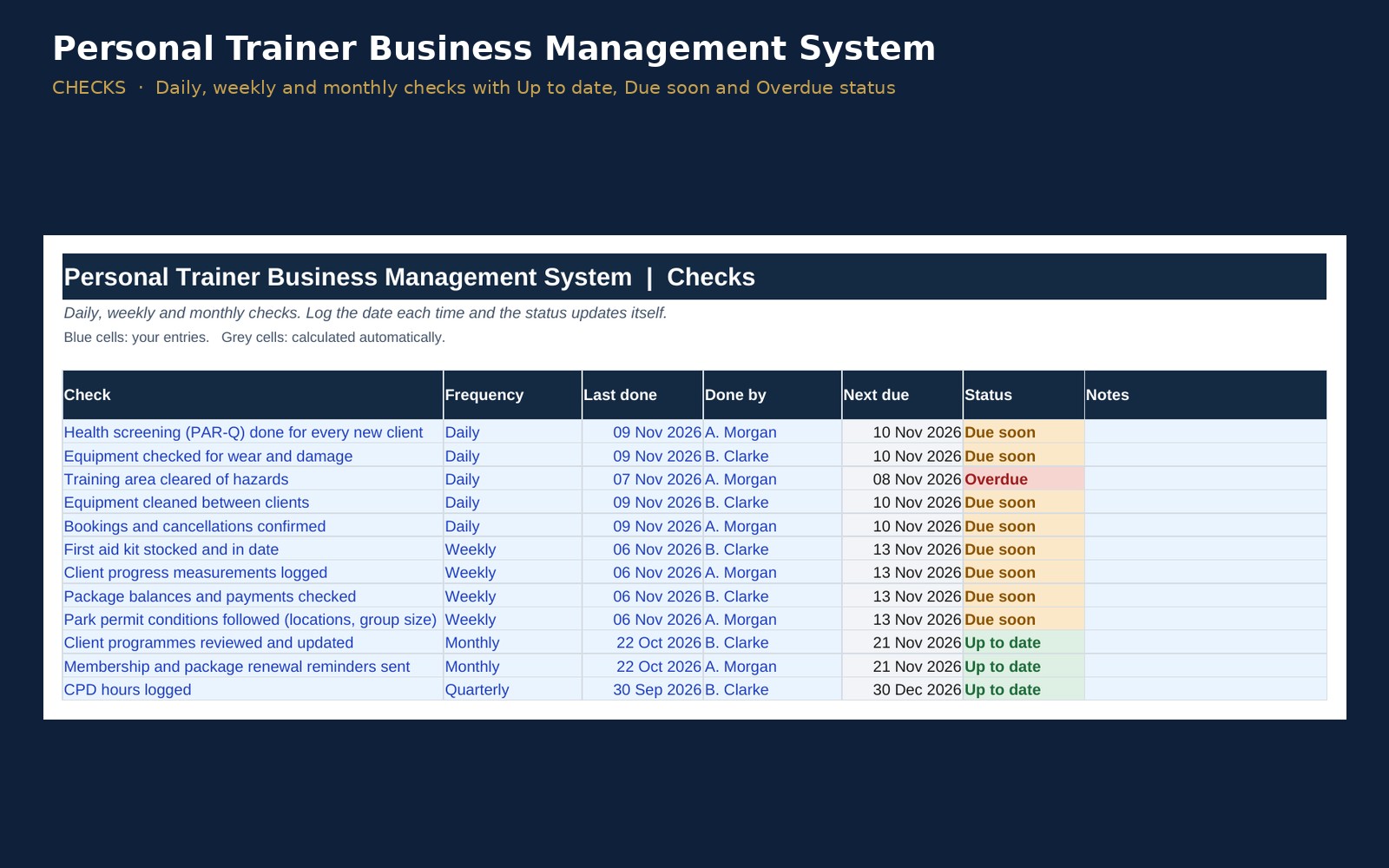
The **personal trainer business spreadsheet** runs the business side in one Excel file for £15, with no subscription: - Sessions by client group and service: one-to-one, packages, small group, online, park bootcamps, corporate, nutrition and assessments - Price, direct costs, rent, permits and app fees, with gross profit on every line - Invoices, debtors, a 12-week cash flow forecast and VAT summary - Daily checks: PAR-Q for new clients, equipment, training area, cleaning, bookings - Weekly checks: first aid kit, progress measurements, package balances, park permit conditions - A compliance register: Level 3, CIMSPA, insurance, first aid, DBS, park licence, ICO fee, music licence, gym agreement - Risk assessments: client injury, undisclosed conditions, outdoor hazards, lone working, health data, burnout - Stock: bands, mats, kettlebells, cones, wipes, forms, bibs and first aid supplies
Planning to open your own studio later? The Fitness Studio & Gym Membership Model and the free gym start-up calculator cover that step.
Your personal training start-up checklist
1. Complete your Level 3 qualification. 2. Get insurance and a first aid certificate, plus a DBS check if training under-18s. 3. Choose where you'll train and agree rent or a revenue share in writing. 4. Check park permits before any outdoor session. 5. Set up PAR-Q screening and secure client records, and pay the ICO fee. 6. Work out costs and break-even sessions with the free personal trainer start-up calculator. 7. Set prices, packages and a cancellation policy. 8. Register for Self Assessment once trading income passes £1,000. 9. Write a plan with the personal trainer business plan template.
Want everything at once? The Personal Trainer Full Business Pack includes the management system, the business plan template and all the free guides for £20.
Frequently asked questions
Do I need a licence to be a personal trainer in the UK? There's no legal licence to be a PT, but a Level 3 qualification and insurance are the industry standard. Training in parks usually needs a council or landowner permit.
How much does it cost to train clients in a park? It depends on the council. Examples include £308 + VAT a year in Merton for 1 to 3 sessions a week, and £530 to £729 a year for Lambeth's group licence. London's Royal Parks need their own licence.
How much should I charge as a new personal trainer? There's no official survey. Reported 2026 rates for new trainers outside London are around £25 to £35 an hour. Work out your break-even first, then price above it.
Is it better to rent gym space or train outdoors? Gym rent (often £200 to £800 a month) gives you equipment and a steady supply of potential clients. Outdoor training costs less but depends on permits and weather. Many trainers do both.
How many clients do I need? In our worked example, about 53 sessions a month covers £450 of costs and £1,500 of pay. That's roughly 13 sessions a week, or six or seven regular clients training twice a week.
Do I need to register as self-employed? Yes, once your total trading income passes £1,000 in a tax year. Register for Self Assessment by 5 October after that tax year ends, and keep records of rent, insurance, kit and CPD, which are usually allowable expenses.
*Sources: National Careers Service; The Royal Parks; Merton and Lambeth councils; FitPages and train.fitness 2026; Uswitch September 2026; Legal 500 on the January 2027 subscription rules. This guide is general information, not legal or financial advice.*