# How to Start a Supported Living Business in the UK
Supported living helps adults with learning disabilities, autism or mental health needs live in their own homes with the support they need. Councils and the NHS fund most of it, and they set the hourly rate.
This guide covers CQC registration, housing, staffing, pay rules, what it costs to start, real rates, and how many hours you need to break even.
1. CQC registration
If your support includes personal care, such as help with washing, dressing, eating or medication, you must register with the Care Quality Commission for the regulated activity of personal care before you start. CQC says you don't need to register if you only provide housing support or social support. You'll need a registered manager and a full set of policies.
2. Keep housing and care separate
Where people must receive care as a condition of living in the property, CQC says there must be a real separation between the personal care and the accommodation agreements. Most providers work with a housing association or specialist landlord, who issues the tenancy, while the provider delivers the support.
3. Staff safely
Run enhanced DBS checks, right to work checks and induction training for every worker, and keep supervision and refresher training in date. ANNA's November 2026 guide puts recruitment at £200 to £600 and training at £150 to £500 per person.
4. What it costs to start
Our free calculator's planning figures:
| Item | Lean | Base | High |
|---|---|---|---|
| Company setup, policies and professional fees | £250 | £1,000 | £3,000 |
| CQC registration preparation | £300 | £1,200 | £3,000 |
| Office setup | £0 | £2,000 | £8,000 |
| Insurance (year 1) | £350 | £800 | £2,000 |
| Staff recruitment | £1,000 | £3,000 | £6,000 |
| Staff training and certificates | £750 | £3,000 | £5,000 |
| Care management software and devices | £0 | £1,500 | £4,000 |
| Marketing and tender bids | £200 | £1,000 | £3,000 |
| Working capital reserve | £5,000 | £20,000 | £40,000 |
| Total | £7,850 | £33,500 | £74,000 |
ANNA puts small setups at £5,000 to £10,000. Work through your own figures with the free supported living startup calculator.
5. Pay and insurance
Pay at least the National Living Wage of £12.71 an hour from April 2026 (GOV.UK), including travel time between visits and the rules on sleep-in shifts. Employers' liability insurance is a legal requirement, and commissioners usually ask for public liability and professional indemnity too.
6. Win contracts
Most work comes through council and NHS commissioning frameworks and tenders, housing associations, social workers and care brokers. A good CQC rating makes every bid stronger.
7. Know the rates
North Tyneside Council's 2026/27 rates:
| Service | Rate |
|---|---|
| Supported living, non-complex | £22.07 an hour |
| Supported living, complex | £22.88 an hour |
| Overnight sleep-in | £136.62 |
| Waking night | hourly rate × 10 hours |
Rates vary by council. Because councils set the rate, your profit comes from controlling staff costs.
8. Work out your break-even
Our calculator's base example earns £22.07 an hour with £16 of care worker pay and on-costs, against £3,500 of monthly fixed costs (registered manager, office, insurance, CQC fee, software, training) and a £1,800 owner-pay target. That needs about 874 support hours a month, roughly 202 a week. Councils pay in arrears, so hold enough cash for at least two payrolls.
9. Protect quality
Keep care plans, risk assessments, medication records and daily notes up to date, report safeguarding concerns straight away, and audit every month. Your CQC rating is your reputation.
10. Run it like a business
Track hours delivered, rate per hour, staff cost, staff turnover, agency hours and debtor days every month. Keep CQC records, DBS checks, training and insurance in one place.
Your supported living business start-up checklist
- [ ] CQC registration
- [ ] Registered manager
- [ ] Housing partner
- [ ] Separate tenancy
- [ ] Policies
- [ ] Enhanced DBS
- [ ] Training matrix
- [ ] Insurance
- [ ] Break-even hours known
- [ ] Payroll reserve
Run it properly from day one
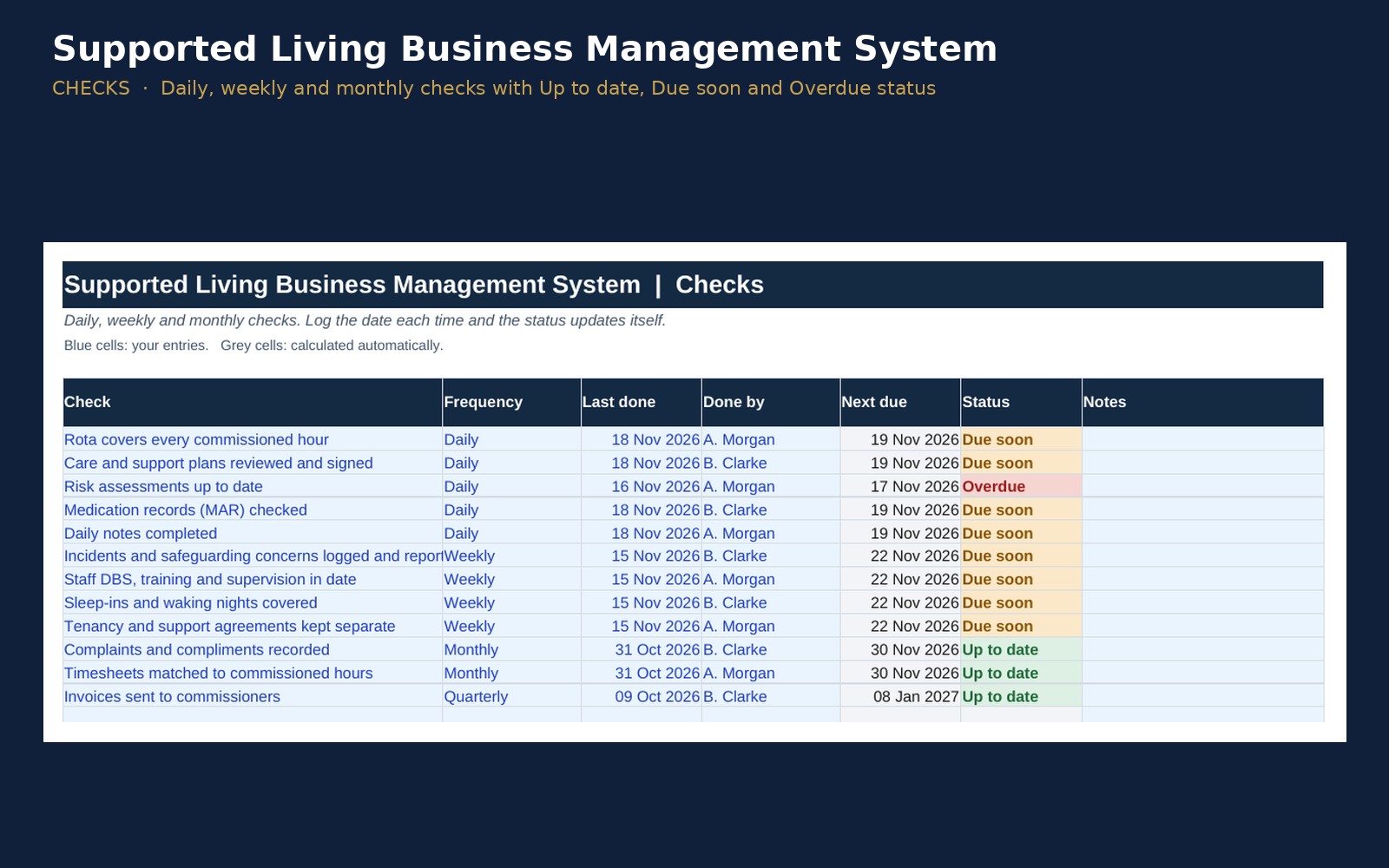
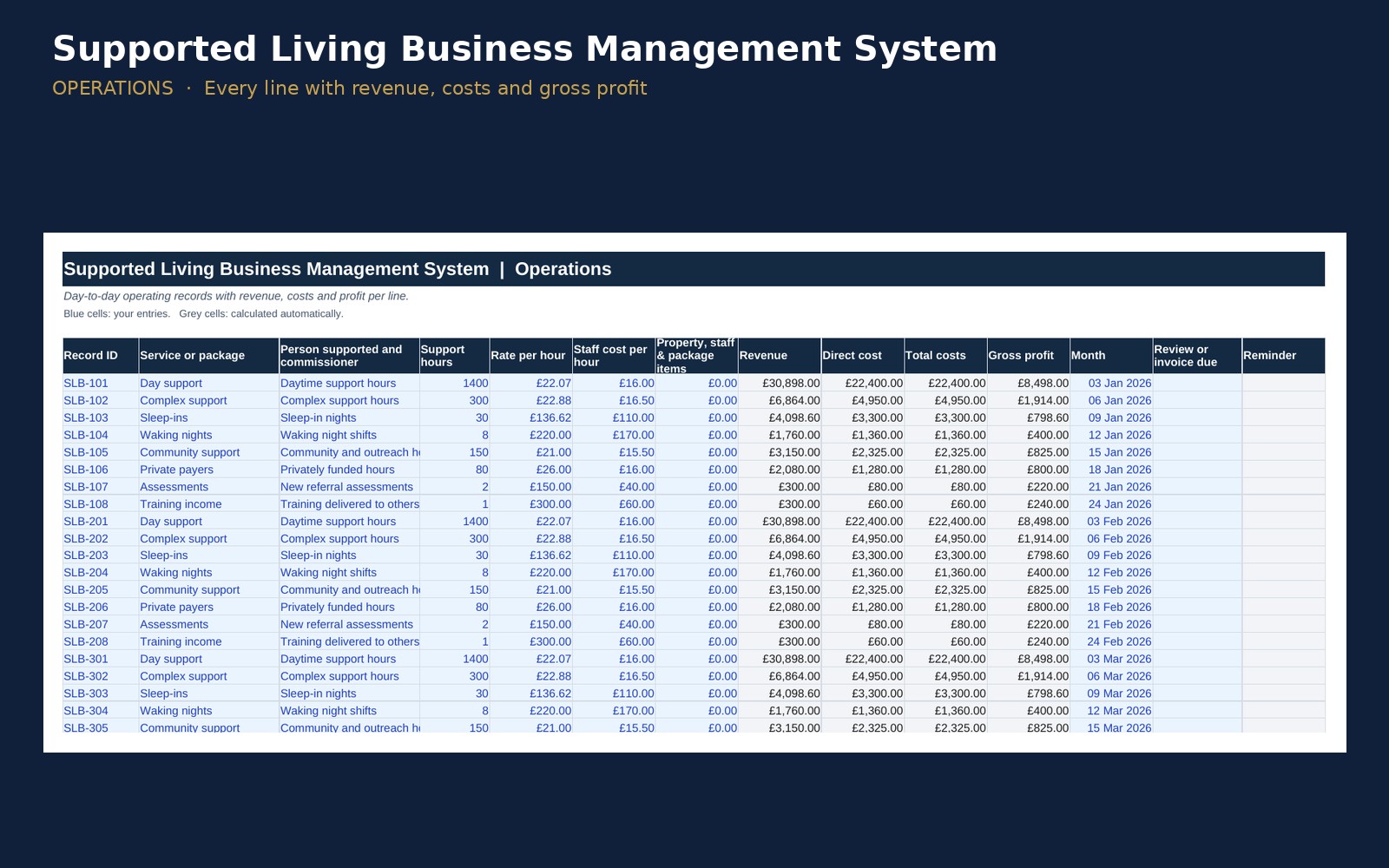
The **Supported Living Business Management System** is a supported living business spreadsheet that tracks every order, cost, invoice and VAT return, with checks, compliance dates, risks and stock in one Excel file. It costs £15 once, with no subscription. Planning to borrow? The Supported Living Business Plan Template (£10) is laid out the way lenders expect, or get both with every free guide in the Full Business Pack for £20.
Next, read how much a supported living provider earns and the KPIs to track.
Related: Home care agency startup costs
Related: Recruitment agency startup costs
Related tools for this kind of business: Home Care Agency Management System · Home Care Agency Full Business Pack · Free HR Starter Pack
Frequently asked questions
How much does it cost to start a supported living business? Starting small with no office, about £7,850 in our calculator. A base service with an office, 10 trained staff and two months of payroll is around £33,500. ANNA puts small setups at £5,000 to £10,000.
Does supported living need CQC registration? Yes, if you provide personal care. Housing support or social support alone doesn't need registration.
How much do councils pay for supported living? North Tyneside Council's 2026/27 rate is £22.07 an hour for non-complex support and £22.88 for complex care, with £136.62 for a sleep-in.
Do I need to own the property? No. Most providers work with a housing association or landlord. CQC requires a real separation between care and accommodation agreements.
Is supported living profitable? It can be, if your staff cost per hour leaves a margin on the council rate. Test it in the calculator.