# How to Start a Wedding Planning Business in the UK
The average UK wedding now costs £20,604 (Bridebook, 2026), and plenty of couples will pay to hand the planning to someone they trust. Organising is the skill. Clear contracts, reliable suppliers, and enough cash to get through the quiet season decide whether the business lasts.
This guide covers skills, registration, contracts, what it costs to start, package prices, and how many weddings you need to break even.
1. Skills and experience
There's no licence to be a wedding planner. Routes in include the Event Assistant Level 3 apprenticeship, events or hospitality courses, short private wedding planning courses, or working for a venue or events company (National Careers Service).
2. Register the business
Register for Self Assessment or set up a limited company. Pay the ICO data protection fee, £52 a year for micro businesses, because you'll hold couples' and guests' personal data.
3. Contracts and deposits
Use written terms for every booking: what's included, payment stages, a retainer on booking and your cancellation policy. For contracts agreed online, by phone or in the client's home, customers usually have a 14-day right to cancel, so get a written request before starting work in that period.
4. What it costs to start
Our free calculator's planning figures:
| Item | Lean | Base | High |
|---|---|---|---|
| Company registration and ICO fee | £52 | £152 | £178 |
| Insurance (year 1) | £100 | £400 | £1,000 |
| Wedding planning course | £0 | £500 | £1,500 |
| Website and portfolio photos | £200 | £1,500 | £4,000 |
| Directory listings and wedding fairs | £0 | £1,000 | £3,000 |
| Laptop, phone and planning software | £300 | £1,000 | £2,500 |
| Styling and emergency kit | £100 | £800 | £3,000 |
| Contracts and terms | £0 | £300 | £800 |
| Working capital reserve | £500 | £2,000 | £5,000 |
| Total | £1,252 | £7,652 | £20,978 |
Work through your own figures with the free wedding planner startup calculator.
5. Suppliers and safety
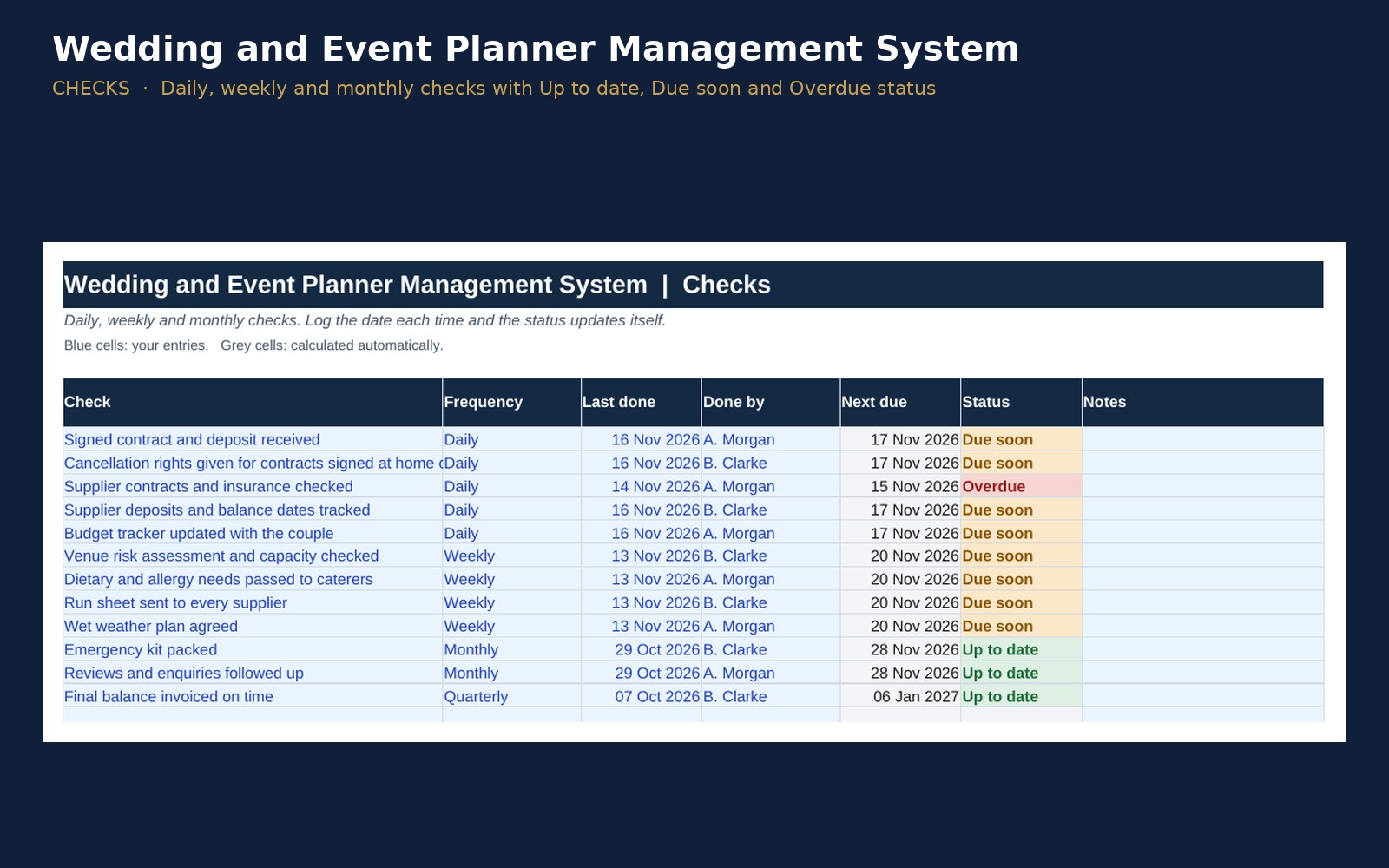
Keep signed contracts and insurance details for every supplier, confirm each one a week before the day, and keep a backup list. Check venue capacity and risk assessments, pass dietary and allergy needs to the caterer, and send a run sheet to every supplier.
6. Insurance
Get public liability and professional indemnity before your first booking. MoneySuperMarket's August–October 2026 data put the average public liability premium at £78.27 a year for up to £2m. Add employers' liability if you employ assistants.
7. Set your packages
Bridebook's 2026 figures:
| Figure | Amount |
|---|---|
| Average UK wedding cost | £20,604 |
| Average spend on a wedding planner | £1,543 |
| Typical planner fee | 10% to 15% of budget |
| 10% to 15% of an average wedding | about £2,060 to £3,090 |
Offer full planning, partial planning and on-the-day coordination, and price each from the hours it really takes.
8. Work out your break-even
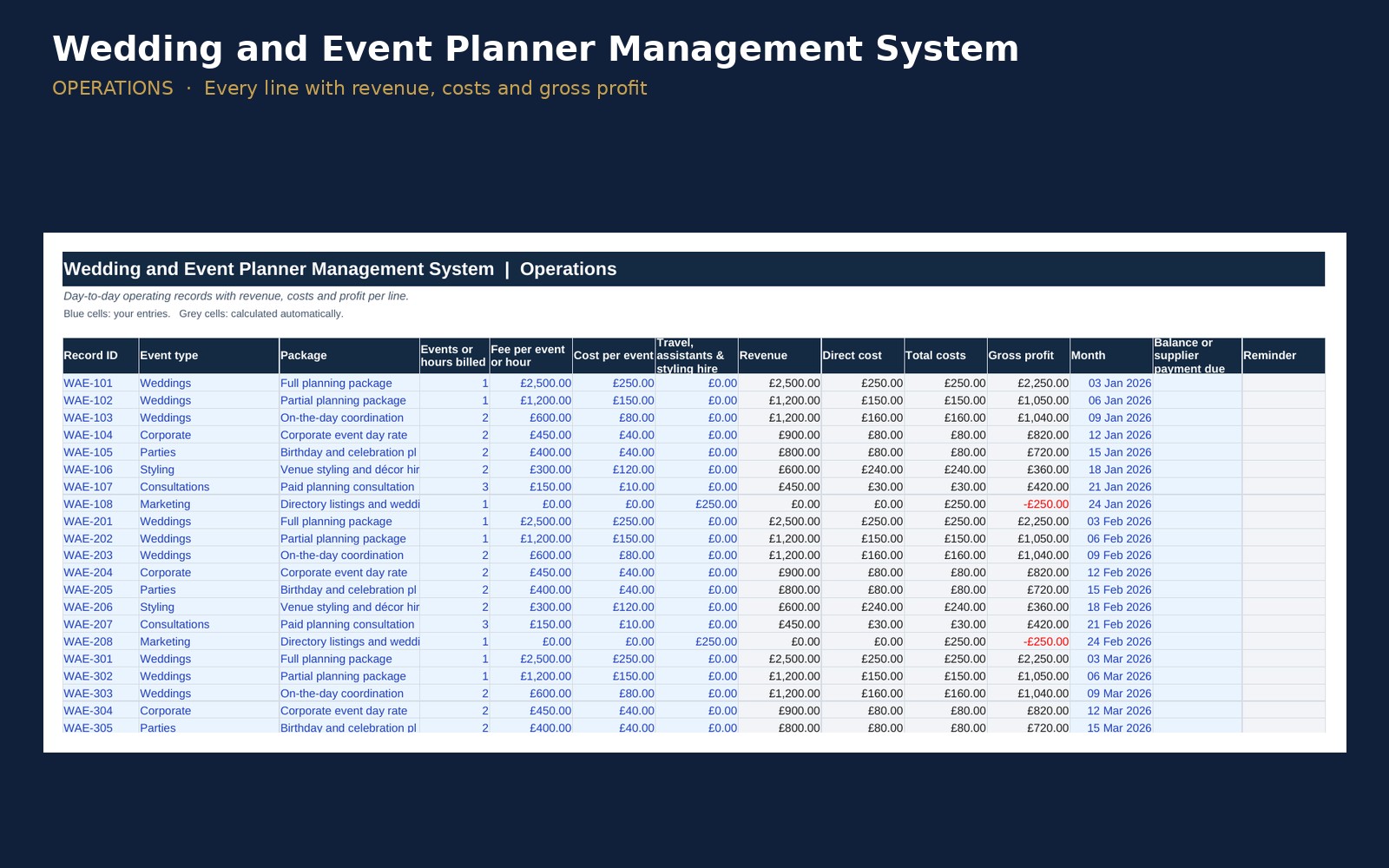
Our calculator's base example earns £1,543 a wedding with £250 of travel, assistant and kit costs, against £400 of monthly fixed costs and a £1,500 owner-pay target. That needs about 2 weddings a month on average. Most weddings fall between spring and autumn, so bank retainers to cover the winter.
9. Win bookings
- Wedding directories and fairs
- Referrals from venues and suppliers
- Instagram and real wedding features
- Corporate events and parties to fill the quiet months
10. Run it like a business
Track enquiries, bookings, average fee, hours per wedding and deposits held every month. Keep contracts, supplier details and insurance in one place.
Your wedding planning business start-up checklist
- [ ] Skills and experience
- [ ] Business set up
- [ ] ICO fee
- [ ] Client terms and retainer
- [ ] Cancellation policy
- [ ] Public liability and professional indemnity
- [ ] Supplier checklist
- [ ] Run sheet template
- [ ] Break-even weddings known
- [ ] Package prices set
Run it properly from day one
The **Wedding and Event Planner Management System** is a wedding planning business spreadsheet that tracks every order, cost, invoice and VAT return, with checks, compliance dates, risks and stock in one Excel file. It costs £15 once, with no subscription. Planning to borrow? The Wedding and Event Planner Business Plan Template (£10) is laid out the way lenders expect, or get both with every free guide in the Full Business Pack for £20.
Next, read how much a wedding planner earns and the KPIs to track.
Related: Restaurant startup costs
Related: Home baking and catering startup costs
Frequently asked questions
How much does it cost to start a wedding planning business? From home with your own laptop, about £1,250 in our calculator. A base launch with training, a website, directory listings and kit is around £7,650.
Do I need a qualification to be a wedding planner? No. There's no licence or required qualification, but courses, an apprenticeship or venue experience help.
How much do wedding planners charge in the UK? Bridebook puts the average UK spend on a wedding planner at £1,543, with many charging around 10% to 15% of the couple's budget.
What insurance does a wedding planner need? Public liability and professional indemnity, plus employers' liability if you employ assistants.
How much do wedding planners earn? The National Careers Service gives £21,000 to £34,000 for employed wedding planners. Self-employed planners earn from package fees after costs.