Searches for food van and ice cream van ideas rose 30% in Hiscox's study of UK side-hustle searches. Ice cream has some of the best margins in catering, but the season is short and one wet month can wipe out a summer's profit.
This guide covers the business side: what vans cost, the council consents you need, the chimes law, food hygiene, what you could take on a good day and a bad one, and how many servings you need to break even.
1. Choose your vehicle
NCASS puts a new ice cream van at upwards of £60,000, a five-year-old van at about £15,000, a new trailer at around £17,000, and a trike or cart from about £3,000. Kandoo's September 2026 guide gives a similar range. Budget for the soft-serve machine, freezers, generator and regular servicing on top.
2. Register and get consent
Register as a food business with your council (it's free) at least 28 days before you trade. You'll usually need street trading consent from each council you trade in, and some streets and pitches are off-limits. Some schools and events ask for a DBS check.
3. The chimes law
Under the Control of Pollution Act 1974, chimes may only be used between 12 noon and 7pm, and must not cause reasonable annoyance. The code of practice adds: no more than 4 seconds at a time, no more than once every 3 minutes, not while stationary, not within 50 metres of schools (during school hours), hospitals or places of worship (on days of worship), and no more than once every 2 hours in the same street.
4. What it costs to start
Our free calculator's planning figures:
| Item | Lean | Base | High |
|---|---|---|---|
| Ice cream van (or trike/cart) | £3,000 | £15,000 | £60,000 |
| Street trading consent and pitch fees | £300 | £600 | £1,000 |
| Insurance (year 1) | £500 | £1,200 | £2,000 |
| Gas, generator and electrical checks | £0 | £400 | £1,200 |
| Opening stock | £300 | £800 | £2,000 |
| Food hygiene training and registration | £15 | £50 | £150 |
| Card reader, signage and branding | £30 | £300 | £1,000 |
| Launch marketing | £0 | £300 | £1,000 |
| Working capital reserve | £500 | £2,500 | £6,000 |
| Total | £4,645 | £21,150 | £74,350 |
Protectivity's 2025 estimate is £12,500 to £40,000+. Work through your own figures with the free ice cream van startup calculator.
5. Food hygiene on wheels
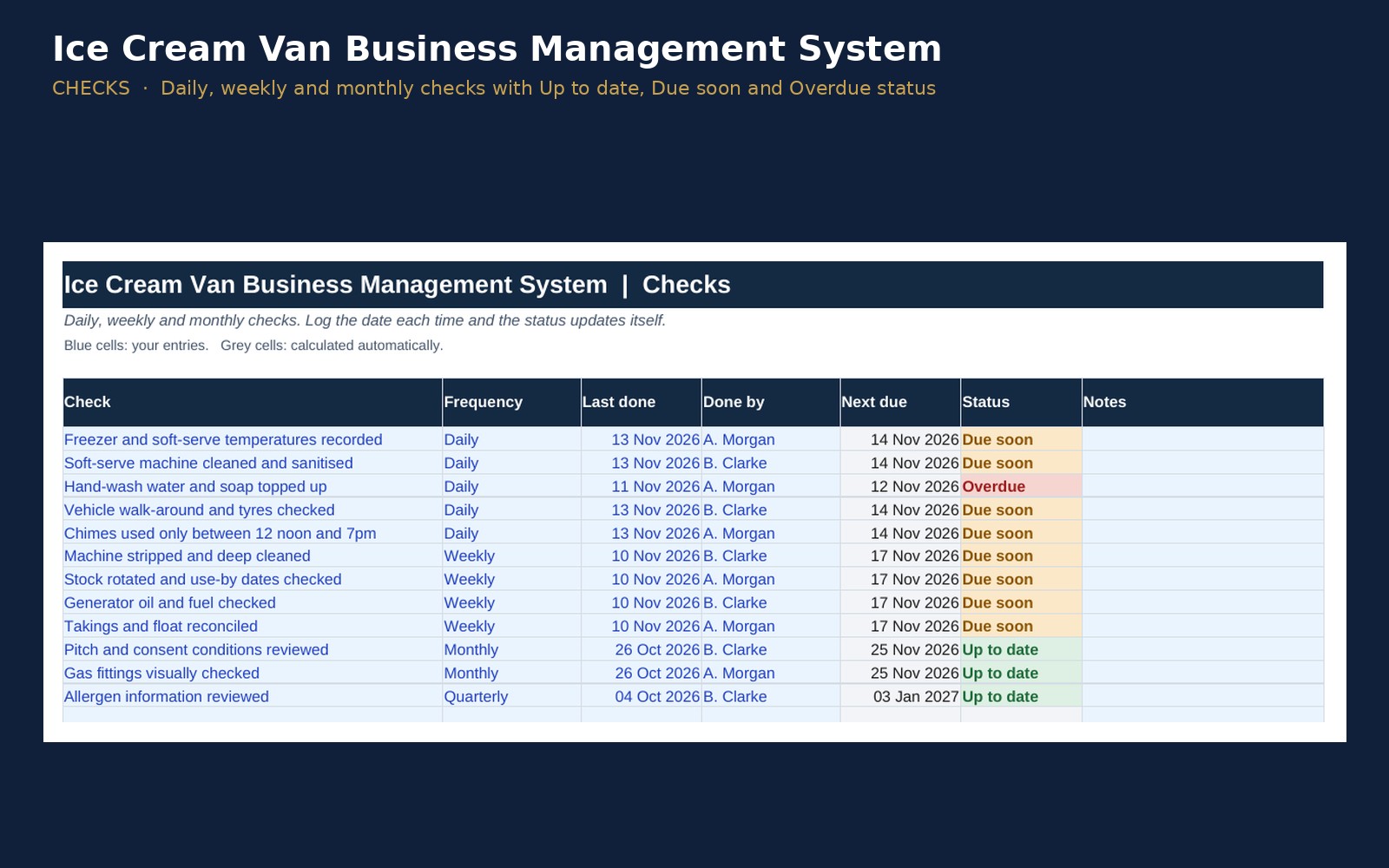
Clean and sanitise the soft-serve machine every day and strip it down on the maker's schedule, record freezer temperatures, provide hand-washing on board and keep allergen information ready. A Level 2 food hygiene course is the usual standard, and your council will inspect you.
6. Gas, generator and safety
If you use LPG or a generator, get them checked, fit a carbon monoxide alarm and refuel safely. Always serve from the kerb side and stop only where children can queue safely.
7. What you could take
Protectivity's 2025 estimates put takings at about £100–£300 on a quiet weekday, £400–£800 on a busy weekend, £500–£1,500+ at an event and £300–£1,000+ for a private hire. Summer turnover runs at £4,000–£10,000+ a month, and winter at £0–£2,000 unless you diversify.
8. Work out your break-even
Our calculator's base example sells at £3.20 a serving with £0.85 of costs, against £900 of monthly fixed costs and a £1,500 owner-pay target. That needs about 1022 servings a month in season, roughly 237 a week. Remember that winter months still carry insurance and van costs.
9. Beat the weather
- Regular rounds at the same times so customers listen for you
- Private hire for weddings, parties and corporate events
- School fetes, sports days and local events
- Winter income, such as hot drinks and snacks, or savings set aside in summer
10. Run it like a business
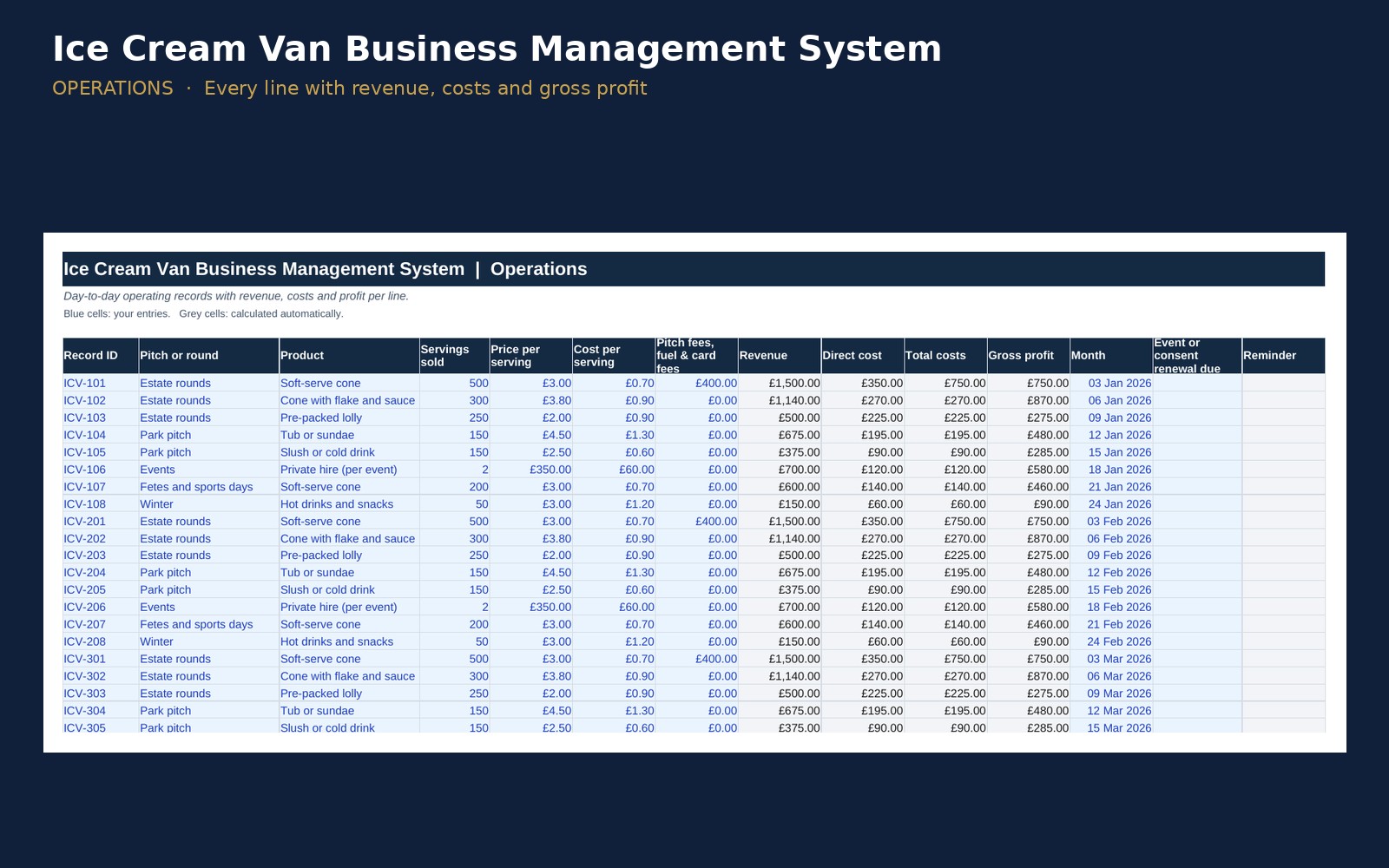
Track takings per trading day, servings, weather days lost, events booked and fuel cost every month. Keep your consents, insurance, MOT, gas and generator checks in one place with renewal dates, and log daily cleaning and temperatures.
Your ice cream van business start-up checklist
- [ ] Vehicle chosen and serviced
- [ ] Food business registered
- [ ] Street trading consent in each area
- [ ] Insurance in place
- [ ] Gas and generator checks
- [ ] Chime cut-out fitted
- [ ] Cleaning and temperature logs
- [ ] Allergen information
- [ ] Break-even servings known
- [ ] Events and private hire booked
Run it properly from day one
The **Ice Cream Van Business Management System** is an ice cream van business spreadsheet that tracks every order, cost, invoice and VAT return, with checks, compliance dates, risks and stock in one Excel file. It costs £15 once, with no subscription. Planning to borrow? The Ice Cream Van Business Plan Template (£10) is laid out the way lenders expect, or get both with every free guide in the Full Business Pack for £20.
Next, read how much an ice cream van owner earns and the KPIs to track.
Related: Food truck startup costs
Frequently asked questions
How much does it cost to start an ice cream van business? A trike or cart can start for about £4,600 in our calculator, and a base setup with a five-year-old van is around £21,200. Protectivity puts the range at £12,500 to £40,000+.
Do I need a licence for an ice cream van? You'll need to register as a food business (free) and usually hold street trading consent from each council you trade in.
When can ice cream vans play their chimes? Only between 12 noon and 7pm under the Control of Pollution Act 1974. The code of practice limits them to 4 seconds at a time, once every 3 minutes.
How much do ice cream vans make? Protectivity's 2025 estimates put summer turnover at £4,000 to £10,000+ a month and winter at £0 to £2,000. Profit depends on your van costs, fuel and pitch fees.
What do ice cream vans do in winter? Many sell hot drinks and snacks, take private hires, or set summer savings aside for the quiet months.